
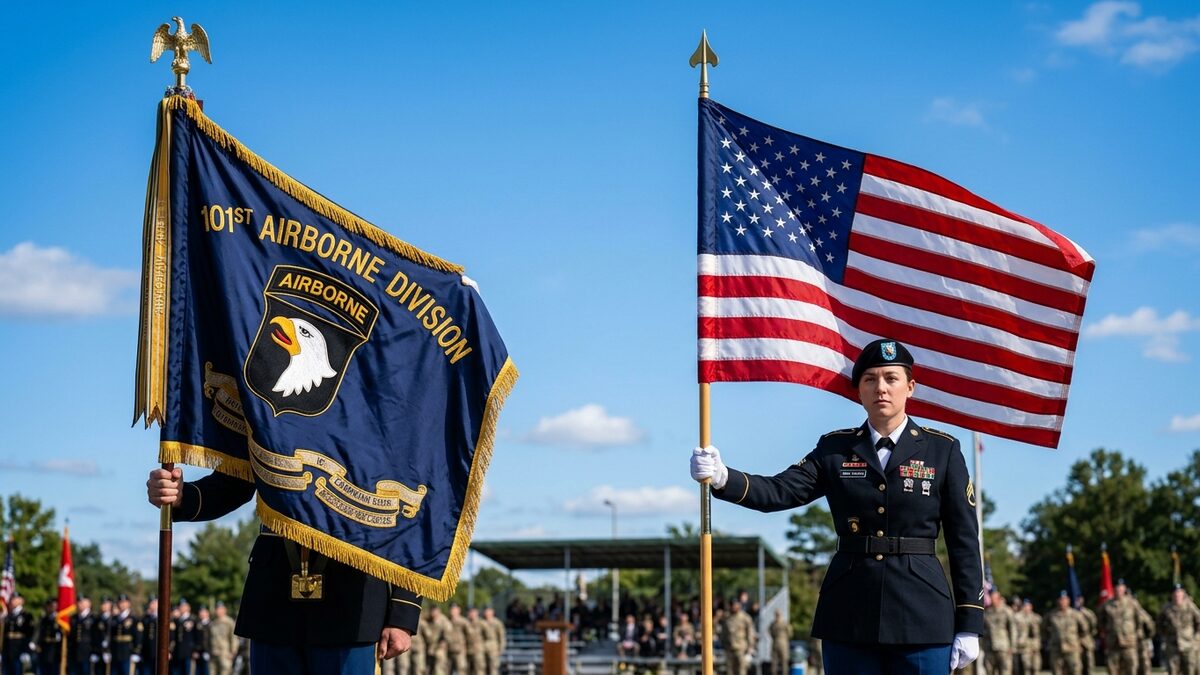
This article explores the distinct roles of the ceremonial flag and the service flag within military tradition, highlighting how each embodies unique aspects of honor and sacrifice. While the ceremonial flag commands public reverence through its ornate symbolism, the service flag offers a poignant, personal acknowledgment of individual family members’ service. Understanding these differences reveals the nuanced ways military culture balances collective identity with personal commitment.
Key Takeaways
- The ceremonial flag symbolizes collective military identity and tradition during formal events.
- The service flag represents the active duty status of family members in a household.
- The ceremonial flag is elaborate and commands public respect and unity.
- The service flag is simple and highlights private sacrifice within families.
The ceremonial flag, resplendent in its elaborate design and symbolic regalia, stands as a visible emblem of tradition and honor during formal military occasions, its presence commanding solemn respect and unity. In stark contrast, the service flag serves a more pragmatic and personal function, quietly displayed to signify the active duty status of family members within a household, its simplicity and accessibility underscoring private sacrifice rather than public spectacle. This juxtaposition between the ceremonial flag’s grandeur and the service flag’s intimate symbolism encapsulates their distinct roles within military culture, reflecting the broader interplay between collective identity and individual commitment.
What Each Flag Represents
The fundamental distinction between the ceremonial flag and the service flag lies in their representative functions within military culture. The ceremonial flag acts as an organizational emblem, symbolizing a specific military branch, unit, or command. It serves as a visual marker of collective identity and institutional heritage, prominently featured in formal ceremonies and official functions. For example, within the U.S. Army, the ceremonial flag is recognized as “the senior flag of the Army,” underscoring its paramount status among military colors and its role in embodying the legacy and honor of the entire service branch.
This juxtaposition between the ceremonial flag’s grandeur and the service flag’s intimate symbolism encapsulates their distinct roles within military culture, reflecting the broader interplay between collective identity and individual commitment.
Conversely, the service flag holds a more personal and familial significance. It is a banner displayed primarily by the immediate family members of active-duty military personnel during periods of war or hostilities. Rather than representing an organizational entity, the service flag is a symbol of the individual service and sacrifice of family members, marking their personal connection to the Armed Forces. This distinction highlights the service flag’s role as a familial honor banner, contrasting with the ceremonial flag’s function as a unit or branch color.
Official Design and Appearance
The visual characteristics of the ceremonial flag and the service flag further delineate their differing roles. The U.S. Army ceremonial flag is distinctive with its white field, trimmed on three sides by a yellow fringe, and prominently featuring the Department of the Army seal along with the year 1775, marking the establishment of the Army. This design is imbued with symbolism reflecting the history and authority of the military branch it represents. A smaller version, known as the Army display flag, mirrors this design and color scheme but is used in less formal contexts.
In contrast, the service flag is defined by federal statute and adheres to a standardized design: a white background bordered in red, bearing one blue star for each family member serving in the Armed Forces during wartime or hostilities. Should a family member die under qualifying conditions, the blue star is replaced with a gold star edged in blue, signifying the ultimate sacrifice. Unlike the ceremonial flag’s tailored and elaborate design specific to branches or units, the service flag’s simpler, standardized appearance underscores its role as a personal and family-oriented symbol.
Who May Display It
The usage protocols for these flags further emphasize their divergent purposes. Ceremonial flags are institutional symbols employed by military units and commands during official events, parades, and formal ceremonies. Their display is controlled by the military itself and is not intended for private or familial use. This exclusivity reinforces the ceremonial flag’s function as a representation of collective military identity and tradition.
Conversely, the service flag is authorized for display by the immediate family members of individuals serving in the Armed Forces during periods of declared war or hostilities, as codified in 36 U.S.C. § 901. It is typically exhibited in the windows of family residences, serving as a public yet personal acknowledgment of military service and sacrifice within the household. This statutory authority and the personal nature of its display underscore the service flag’s unique role in bridging military service with family recognition.