
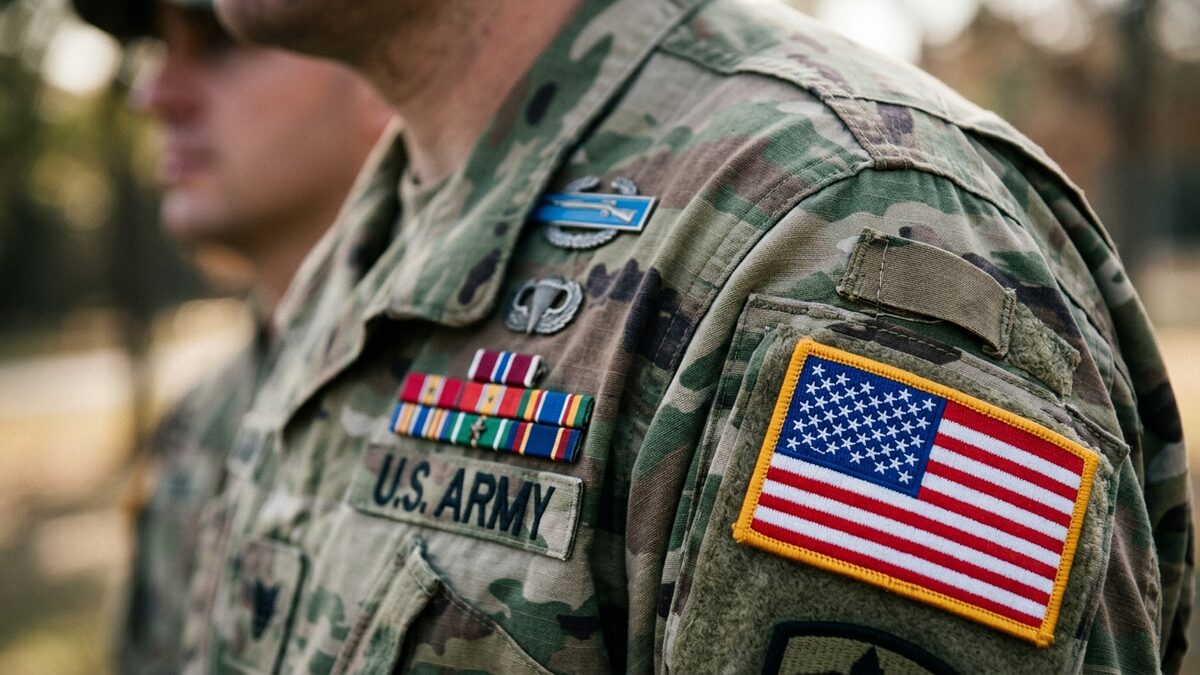
The incorporation of the American flag into military uniforms and decorations reflects a deep-rooted tradition of honoring national identity and valor. From its origins in the Revolutionary War to its current regulated presence, the flag serves not only as a symbol of allegiance but also as a poignant reminder of sacrifice and unity within the armed forces. Exploring this evolution reveals the profound significance the flag holds in shaping military heritage and esprit de corps.
Key Takeaways
- The American flag has symbolized national identity and valor in military uniforms since the Revolutionary War.
- Military use of the flag on uniforms is regulated by the U.S. Flag Code, with specific exemptions for service members.
- Flag patches on uniforms signify both allegiance to the country and recognition of individual sacrifice.
- The tradition of displaying the flag on military attire reflects a continuous and evolving expression of unity and distinction.
Since the Revolutionary War, when Continental soldiers first bore the fledgling Stars and Stripes into battle, the American flag has served as a potent emblem of national identity and martial valor. Its incorporation into military uniforms and decorations has evolved from rudimentary patches and banners to meticulously regulated insignia and awards, symbolizing both allegiance and sacrifice. This enduring tradition reflects the flag’s dual role as a unifying standard and a marker of individual and collective distinction within the armed forces, tracing a continuous thread through the nation’s military history.
Legal Framework Governing the Use of the American Flag on Uniforms
The use of the American flag in military uniforms is governed primarily by the U.S. Flag Code, which establishes strict guidelines on how the flag may be displayed and utilized. While the Flag Code generally prohibits the use of any part of the flag as a costume or athletic uniform, it explicitly carves out an exception for military personnel, firefighters, police officers, and members of patriotic organizations. This exemption allows for the attachment of flag patches to uniforms, distinguishing official military wear from unauthorized apparel fashioned from the flag itself. The legal framework thus balances respect for the flag’s sanctity with practical considerations of military identity and esprit de corps. The Flag Code’s provisions are widely regarded as the baseline standard for flag etiquette in uniform use, underscoring the symbolic importance of the flag as both a national icon and a signifier of service.
Since the Revolutionary War, when Continental soldiers first bore the fledgling Stars and Stripes into battle, the American flag has served as a potent emblem of national identity and martial valor.
The U.S. Army’s Right-Shoulder Flag Insignia: Symbolism and Placement
The U.S. Army’s specific regulations concerning the display of the flag patch underscore the precision with which the flag’s symbolism is maintained on military uniforms. The Army mandates that the American flag insignia be affixed to the right shoulder pocket flap of the utility uniform. This placement is not arbitrary; it is intended to maximize visibility and maintain uniformity across personnel. The patch is positioned on the uppermost portion of a hook-and-loop pad, with its top edge aligned with the pad’s top, ensuring consistent presentation. Importantly, the flag is oriented with the star field facing forward—the flag’s own right—mirroring the convention of the flag flying in the breeze as the soldier advances. This forward-facing orientation reflects a deeper symbolic meaning, representing the nation moving ahead and the soldier’s role as a defender of its values. Under tactical field conditions, commanders may direct the use of a subdued tactical flag patch, reflecting operational security and camouflage needs.
Standards of Size, Color, and Regulation in Army Uniforms
Army regulations provide detailed specifications regarding the size, color, and application of the American flag insignia on military uniforms. The flag patch is standardized at two inches by three inches, a size that balances visibility with uniformity. The full-color version features the traditional red, white, and blue, maintaining the flag’s vibrant symbolism in non-deployed environments. Conversely, the tactical, subdued version is worn in the field or during deployments, minimizing visual exposure while preserving the flag’s symbolic presence. Historically, Army regulations required the full-color embroidered flag insignia on utility and organizational uniforms except when operational conditions dictated otherwise. Earlier directives also specified sewing the flag replica below the right shoulder seam on certain uniforms, a practice that has evolved with modern uniform designs. These detailed standards are codified in Army Regulation 670-1, which governs the wear and appearance of Army uniforms and insignia, reflecting the institution’s commitment to honoring the American flag through disciplined and respectful display.