
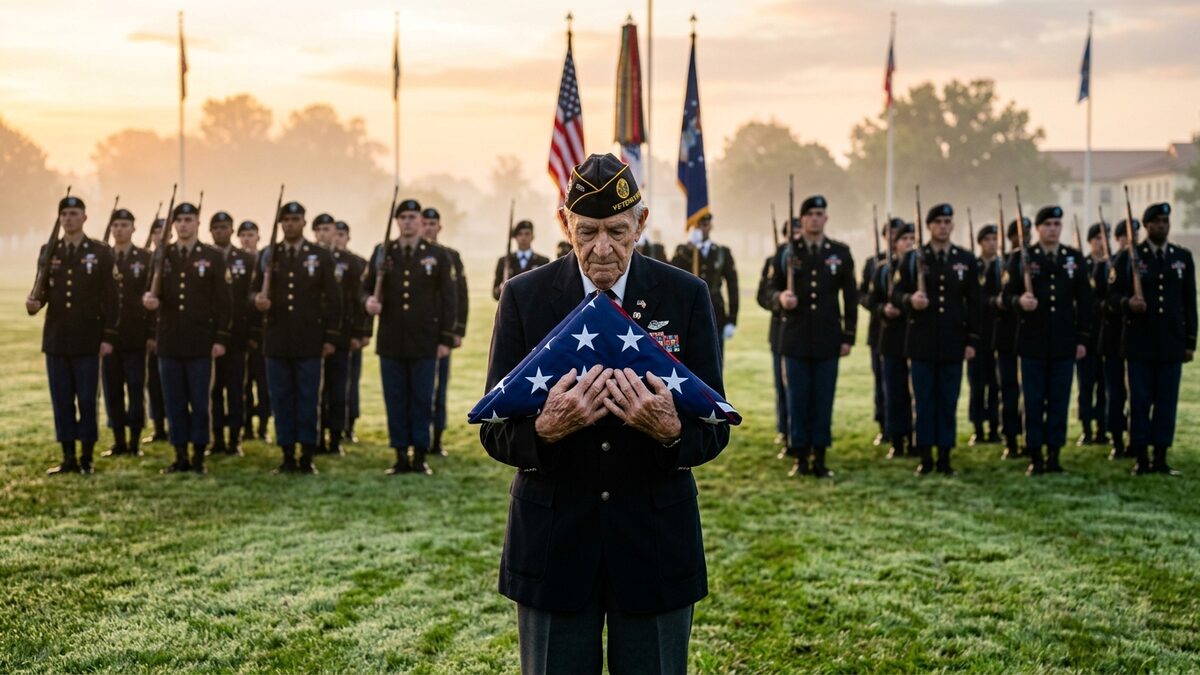
The article explores how flag etiquette, deeply embedded in military tradition since 1777, serves as a powerful symbol of respect, unity, and honor during ceremonies. It highlights the intricate protocols and legal foundations that govern flag display, underscoring their role in reinforcing the solemnity and values upheld by service members worldwide. Understanding these practices offers insight into the enduring significance of military ceremonies and national identity.
Key Takeaways
- Flag etiquette in military ceremonies symbolizes unity, honor, and national identity.
- The legal basis for flag protocol is established in 4 U.S.C. § 9.
- Uniformed service members must salute during flag hoisting, lowering, and passage.
- Veterans not in uniform are also permitted to render the military salute.
Since the Continental Congress established the first official flag of the United States in 1777, the protocols surrounding its display have evolved into a disciplined practice integral to military tradition. Flag etiquette, rooted in centuries of heraldic customs and battlefield symbolism, serves not only as a mark of respect but also as a tangible expression of unity, honor, and national identity within armed forces worldwide. This adherence to precise flag handling during military ceremonies reinforces the solemnity of the occasion and reflects the enduring values upheld by service members across generations.
Legal Foundation for Military Flag Etiquette
The legal framework underpinning flag etiquette in military ceremonies is codified primarily in 4 U.S.C. § 9, which delineates the expected conduct during the hoisting, lowering, and passage of the flag in parades or reviews. This statute mandates that uniformed service members render the military salute during such ceremonies, reinforcing discipline and respect for the national emblem. Veterans and other armed forces members not in uniform are also accorded the privilege of saluting, reflecting their ongoing bond with military tradition even when civilian attire is worn.
Flag etiquette, rooted in centuries of heraldic customs and battlefield symbolism, serves not only as a mark of respect but also as a tangible expression of unity, honor, and national identity within armed forces worldwide.
For civilians, the statute prescribes a different but equally respectful gesture: facing the flag while standing at attention and placing the right hand over the heart. Men not wearing uniforms are expected to remove any non-religious headdress with the right hand, holding it at the left shoulder as a mark of reverence. These legal provisions serve as a foundation for uniformity in behavior, ensuring that flag etiquette is not merely ceremonial but a legally recognized expression of national respect and military discipline.
Salute and Anthem Protocol
Flag etiquette in military ceremonies extends to the observance of the national anthem, where the protocols further emphasize respect and unity. When the anthem is played indoors during formal gatherings, participants are instructed to stand at attention and face the flag if it is present. In situations where no flag is displayed, the proper conduct is to face the source of the music, maintaining the solemnity of the occasion. Military personnel in uniform are required to render the military salute during the anthem, symbolizing their allegiance and service.
Civilians, by contrast, do not perform the salute but instead place their right hand over the heart, a gesture codified in military and veteran service guides to maintain respectful participation without compromising uniformed customs. These protocols are consistently reiterated in official military manuals and veteran service publications, underscoring their importance in preserving the dignity of the flag and the anthem as central elements of military ceremonies worldwide.
Flag Positioning in Ceremonial Displays
The physical positioning of the flag during military ceremonies is governed by strict rules that reinforce the flag’s symbolic primacy. When displayed against a wall, whether horizontally or vertically, the union—the blue field with stars—must be placed uppermost and to the flag’s own right, which corresponds to the observer’s left. This orientation is crucial for maintaining the flag’s integrity and respect in all settings.
On speaker platforms, the flag should be positioned above and behind the speaker if displayed flat, signifying its superior status. In venues such as auditoriums or churches, the U.S. flag is accorded the position of superior prominence, often placed centrally or where it can command the greatest visual respect. When multiple flags are present, the U.S. flag must occupy the position of honor, typically to the observer’s left or at the center front, ensuring its preeminence is unmistakable. Adherence to these guidelines reflects the military’s commitment to honoring national symbols and reinforcing collective identity through precise ceremonial practices.