
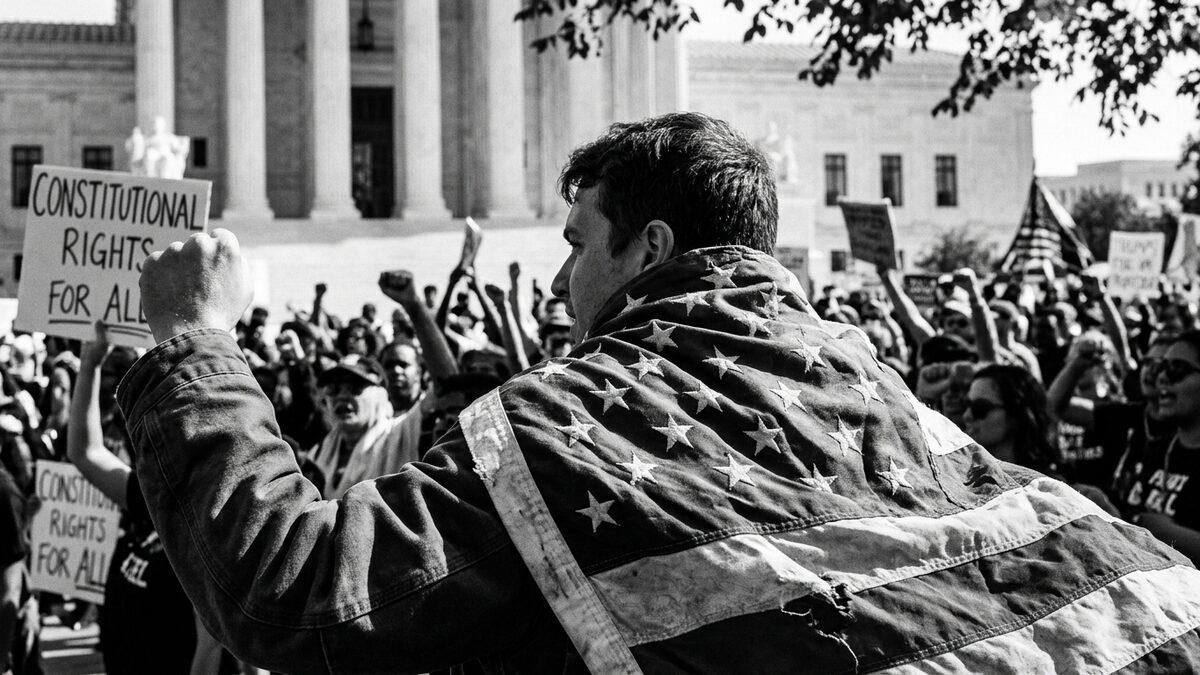
The American flag, long emblematic of national unity and constitutional principles, occupies a unique space where patriotism and protest intersect. Its use in political demonstrations raises profound questions about the limits of free expression and the symbolism of national identity. Examining the Supreme Court’s evolving decisions reveals the delicate balance between safeguarding respect for the flag and upholding citizens’ rights to dissent, inviting a deeper exploration of this enduring constitutional dialogue.
Key Takeaways
- The American flag symbolizes national identity but also serves as a platform for political protest.
- Flag desecration is recognized by the Supreme Court as symbolic speech protected under the First Amendment.
- The 1989 ruling in Texas v. Johnson set a precedent affirming the constitutional protection of flag burning as expressive conduct.
- Supreme Court rulings balance respect for the flag with the protection of free expression and dissent.
Since the dawn of the Republic, the American flag has served as a potent emblem of national identity, unity, and the ideals enshrined in the Constitution. From its first unfurling during the Revolutionary War to its prominent display in moments of national triumph and tragedy, the flag has embodied both collective pride and contested meanings. Over time, it has also become a focal point in political protests, where its use challenges and redefines the boundaries of free expression. The Supreme Court’s evolving jurisprudence on flag-related speech reflects this tension, balancing respect for a revered national symbol with the constitutional protection of dissent.
Core Constitutional Rule on Flag Desecration
The American flag’s status as a symbol of national unity does not render it immune from acts of protest under the First Amendment. Central to the constitutional framework governing flag-related expression is the Supreme Court’s recognition that flag desecration can constitute symbolic speech deserving of protection. In particular, the landmark 1989 decision in Texas v. Johnson firmly established that burning the flag, when conducted as expressive conduct, falls within the ambit of constitutionally protected speech. The Court, in a narrow 5–4 ruling, rejected the argument that the government’s interest in preserving the flag’s symbolic value justified criminalizing such conduct. This principle significantly curtailed the state’s ability to prosecute flag desecration when it serves as a form of political expression, emphasizing the primacy of free speech over symbolic reverence.
The American flag’s status as a symbol of national unity does not render it immune from acts of protest under the First Amendment.
Spence v. Washington and Early Recognition of Symbolic Speech
Before Texas v. Johnson, the Supreme Court had already laid important groundwork in recognizing the flag as a medium for political expression. In the 1974 case Spence v. Washington, the Court protected a student’s display of an American flag hung upside down with a peace symbol affixed. This act, though controversial, was deemed expressive conduct rather than mere misconduct. The ruling underscored the principle that the political context and the intended message behind flag display are critical in determining First Amendment protection. Spence expanded the boundaries of permissible symbolic speech by affirming that the flag can be used in protest to communicate dissenting views. This case is widely regarded as a precursor to the broader protections later articulated in Texas v. Johnson, establishing that the expressive content of flag-related acts is a decisive factor in constitutional analysis.
Texas v. Johnson: Defining the Limits of Protest and Patriotism
The 1989 decision in Texas v. Johnson (491 U.S. 397) stands as the definitive Supreme Court ruling on the intersection of the American flag in political protests and constitutional free speech rights. Authored by Justice William Brennan, Jr., the majority opinion invalidated a Texas statute that criminalized flag desecration, holding that the First Amendment protects expressive conduct that may be offensive or disagreeable to many. The Court emphasized that the government cannot prohibit expression simply because it is disrespectful or challenges prevailing patriotic sentiment. This ruling sparked intense public debate over the boundaries of protest and the symbolic meaning of the flag, ultimately reaffirming that the Constitution safeguards even those acts that insult revered national symbols. The decision remains a cornerstone in constitutional law, illustrating the tension between patriotism and the right to dissent.