
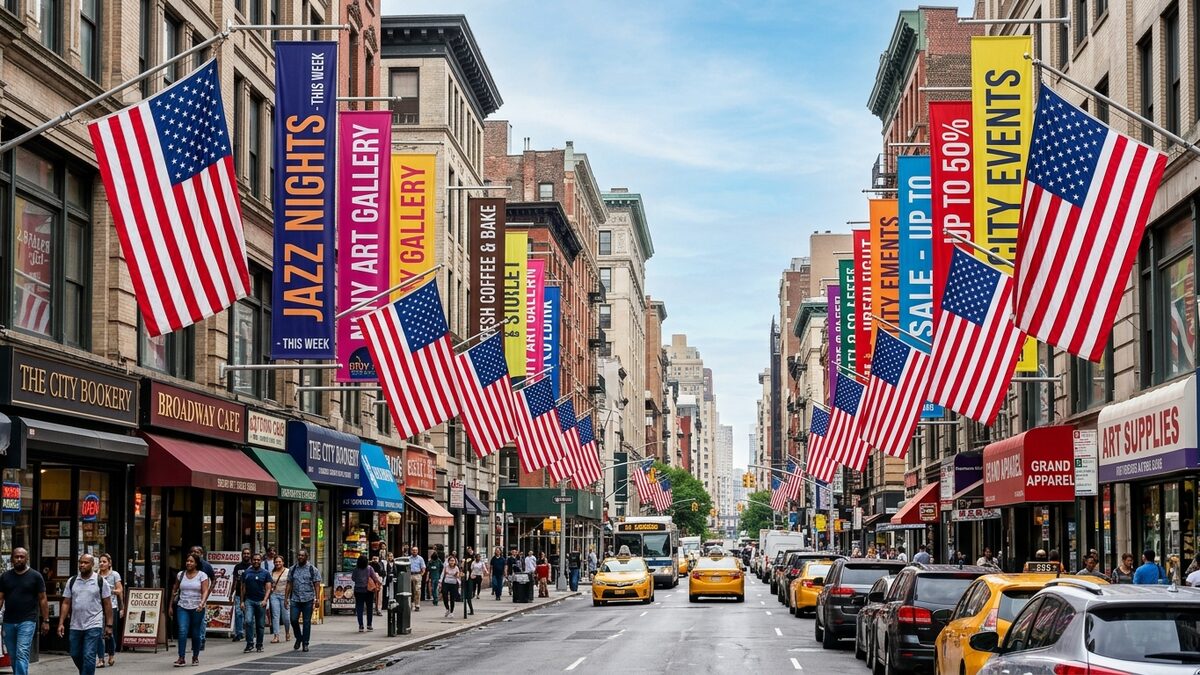
The United States Flag Code establishes important standards governing the use of the American flag, particularly in the realm of advertising. Although lacking criminal penalties, these guidelines emphasize respect and dignity, explicitly restricting the flag’s commercial exploitation under 4 U.S.C. § 8(i). This article explores the delicate balance advertisers must strike between leveraging patriotic imagery and adhering to legal and ethical boundaries, raising critical questions about the flag’s role in marketing practices.
Key Takeaways
- The U.S. Flag Code prohibits the use of the American flag for advertising purposes.
- The Flag Code aims to preserve the dignity of the flag by preventing its commercial exploitation.
- The law restricts the flag's use on disposable items like cushions and napkins meant for temporary use.
- Although the Flag Code lacks criminal penalties, it provides important guidelines for respectful flag usage.
Is it appropriate to incorporate national flags in commercial advertisements without restriction, or does the law impose boundaries on such usage? The United States Flag Code provides specific guidelines governing the display and use of the American flag, including its representation in advertising. While the Code does not carry criminal penalties, it establishes a framework intended to preserve the flag’s dignity and prevent its misuse for commercial gain. Understanding these regulations is essential for advertisers seeking to navigate the intersection of patriotic symbolism and marketing practices.
Core Rule Against Advertising Use
The Flag Code, codified at 4 U.S.C. § 8(i), explicitly states that the American flag “should never be used for advertising purposes in any manner whatsoever.” This provision underscores a fundamental principle designed to maintain the flag’s dignity by preventing its exploitation in commercial contexts. The Code further prohibits the use of the flag on disposable items such as cushions, handkerchiefs, napkins, and boxes when these objects are intended for temporary use and disposal. Such restrictions aim to avoid any association of the flag with transient or trivial products.
The Flag Code, codified at 4 U.S.C. § 8(i), explicitly states that the American flag “should never be used for advertising purposes in any manner whatsoever.”
Beyond the statutory language, authoritative institutions reinforce this interpretation. The National Museum of American History highlights that the rule encompasses uses that might be perceived as disrespectful, including the flag’s incorporation into advertising campaigns and decorative elements on clothing or merchandise. The American Legion’s flag guidance mirrors these prohibitions, consistently advocating for respectful treatment of the flag and discouraging its commercialization. Together, these perspectives form the foundation of the Flag Code regulations on flag use in advertising.
Statutory Prohibition in 4 U.S.C. § 3
Section 4 U.S.C. § 3 specifically addresses the use of the American flag for advertising and prohibits the placement of any word, figure, mark, picture, design, drawing, or advertisement on the flag when it is exhibited or displayed within the District of Columbia. This statute also forbids exposing a flag to public view if it bears such markings, whether attached, printed, painted, or otherwise applied. The legal framework extends to merchandise and containers bearing representations of the flag when these are used to advertise, draw attention to, decorate, mark, or distinguish the items.
Historically, violations of this statutory provision carried criminal penalties, including fines up to $100, imprisonment for up to 30 days, or both. Although enforcement has been rare and the statute’s applicability limited geographically, this prohibition reflects a legislative intent to protect the flag from commercial exploitation and unauthorized alteration, particularly within the nation’s capital.
Geographic Scope and Legal Limits
The criminal prohibition set forth in 4 U.S.C. § 3 explicitly applies only “within the District of Columbia,” limiting its enforceability to that jurisdiction. This geographic constraint contrasts with the broader etiquette-based rule in § 8(i), which advocates that the flag should never be used for advertising in any manner whatsoever, without territorial limitation. The Flag Code itself does not impose criminal penalties for violations outside the District of Columbia, relying primarily on voluntary compliance and public respect.
Legal scholarship and congressional research have noted that courts have yet to directly resolve whether the use of the U.S. flag in advertising constitutes protected commercial speech under the First Amendment. This unresolved question highlights the complexity of balancing flag protection with constitutional free speech guarantees. Nonetheless, the Congressional Research Service and other official sources emphasize the Flag Code’s role as a guide to respectful flag use rather than a strict legal prohibition, thereby informing advertisers of the ethical and cultural considerations involved.