
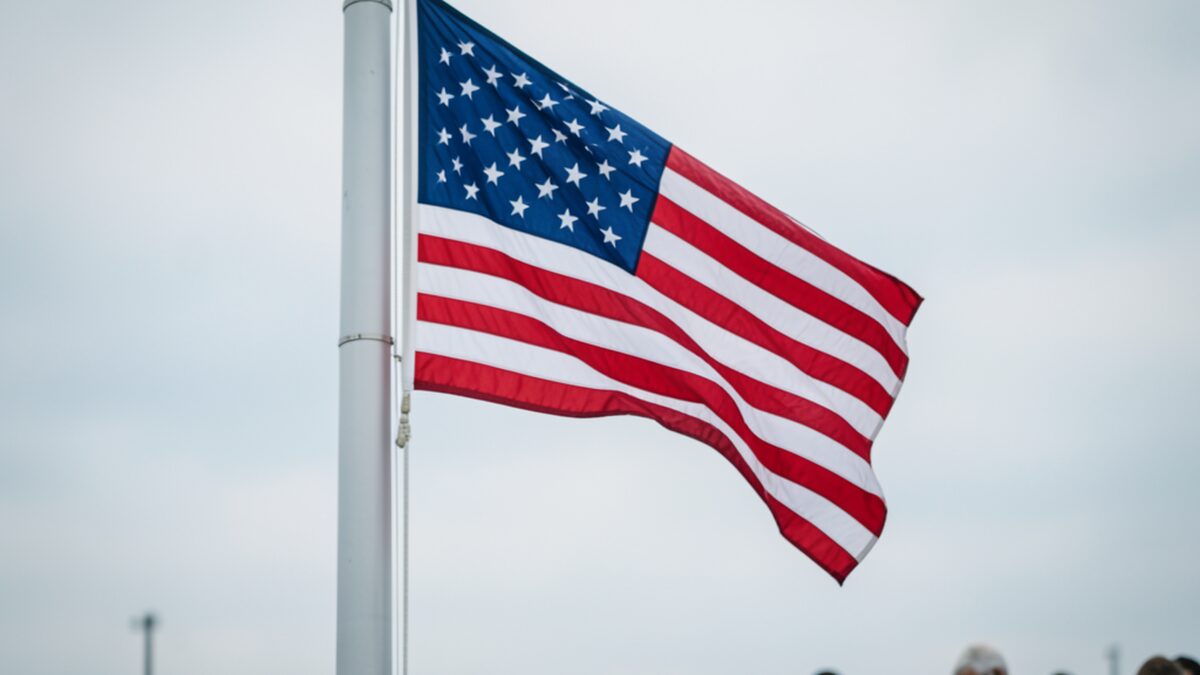
The United States Flag Code establishes clear protocols for flying the flag at half-staff, signifying national mourning and respect. These provisions outline specific occasions, timing, and methods to ensure the flag’s dignified display during moments of collective grief. Exploring these guidelines reveals the legal and symbolic framework that upholds the flag’s role as a powerful emblem of unity and remembrance.
Key Takeaways
- The US Flag Code mandates flying the flag at half-staff as a sign of mourning and respect.
- U.S.C. § 7 is the primary legal authority governing half-staff flag display on federal properties.
- The statute applies to federal buildings, grounds, and naval vessels in the US and its territories.
- The Flag Code ensures uniform standards for the flag’s display during periods of national sorrow.
“The flag, when flown at half-staff, is a solemn signal of mourning and respect.” This directive, rooted in the United States Flag Code, encapsulates the symbolic gravity assigned to the flag’s position during periods of national sorrow. The Code provides precise instructions concerning the occasions, duration, and manner in which the flag should be displayed at half-staff, reflecting the nation’s collective expression of grief and honor. Understanding these key provisions is essential for ensuring proper observance and maintaining the dignity of the flag as a national emblem.
Statutory Source and Scope
The primary legal authority governing the display of the United States flag at half-staff is found in 4 U.S.C. § 7, titled “Position and manner of display.” This provision is part of the U.S. Flag Code, which establishes uniform standards for the flag’s display on federal property. The statute applies explicitly to the flag on federal buildings, grounds, and naval vessels located within the District of Columbia, throughout the United States, and in U.S. territories and possessions. It is important to note that this statute functions as a federal display standard rather than a criminal statute, thereby setting forth guidelines rather than punitive measures.
“The flag, when flown at half-staff, is a solemn signal of mourning and respect.”
Secondary sources and official guidance materials consistently reference 4 U.S.C. § 7 as the operative national rule for half-staff display. These include documents issued by veterans’ organizations, federal agencies, and state authorities that align their protocols with the Flag Code’s statutory language. Consequently, the Flag Code provisions on half-staff display serve as the definitive reference for proper flag etiquette in official federal contexts.
Basic Meaning of Half-Staff and How to Raise It
The term “half-staff” denotes the position of the flag when it is lowered to one-half the distance between the top and bottom of the flagstaff. This positioning symbolizes mourning and respect in accordance with established flag etiquette. The Flag Code mandates a specific procedure for raising and lowering the flag to and from half-staff. The flag must first be hoisted briskly to the peak of the staff, held momentarily at the top, and then lowered slowly to the half-staff position.
At the conclusion of the day’s display, the flag is to be raised again to the peak before being fully lowered. This sequence ensures that the flag’s dignity is preserved throughout the ceremony of lowering and raising. This protocol is reiterated across various authoritative sources, including Texas A&M’s official flag etiquette guidance and veterans’ organizations such as the Veterans Affairs and Veterans of Foreign Wars, underscoring its universal acceptance as the proper method for half-staff display.
Mandatory Federal Half-Staff Periods for Top Officials
The U.S. Flag Code specifies mandatory durations for which the flag must be flown at half-staff following the death of certain high-ranking officials. The flag is required to be displayed at half-staff for thirty days upon the death of the sitting President or any former President. This extended period reflects the profound national mourning accorded to the highest officeholders.
For the Vice President, Chief Justice of the United States, retired Chief Justice, and Speaker of the House of Representatives, the flag must be flown at half-staff for ten days. In contrast, for Associate Justices of the Supreme Court, Secretaries of executive or military departments, former Vice Presidents, and Governors of states, territories, or possessions, the flag is to be displayed at half-staff from the day of death until the day of interment. These graduated periods of half-staff display express the varying degrees of honor and respect accorded to officials based on their roles and service to the nation.