
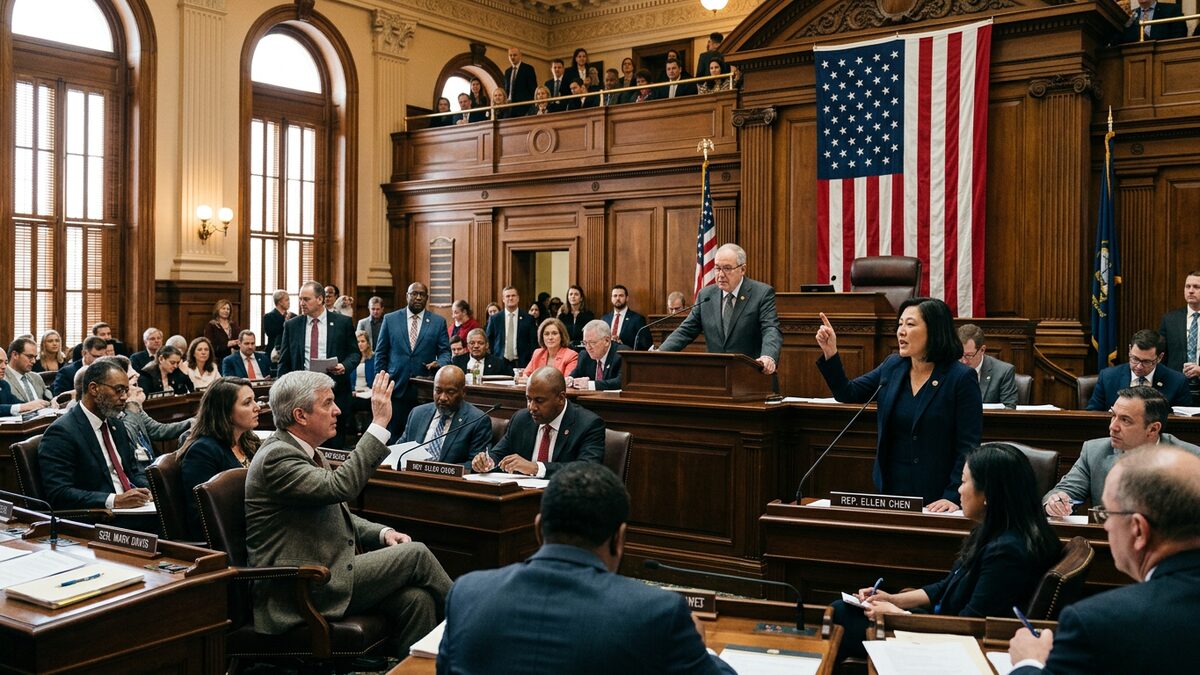
The legislative battles surrounding flag desecration laws in the United States reflect a complex interplay between national identity and constitutional rights. Originating during World War I, these statutes have evolved amid shifting social and political landscapes, particularly during the civil rights movement. The ongoing tension between safeguarding symbolic expression and asserting governmental authority has prompted landmark Supreme Court decisions, making this issue a persistent and provocative element of American legal discourse.
Key Takeaways
- The origins of flag desecration laws date back to World War I, driven by nationalism.
- The 1968 Federal Flag Desecration Law targeted flag burning during Vietnam War protests.
- Legislative efforts around flag desecration reflect tensions between free expression and government authority.
- Supreme Court rulings have played a key role in defining the limits of flag desecration laws.
The debate over flag desecration laws in the United States traces its roots to the early 20th century, a period marked by heightened nationalism during World War I when the first statutes criminalizing the defilement of the American flag were enacted. These initial laws, aimed at preserving national unity and patriotism, laid the groundwork for a contentious legal and political battleground that would intensify during the civil rights era and beyond. Over the decades, legislative efforts to regulate flag desecration have reflected broader tensions between symbolic expression and governmental authority, culminating in a series of Supreme Court decisions that continue to shape the contours of this polarizing issue.
Early Federal Anti-Desecration Laws
The first significant federal effort to criminalize flag desecration emerged in 1968 amid widespread protests against the Vietnam War, many of which included acts of burning or defiling the American flag. Congress responded by enacting the Federal Flag Desecration Law, which specifically prohibited knowingly showing “contempt” for the flag through acts such as mutilation, defacement, defiling, burning, or trampling. This statute, codified later in 18 U.S.C. § 700, represented a federal attempt to standardize flag protection laws across states, replacing what had been a patchwork of inconsistent state statutes.
Over the decades, legislative efforts to regulate flag desecration have reflected broader tensions between symbolic expression and governmental authority, culminating in a series of Supreme Court decisions that continue to shape the contours of this polarizing issue.
These early measures reflected Congress’s view of the flag as a uniquely sacred national symbol warranting special legal protection. The law’s emphasis on preventing contemptuous treatment of the flag highlighted the symbolic importance attributed to the flag in maintaining national unity and patriotism during a turbulent period in American history. However, despite its passage, the statute’s enforceability would eventually be challenged on constitutional grounds, setting the stage for future legal battles.
Supreme Court Rulings That Triggered Legislative Backlash
The legislative battles over flag desecration laws took a decisive turn with the Supreme Court’s rulings in the late 1980s. In Texas v. Johnson (1989), the Court ruled 5–4 that flag burning constituted expressive conduct protected by the First Amendment. This landmark decision invalidated Texas’s flag-desecration statute and established a precedent that symbolic speech, even when offensive to many, is constitutionally safeguarded.
Congress attempted to counter this ruling with the Flag Protection Act of 1989, but in United States v. Eichman (1990), the Supreme Court again ruled 5–4 that the federal statute was unconstitutional. These decisions collectively rendered existing flag-desecration bans unenforceable at the federal level and curtailed states’ abilities to prosecute such acts without violating constitutional speech protections. The rulings shifted the debate from statutory lawmaking to efforts focused on amending the Constitution to explicitly prohibit flag desecration, illustrating the deep polarization surrounding the issue.
The Flag Protection Act of 1989
In direct response to the Texas v. Johnson decision, Congress enacted the Flag Protection Act of 1989. This legislation sought to impose a nationwide ban on flag desecration while permitting the proper disposal of worn or soiled flags, aiming to address concerns about protecting the flag’s dignity without infringing on constitutionally protected expression. Lawmakers attempted to craft the statute as content-neutral by removing language that criminalized acts likely to “offend,” focusing instead on flag mutilation and destruction regardless of the message conveyed.
Despite these efforts to refine the law, the Supreme Court struck down the Flag Protection Act in United States v. Eichman less than a year after its passage. The ruling reaffirmed the primacy of First Amendment protections over legislative attempts to prohibit flag desecration through statutory means. Following Eichman, Congress found itself without a viable legislative mechanism to ban flag desecration absent a constitutional amendment, plunging the issue into a prolonged constitutional and political struggle that continues to influence American discourse on free speech and national symbols.