
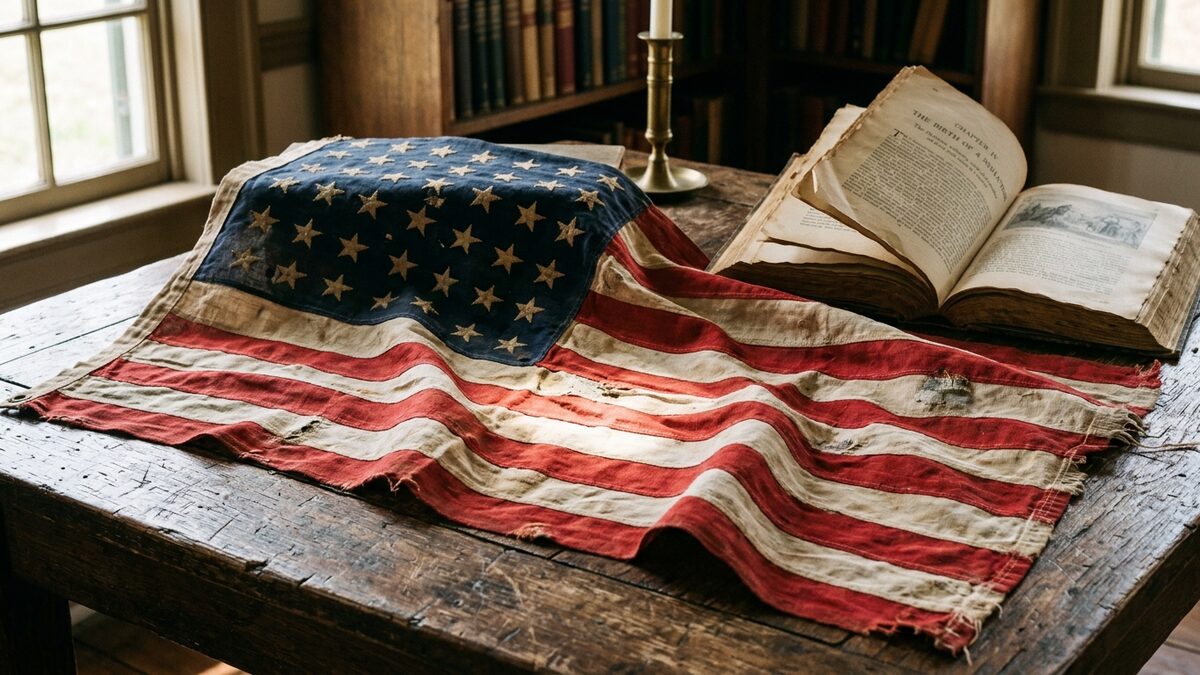
The 13 stripes on the American flag hold profound historical significance, embodying the unity and resilience of the original colonies that forged a new nation. Rooted in the Flag Resolution of 1777, these stripes are more than mere design elements—they represent the collective struggle and enduring spirit that shaped the United States. Exploring their origin reveals a deeper understanding of how symbolism reinforces national identity.
Key Takeaways
- The 13 stripes on the American flag represent the original thirteen colonies that declared independence in 1776.
- The design was officially established by the Flag Resolution of June 14, 1777.
- The alternating red and white stripes symbolize unity, resilience, and shared purpose among the colonies.
- The stripes serve as enduring symbols of the United States’ foundational moment and collective identity.
The 13 stripes on the American flag trace their origins to the Revolutionary War era, symbolizing the original thirteen colonies that declared independence from British rule in 1776. This emblematic design was first codified in the Flag Resolution of June 14, 1777, by the Continental Congress, seeking to unify the fledgling nation under a common banner. The alternating red and white stripes represented not only the unity of these colonies but also the resilience and shared purpose that fueled the struggle for sovereignty. This historical reference anchors the stripes as enduring symbols of the United States’ foundational moment and its collective identity.
The 13 Stripes Represent the Original Colonies
The 13 stripes on the American flag distinctly symbolize the original thirteen British colonies that declared independence and formed the United States in 1776. These colonies—Delaware, Pennsylvania, New Jersey, Georgia, Connecticut, Massachusetts, Maryland, South Carolina, New Hampshire, Virginia, New York, North Carolina, and Rhode Island—were the political and cultural foundations of the new nation. Official sources such as USA.gov emphasize that the alternating red and white stripes represent these colonies, underscoring their collective role in the nation’s creation.
The alternating red and white stripes represented not only the unity of these colonies but also the resilience and shared purpose that fueled the struggle for sovereignty.
Encyclopedia Britannica and the U.S. Embassy in the United Kingdom corroborate this interpretation, noting that the stripes honor the colonies’ victory over British rule during the American Revolutionary War. Thus, the stripes serve not only as a historical record but also as a symbol of unity and shared purpose among the founding entities of the United States.
Official Adoption of the 13‑Stripe Design
The official adoption of the 13-stripe design occurred on June 14, 1777, when the Second Continental Congress passed the Flag Resolution. This resolution mandated that the flag consist of “thirteen stripes, alternate red and white,” alongside a blue canton displaying 13 white stars. These elements were intended to visually unify the colonies under a single emblem during the ongoing Revolutionary War. Historical records from the National Archives and USA.gov affirm June 14 as the formal date of this adoption, which later became known as Flag Day.
This resolution was significant because it established the flag as a symbol of the new nation’s sovereignty and collective identity during a time of conflict and uncertainty. The alternating stripes and stars represented both the individual colonies and their unity, reflecting the importance of cooperation among the states in the struggle for independence.
Legal Fixing of the 13‑Stripe Number
While the number of stars on the American flag has changed to reflect the admission of new states, the Flag Act of 1818 legally fixed the number of stripes at thirteen. Passed by Congress in April 1818, this act preserved the 13 stripes to honor the original colonies, ensuring continuity and respect for the nation’s origins. The number of stars, however, would vary according to the number of states in the Union, allowing the flag to evolve without losing its foundational symbolism.
The U.S. Embassy and other official sources highlight that this legislative decision balanced the need for a dynamic representation of the growing nation with the preservation of its historical roots. By maintaining the 13 stripes, the flag continues to serve as a visual reminder of the United States’ origin and the enduring meaning of its foundational thirteen colonies.