The protocol for folding the American flag is more than a ceremonial act; it encapsulates a rich history of honor and patriotism dating back to World War I. This tradition, formalized by the U.S. Armed Forces, transforms each fold into a meaningful gesture that connects contemporary practices with deep-rooted national values. Exploring this ritual reveals how symbolism and tradition intertwine to uphold a century-long legacy of respect and remembrance.
Key Takeaways
- The American flag folding tradition originated from early 20th-century military ceremonies.
- Each fold in the flag folding process symbolizes core American values and sacrifices.
- The flag is folded lengthwise twice before being folded into a series of triangles.
- The procedure emphasizes treating the flag with dignity and preventing it from touching the ground.
The tradition of folding the American flag traces its origins to military ceremonies of the early 20th century, where precise gestures underscored respect and solemnity. Rooted in practices established during World War I and formalized by the United States Armed Forces, the flag folding protocol evolved into a ritual imbued with symbolism reflecting the nation’s values and sacrifices. Each fold carries historical resonance, connecting present-day observances to a legacy of honor, patriotism, and remembrance that has defined American civic and military culture for over a century.
Standard Physical Procedure for Folding the American Flag
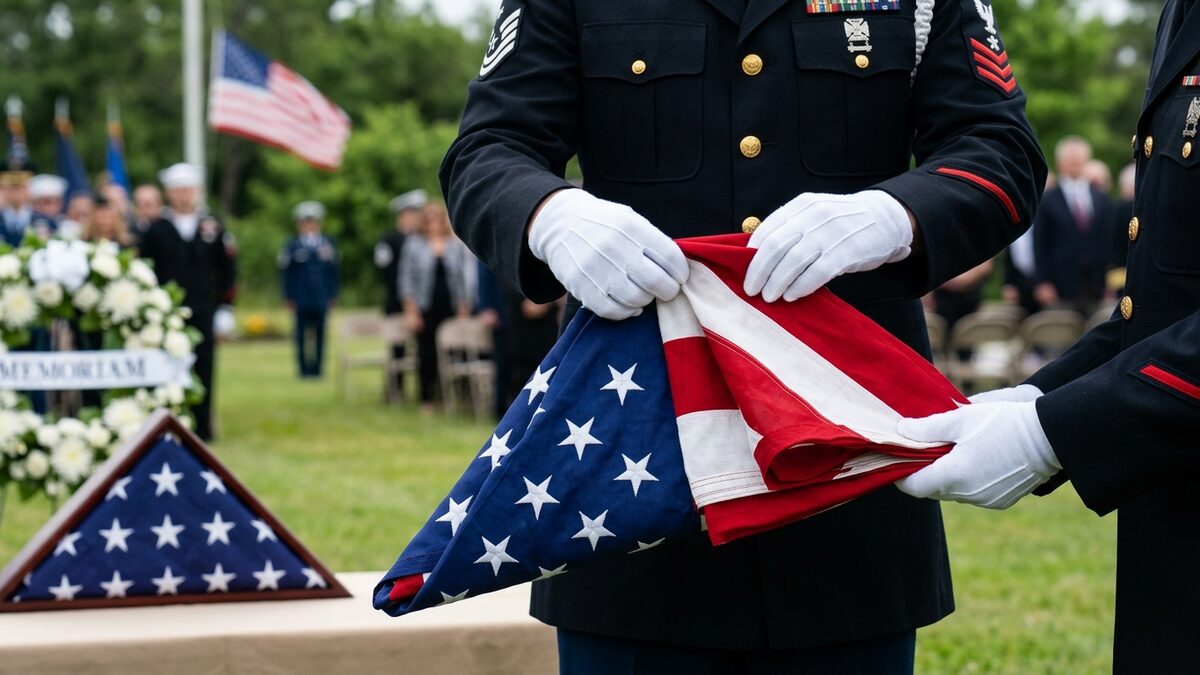
The protocol for folding the American flag involves a careful, methodical sequence designed to ensure the flag is treated with dignity and respect. Traditionally, the flag is first held taut by two individuals, then folded lengthwise twice to create a long, narrow rectangle. Subsequently, the flag undergoes a series of triangular folds, each one bringing the flag closer to its final compact form. This process requires precision to prevent the flag from touching the ground, reflecting the reverence accorded to the national symbol. The final folded flag resembles a triangle, symbolizing the tricorne hats worn by soldiers during the American Revolutionary War, linking the physical procedure to historical military traditions.
Each fold carries historical resonance, connecting present-day observances to a legacy of honor, patriotism, and remembrance that has defined American civic and military culture for over a century.
Personnel and Handling Requirements in Flag Folding
The protocol for folding the American flag typically involves at least two individuals, often members of the military or veterans, trained in the precise handling techniques required. Proper etiquette dictates that the flag be carried and folded with clean hands and a respectful demeanor throughout the ceremony. The flag should never be allowed to touch the ground or any surface other than the hands of those folding it. In formal settings, such as military funerals or official ceremonies, the folding is conducted with solemnity and synchronized movements, emphasizing collective honor. This procedural discipline underscores the flag’s role as a powerful emblem of national unity and sacrifice.
Symbolism Embedded in the 13 Folds
The protocol for folding the American flag is deeply symbolic, particularly in the tradition of performing thirteen folds. Each fold is said to represent a specific principle or historical reference tied to American heritage and values. Common interpretations link the thirteen folds to the original thirteen colonies, the unity of the nation, and ideals such as life, liberty, and honor. While the U.S. military has not officially codified the symbolic meanings of each fold, these interpretations persist in veteran and civic communities, providing a narrative that enhances the flag folding ceremony’s emotional and cultural significance. This layering of symbolism bridges the physical act of folding with broader themes of patriotism and remembrance.