
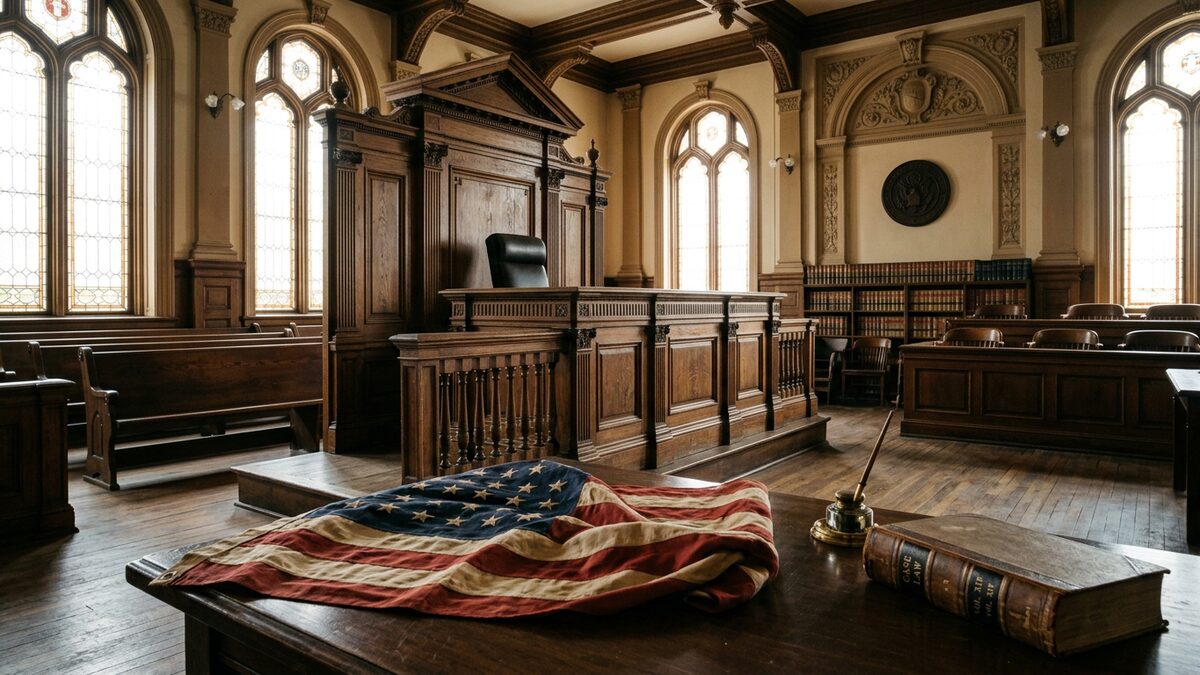
The complex interplay between patriotism and free speech has shaped the legal landscape surrounding flag desecration in the United States for over a century. Originating from wartime efforts to protect national symbols, flag desecration laws have repeatedly confronted constitutional scrutiny. Supreme Court decisions have played a pivotal role in defining the limits of symbolic expression, revealing enduring tensions between protecting national identity and upholding individual rights. This history invites reflection on the evolving meaning of free speech in American democracy.
Key Takeaways
- Flag desecration laws originated in the early 20th century to protect the flag from disrespect.
- Supreme Court rulings have played a critical role in defining the limits of flag-related free expression.
- The 1931 case Stromberg v. California was a landmark decision for flag symbolism under the First Amendment.
- The legal debate over flag desecration reflects ongoing tensions between patriotism and constitutional rights.
Since the early 20th century, the American flag has served not only as a symbol of national identity but also as a focal point for legal and cultural conflicts surrounding free expression. The evolution of flag desecration laws reflects broader tensions between patriotism and constitutional rights, tracing back to World War I-era statutes that sought to criminalize acts deemed disrespectful to the flag. These laws eventually prompted pivotal Supreme Court decisions, beginning with Stromberg v. California (1931), which laid the groundwork for interpreting flag-related conduct under the First Amendment. This historical trajectory reveals how the judiciary has grappled with balancing symbolic speech against government interests, shaping the ongoing debate over the limits of free expression in the United States.
Early State Regulation and the First Supreme Court Case
The inception of flag desecration laws in the United States can be traced to the late 19th and early 20th centuries, initially targeting the commercial exploitation of the American flag rather than political dissent. Early statutes were primarily concerned with prohibiting the use of flag imagery in advertising, reflecting a societal interest in preserving the flag’s symbolic sanctity from perceived commercial degradation. By the early 1900s, a majority of states had enacted laws restricting the misuse of the flag, exercising their police power to regulate conduct involving national symbols.
The evolution of flag desecration laws reflects broader tensions between patriotism and constitutional rights, tracing back to World War I-era statutes that sought to criminalize acts deemed disrespectful to the flag.
The first significant Supreme Court engagement with flag desecration occurred in Halter v. Nebraska (1907). The case involved a Nebraska statute that prohibited the use of the flag’s image on beer bottle labels. The Court unanimously upheld the state’s conviction, emphasizing the state’s authority to regulate such usage to maintain respect for the flag. This ruling underscored the judiciary’s early stance that flag protection was a legitimate exercise of state power and did not implicate constitutional free speech concerns as understood at that time. The decision set a precedent that allowed broad state regulation of flag-related conduct well before the development of robust First Amendment jurisprudence in this area.
Expansion of Flag-Protection Laws in the 20th Century
The period surrounding World War I marked an expansion in flag-protection legislation, with many states enacting new laws aimed at safeguarding the flag from acts interpreted as disrespectful or subversive. This legislative trend continued through World War II, when additional statutes emerged, including those mandating flag salutes and regulating the conduct of citizens in the presence of the flag. By the mid-20th century, nearly every state had some form of flag-protection statute on the books, reflecting a national consensus on the symbolic importance of the flag and the perceived need to preserve its dignity.
Over time, the focus of these laws shifted from commercial misuse to the regulation of political dissent and public protest. Flag burning and other acts of symbolic speech became prominent forms of protest, particularly during periods of patriotic mobilization and wartime sensitivity. Enforcement of flag desecration statutes intensified during these eras, as governments sought to suppress acts that challenged national unity or expressed opposition to government policies. This shift highlighted the tension between societal interests in preserving national symbols and the constitutional protections afforded to expressive conduct.
The 1968 Federal Response to Vietnam-Era Protest
The Vietnam War era catalyzed a significant federal legislative response to flag desecration. In 1968, Congress enacted the Federal Flag Desecration Law, also known as the Flag Protection Act of 1968, in direct reaction to the widespread use of flag burning as a form of protest against the war. This statute criminalized the “knowing” casting of “contempt” on the U.S. flag through acts such as mutilation, defacement, defiling, burning, or trampling. The law effectively nationalized an earlier 1947 District of Columbia statute, thereby extending federal jurisdiction over flag desecration offenses.
The 1968 Act imposed penalties including fines and imprisonment for up to one year, reflecting the government’s intent to deter flag desecration as a form of symbolic speech. This legislation set the stage for a series of Supreme Court challenges that would further define the constitutional boundaries of flag protection and free expression. The ensuing judicial scrutiny would test the balance between the government’s interest in preserving the flag’s symbolic value and the First Amendment’s robust protections for expressive conduct, a debate that remains central to the history of flag desecration laws and Supreme Court rulings.