
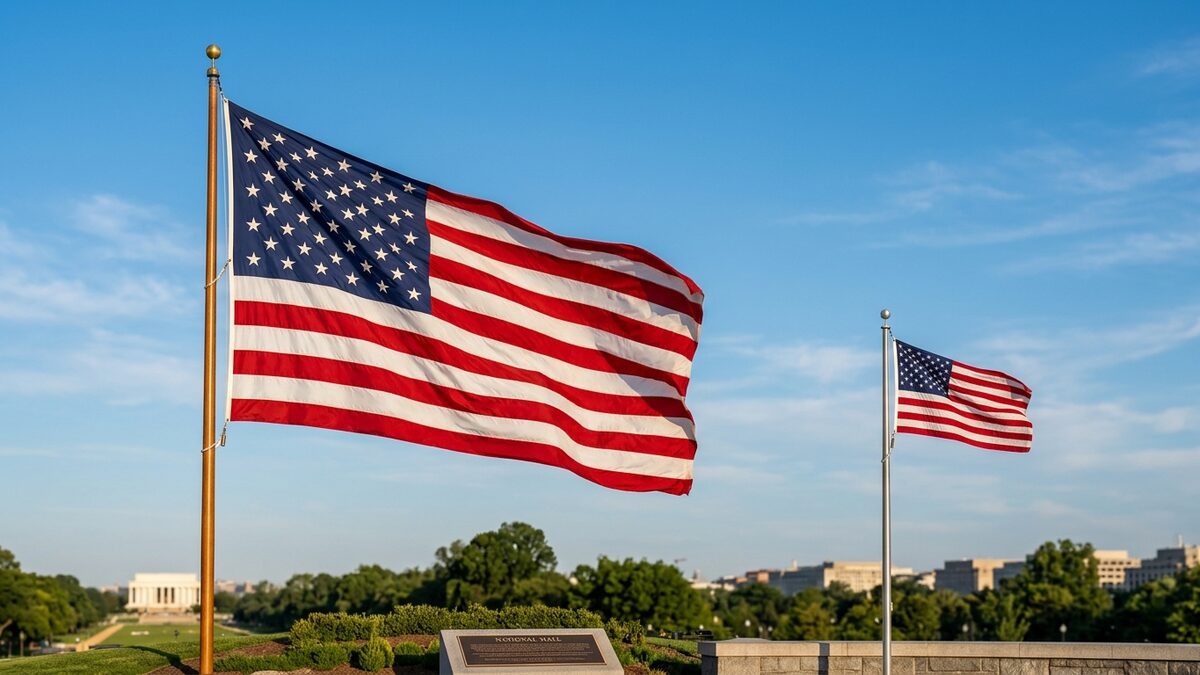
The distinctions between the Garrison Flag and the Post Flag reveal much about their symbolic roles within American military tradition. While both serve as powerful emblems, their differences in size and intended use highlight contrasting functions—from grand ceremonial displays to routine daily presence. Understanding these nuances offers insight into how military customs honor both solemn occasions and ongoing duty. What deeper significance might these flags hold beyond their physical dimensions?
Key Takeaways
- The Garrison Flag is much larger than the Post Flag, measuring 20 by 38 feet compared to about 10 by 19 feet.
- The Garrison Flag is used for significant occasions, while the Post Flag is intended for everyday display.
- The Garrison Flag commands attention with its size and ceremonial role.
- The Post Flag serves as a constant, understated symbol of military presence and duty.
The Garrison Flag and the Post Flag, though both emblematic of American military tradition, diverge sharply in scale and symbolism. The Garrison Flag, imposing and expansive, measures 20 by 38 feet, designed to dominate large open spaces and signal significant occasions. In contrast, the Post Flag is more modest at 10 by 19 feet, intended for daily display at military installations. Where the Garrison Flag commands attention with its sheer size and ceremonial prominence, the Post Flag serves as a constant, understated marker of presence and duty. This juxtaposition underscores the distinct roles each flag plays within the broader framework of military heraldry.
1. Basic Size Difference
The Garrison Flag is significantly larger than the Post Flag, typically measuring 20 feet hoist by 38 feet fly, while the Post Flag commonly measures around 10 by 19 feet or, in some Army references, approximately 8 feet 11 3/8 inches by 17 feet. This size disparity is deliberate, with the Garrison Flag intended to be a dominant visual presence during important events, whereas the Post Flag’s smaller dimensions suit daily display.
Where the Garrison Flag commands attention with its sheer size and ceremonial prominence, the Post Flag serves as a constant, understated marker of presence and duty.
2. Primary Purpose
The Post Flag serves as the standard flag flown on a routine basis at military installations, symbolizing daily operations and presence. In contrast, the Garrison Flag is reserved for ceremonial use on special occasions and major holidays, emphasizing its role as a symbol of heightened significance and honor within military tradition.
3. When Each Flag Is Flown
The Post Flag is displayed on ordinary days and throughout regular daily operations. The Garrison Flag is specifically flown on Sundays, major national holidays, and other significant events as designated by presidential or command authority. In the absence of a Garrison Flag, the Post Flag may be used as a substitute on these special occasions.
4. Official-Size References and Service Variation
While the Army tends to specify the Post Flag size as 8 feet 11 3/8 inches by 17 feet, other branches such as the Marine Corps, Navy, and Coast Guard often use a 10 by 19 foot Post Flag. These variations reflect differing service traditions and guidelines, although the Garrison Flag size remains relatively consistent across branches.
5. Symbolic and Ceremonial Significance
The Garrison Flag’s imposing size conveys a ceremonial prominence, marking occasions of national importance and military pride. The Post Flag, though less grand in scale, symbolizes the ongoing commitment and daily vigilance of military personnel, serving as a steady emblem of duty rather than spectacle.