
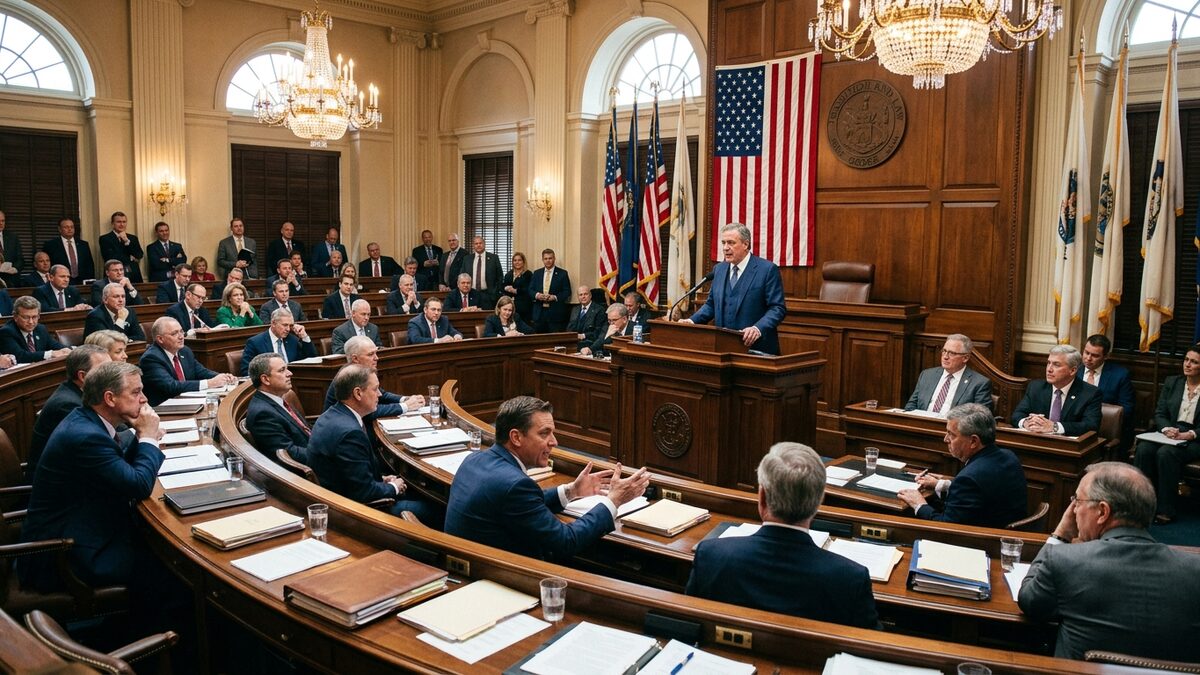
The evolution of US flag protocols reflects a complex interplay between national pride and constitutional rights, shaped by pivotal legislative debates over centuries. From foundational resolutions in the 18th century to contentious laws in the 20th century, these discussions reveal shifting attitudes toward patriotism and civil liberties. Understanding how lawmakers navigated these tensions offers valuable insights into the broader social and political currents that have influenced American identity.
Key Takeaways
- The American flag's protocols have evolved through legislative efforts since its adoption in 1777.
- State-level flag-desecration laws emerged in the early 1900s to protect the flag's sanctity.
- The Flag Code of 1942 established formal guidelines for respectful flag display amid national debates.
- The Flag Protection Act of 1989 highlighted tensions between flag respect and constitutional freedoms.
Since the adoption of the Stars and Stripes in 1777, the American flag has served as a potent symbol of national identity and unity, its display governed by evolving customs and legal standards. From early congressional resolutions establishing basic guidelines for its use, to the contentious debates surrounding the Flag Code of 1942 and the landmark Flag Protection Act of 1989, legislative discussions have repeatedly reflected the nation’s struggle to balance reverence for the flag with constitutional freedoms. These debates, often unfolding amid broader social and political upheavals, have not only defined protocols for respect and display but also illuminated the shifting contours of patriotism and civil rights in the United States.
Early State Laws and the Rise of National Flag-Protection Rules
In the early 20th century, legislative concern over the treatment of the American flag manifested prominently at the state level. By the early 1900s, most U.S. states had enacted flag-desecration laws aimed at preserving the flag’s sanctity, reflecting a widespread consensus about the importance of protecting the national emblem from disrespect. A notable judicial affirmation of such legislative measures occurred in 1907 when the U.S. Supreme Court upheld a Nebraska statute related to the use of the flag in commercial contexts, specifically in a case involving “Stars and Stripes” beer. This decision underscored the judiciary’s willingness to support early state efforts to regulate flag use and set a foundation for later federal actions.
Legislative discussions have repeatedly reflected the nation’s struggle to balance reverence for the flag with constitutional freedoms.
The push for standardized flag protocols culminated with the first National Flag Conference convened on June 14, 1923, in Washington, D.C. This gathering sought to establish civilian guidelines for the flag’s display and treatment, culminating in the publication of the original U.S. Flag Code later that year. The need for uniformity amidst varying state laws was clear, and this early codification laid the groundwork for Congress’s formal adoption of the Flag Code in 1942, which established comprehensive federal guidance on respectful flag use and display.
The U.S. Flag Code as a Protocol, Not a Criminal Ban
The U.S. Flag Code, formally adopted by Congress in 1942, articulates behavioral standards that govern the proper display and treatment of the American flag. Rooted in the symbolic notion that the flag “represents a living country and is itself considered a living thing,” the Code seeks to foster respect through ceremonial and civic observances. It explicitly prohibits certain uses deemed disrespectful, such as employing the flag for advertising purposes or incorporating it into clothing and merchandise, thereby reinforcing its status as a solemn national symbol rather than a commercial emblem.
Importantly, the Flag Code functions as a protocol framework rather than a criminal statute. While it prescribes guidelines for etiquette and respect, it does not impose criminal penalties for violations. This distinction has been pivotal in legislative debates, as the Code balances reverence for the flag with constitutional protections, particularly the First Amendment’s guarantees of free expression. The 1942 congressional adoption of the Flag Code established it as the national reference for flag etiquette, yet left open questions regarding enforcement and legal consequences for desecration.
The 1968 Federal Desecration Law and Vietnam-Era Protests
The social and political turbulence of the Vietnam War era intensified legislative efforts to criminalize flag desecration. In 1968, Congress enacted a nationwide flag-desecration statute, responding to increasing instances of flag burning and other acts viewed as contemptuous. The law made it unlawful to “knowingly” cast “contempt” on the U.S. flag through public mutilation, defacement, defiling, burning, or trampling. This statute, codified at 18 U.S.C. § 700, effectively nationalized an earlier 1947 District of Columbia law and reflected Congress’s determination to safeguard the flag’s symbolic dignity amid widespread protest.
Enacted through Public Law 90–381 on July 5, 1968, the federal desecration law became a focal point of legislative and judicial scrutiny in the decades that followed. It embodied the tension between patriotic reverence and free expression, as efforts to protect the flag clashed with growing recognition of symbolic speech rights. This statute set the stage for landmark Supreme Court cases, most notably Texas v. Johnson in 1989, which would challenge the constitutional limits of flag-protection laws and reshape the legal landscape surrounding the flag’s symbolic treatment.