
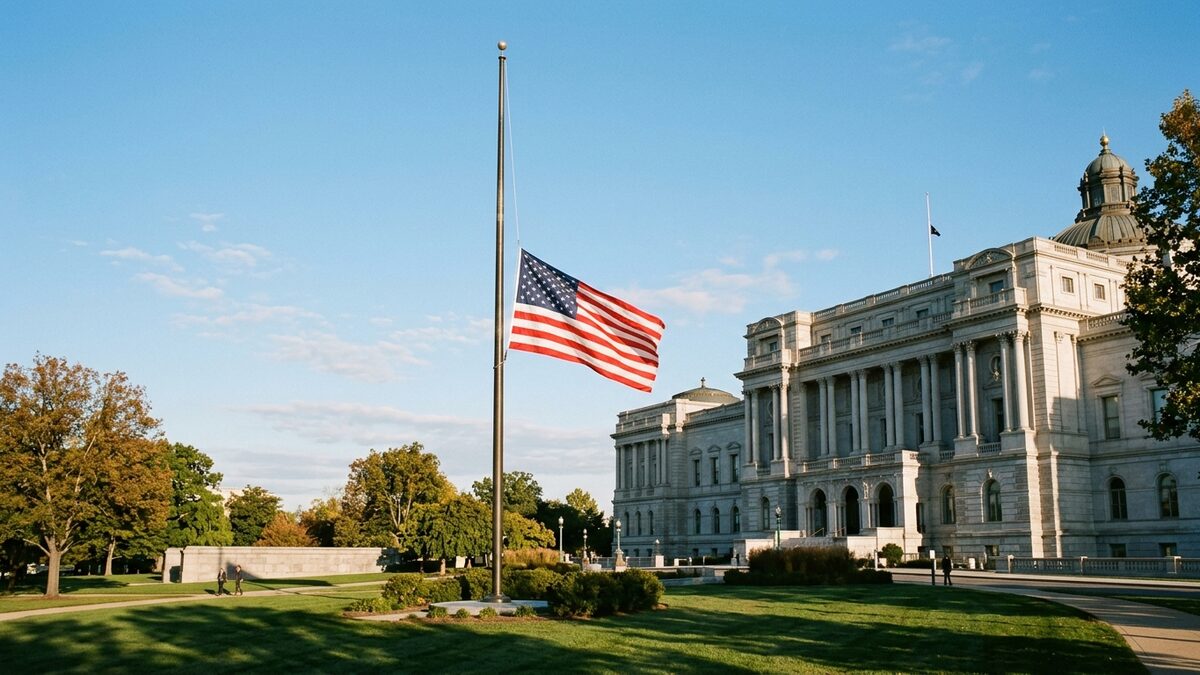
The practice of flying the American flag at half-staff carries deep historical roots and profound symbolic meaning, tracing back to 17th-century naval traditions. Formalized in the 20th century, this gesture serves as a powerful emblem of national mourning and respect. Exploring the specific occasions and reasons behind this protocol reveals much about American values, collective memory, and the ways in which a nation expresses shared grief and honor.
Key Takeaways
- The American flag is flown at half-staff as a symbol of mourning and respect.
- This tradition originates from 17th-century naval practices.
- The Flag Code of 1942 officially established the half-staff protocol in the U.S.
- Flags are lowered to honor fallen officials, military members, and mark tragic events.
The tradition of flying the American flag at half-staff traces back to naval practices in the 17th century, when lowering a ship’s flag halfway down the mast signified mourning or respect for the deceased. In the United States, this custom evolved into a national symbol of collective grief and solemn remembrance, officially codified in the Flag Code of 1942. The flag is lowered to honor fallen government officials, military personnel, and other significant figures, as well as to mark periods of mourning following tragic events, reflecting a deep-rooted cultural expression of respect and unity.
Understanding the Meaning of Half-Staff
In American flag protocol, the term “half-staff” refers to the position of the flag being lowered to a point halfway between the top and bottom of the flagpole or staff. This specific positioning serves as a formal symbol of mourning, respect, or solemn remembrance, distinguishing it from everyday flag displays. The procedure for flying the flag at half-staff is precise: the flag is first raised briskly to the peak of the staff, then lowered ceremoniously to the half-staff position. At the end of the day, before the flag is lowered completely, it is again raised to the peak as a mark of respect. This practice is distinct from the term “half-mast,” which is used for flags on ships; however, in U.S. federal guidelines, “half-staff” is the standard term for flags on land.
The tradition of flying the American flag at half-staff traces back to naval practices in the 17th century, when lowering a ship’s flag halfway down the mast signified mourning or respect for the deceased.
Flying the flag at half-staff is not a decorative or routine practice but a deliberate act of honoring individuals or marking periods of national mourning. It conveys a unified expression of grief and respect across government institutions, military installations, and public spaces.
Authority to Order the Flag at Half-Staff
The authority to direct the American flag to be flown at half-staff rests primarily with the President of the United States. The President’s proclamations can mandate this observance nationwide, applying to federal buildings, military posts, naval stations, and vessels. Furthermore, such presidential orders extend to American embassies, legations, consular offices, and other governmental facilities abroad, underscoring the global reach of this national symbol.
At the state level, governors possess the power to issue proclamations ordering the flag to be flown at half-staff within their respective states. These state-level directives often align with federal observances or respond to local tragedies and notable deaths. This dual system of authority ensures that both national and regional events can be appropriately commemorated through the flag’s display, reinforcing a shared sense of respect and mourning across different jurisdictions.
Half-Staff Protocol Following Deaths of Federal Officials
The American flag is lowered to half-staff to honor significant federal officials who have passed away, with the duration of the observance varying according to the office held. For example, the flag is flown at half-staff for 30 days following the death of a sitting or former President of the United States. This extended period reflects the profound respect accorded to the nation’s highest office. Similarly, the flag is lowered for 10 days after the death of a Vice President, Chief Justice, retired Chief Justice, or Speaker of the House.
Other officials receive varying durations of half-staff observance: from the day of death until interment for Associate Justices of the Supreme Court, Cabinet Secretaries, former Vice Presidents, and state governors; and for the day of death and the following day for Members of Congress. These protocols are codified under federal law, specifically 4 U.S.C. § 7, providing a clear legal framework for honoring public servants through the flag’s display.