
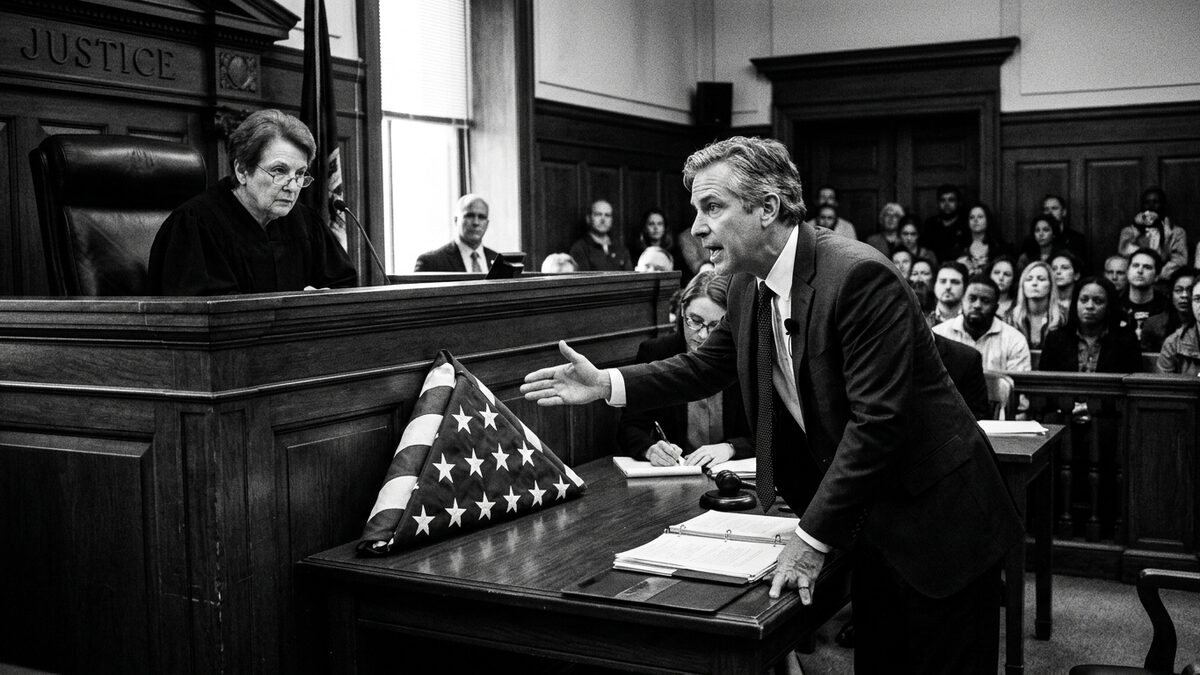
The ongoing legal discourse surrounding flag desecration highlights a profound constitutional dilemma: how to reconcile the flag’s role as a powerful national symbol with the First Amendment’s safeguard of free speech. Supreme Court rulings have consistently grappled with whether acts like burning the flag constitute protected expression, despite their potential to offend. This complex tension invites critical examination of how society navigates respect for patriotic icons alongside unwavering commitment to individual rights.
Key Takeaways
- The legal debate focuses on whether flag desecration is protected speech under the First Amendment.
- The Supreme Court ruled in Texas v. Johnson that flag burning is symbolic speech protected by the Constitution.
- This ruling highlights the conflict between respecting national symbols and protecting free expression.
- The Court emphasized that offensive speech cannot be suppressed solely to preserve the flag's symbolic value.
What constitutional principles govern the act of burning or defacing a national flag, and should such conduct be shielded as a form of protected speech under the First Amendment? This question lies at the heart of a contentious legal debate, pitting the symbolic value of the flag as a unifying national emblem against the fundamental right to free expression. The Supreme Court’s rulings have repeatedly confronted this tension, challenging society to reconcile respect for national symbols with the constitutional guarantee that speech, even if offensive or provocative, remains free from government suppression.
Constitutional Core of the Debate
The pivotal issue in the legal debate over flag desecration centers on whether acts such as burning the American flag constitute expressive conduct protected by the First Amendment. This question was definitively addressed in Texas v. Johnson (1989), where the Supreme Court, in a narrow 5-4 decision, held that flag burning qualifies as symbolic speech deserving constitutional protection. The Court rejected Texas’s contention that the state’s interest in preserving the flag’s symbolic status justified criminal penalties for such expression.
The Supreme Court’s rulings have repeatedly confronted this tension, challenging society to reconcile respect for national symbols with the constitutional guarantee that speech, even if offensive or provocative, remains free from government suppression.
Justice William J. Brennan Jr., writing for the majority, emphasized that political expression must remain free from government suppression even when it involves offensive or provocative conduct. The Court’s ruling shifted the focus away from the flag’s emblematic value toward safeguarding the individual’s right to express dissent. This principle underscores the constitutional commitment to protect speech that challenges or critiques national symbols, reaffirming the supremacy of free expression over governmental efforts to maintain symbolic reverence.
The Texas v. Johnson Case Facts
The facts of Texas v. Johnson provide critical context to the legal analysis. Gregory Lee Johnson burned an American flag outside the 1984 Republican National Convention in Dallas as a protest against President Ronald Reagan’s policies. Texas authorities prosecuted Johnson under a state statute that prohibited desecrating venerated objects, including the flag, when such actions were likely to incite anger or breach the peace.
Johnson’s conviction at the state level was overturned by the Supreme Court, which interpreted his act as expressive political protest rather than mere property damage. The Court’s treatment of flag burning as a form of symbolic speech highlighted the importance of the expressive intent behind the conduct. This distinction was central in framing flag desecration as a form of constitutionally protected speech, rather than criminal vandalism.
Federal Follow-Up: United States v. Eichman (1990)
In response to the Texas v. Johnson decision, Congress enacted the Flag Protection Act of 1989 to criminalize flag desecration at the federal level. However, this legislative effort was promptly challenged, and the Supreme Court reviewed the case in United States v. Eichman (1990). On June 11, 1990, the Court invalidated the federal statute by a 5-4 vote, reaffirming that punitive measures aimed at protecting the flag’s symbolic value are unconstitutional.
Eichman reinforced the precedent set in Johnson, extending its constitutional protections to federal laws regulating flag desecration. The ruling clarified that government cannot suppress expression simply because it disrespects or insults national symbols. Together, these decisions establish a robust legal doctrine recognizing flag burning as symbolic speech, ensuring that the First Amendment shields even controversial forms of political expression from government censorship.