
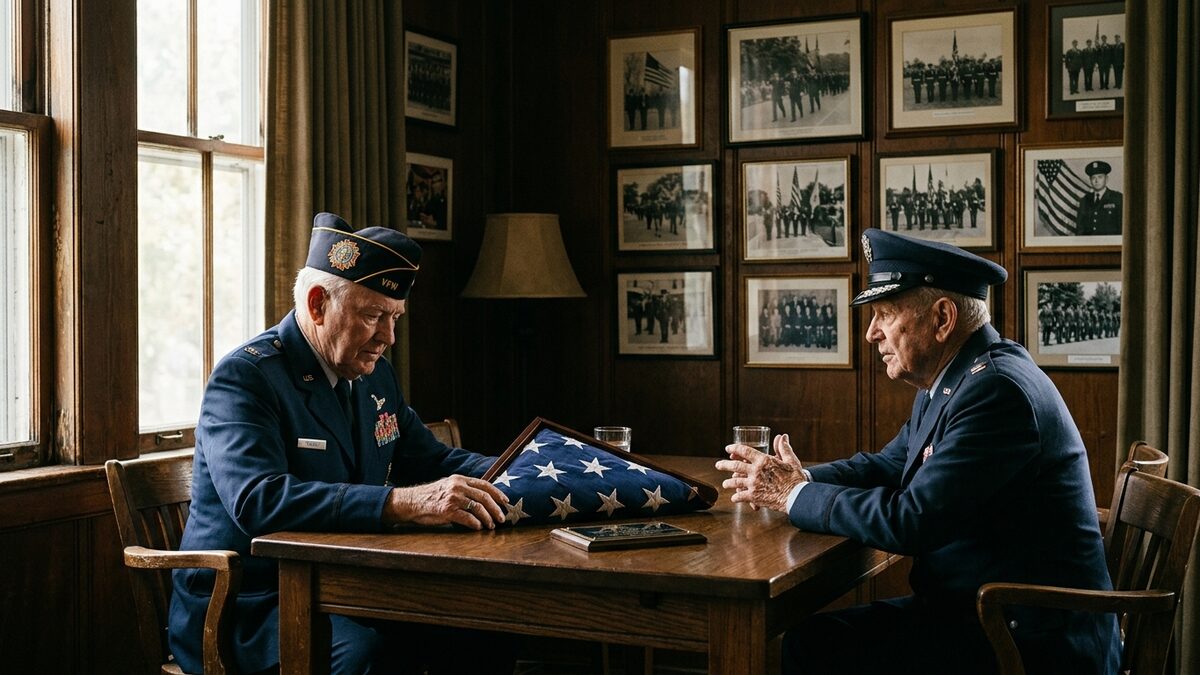
The triangular folding of the American flag, rooted in Revolutionary War practicality, has transformed into a ceremonial practice laden with symbolism. Yet, the specific protocols and meanings attributed to each fold continue to spark debate among historians, veterans, and flag experts. This enduring discourse reflects broader questions about national identity and the evolving ways in which respect for the flag is expressed.
Key Takeaways
- The triangular flag folding originated as a practical method during the Revolutionary War.
- The folding ritual has evolved into a symbolic tradition in military and patriotic ceremonies.
- There is no legally mandated flag folding procedure in the United States Flag Code.
- Debates over folding protocols reflect broader issues of national identity and respect.
The practice of folding the American flag into a triangular shape dates back to military traditions during the Revolutionary War, when soldiers sought practical means to store and transport the banner. Over time, this utilitarian folding evolved into a formalized ritual imbued with symbolic meaning, particularly within military funerals and patriotic ceremonies. However, the protocols governing the precise method and interpretation of each fold have sparked ongoing debate among historians, veterans, and vexillologists, reflecting broader tensions over national identity, respect, and the evolving significance attributed to this enduring emblem.
Official Status of the Folding Ritual
The historical debate over flag folding protocols and symbolism is rooted in the distinction between custom and codified law. The United States Flag Code serves primarily as a guide to etiquette, providing standards for handling and displaying the flag but notably lacking any mandated procedure for folding. The American Legion explicitly clarifies that the Flag Code does not prescribe a singular folding method, underscoring the ritual’s status as a customary practice rather than a legal requirement. Likewise, the National Flag Foundation emphasizes that the triangular fold is a tradition embraced by many but remains unofficial in the eyes of federal regulation.
The practice of folding the American flag into a triangular shape dates back to military traditions during the Revolutionary War, when soldiers sought practical means to store and transport the banner.
Customarily, the flag is folded lengthwise twice before beginning the series of triangular folds. The final folded form is a compact triangle, typically displaying only the blue union—the canton—symbolizing honor and respect. This conventional approach has gained widespread acceptance across military and civic contexts, but it is important to recognize that the absence of a legally mandated standard leaves room for variation and interpretive flexibility within the ritual.
Modern Folding Protocol and Its Execution
The modern protocol for folding the American flag is methodical and precise, reflecting both practical considerations and ceremonial dignity. The procedure begins with two individuals holding the flag waist-high and parallel to the ground. The flag is then folded lengthwise once so that the stripes cover the canton, followed by a second lengthwise fold. This ensures that the flag’s dimensions are halved in a controlled manner before the more intricate triangular folding commences.
The triangular folds start at the striped end, folding the flag into successive triangles toward the blue field. The final step involves tucking the remaining edge into the folds, securing the flag in a neat and compact triangular shape. This method is consistently taught in veteran organizations, military ceremonies, and civic training programs, reinforcing both uniformity and respect. Despite its widespread adoption, the procedural details remain largely traditional rather than legislated, contributing to ongoing discussions about the ritual’s origin and meaning.
The Symbolism of the 13 Folds
A significant and contentious element of the historical debate over flag folding protocols and symbolism concerns the meaning attributed to the thirteen folds. Ceremonial explanations often assign a distinct symbolic significance to each fold, beginning with concepts such as life and eternal life, and extending to honor for veterans, trust in God, and respect for the country. These interpretations attempt to imbue the folding process with layered meaning that resonates with American history and values.
Additionally, some narratives link the final folded shape to the tricorner hat worn by Patriots during the American Revolution, while others associate the thirteen folds with the original thirteen colonies. However, these symbolic attributions are not officially codified and vary among honor guards and organizations. The National Flag Foundation notes that while the symbolic meanings enrich the ritual’s emotional impact, they remain largely informal and subject to regional or organizational differences. This variability underscores the broader debate about how traditions evolve and how symbolism is constructed within national ceremonies.