
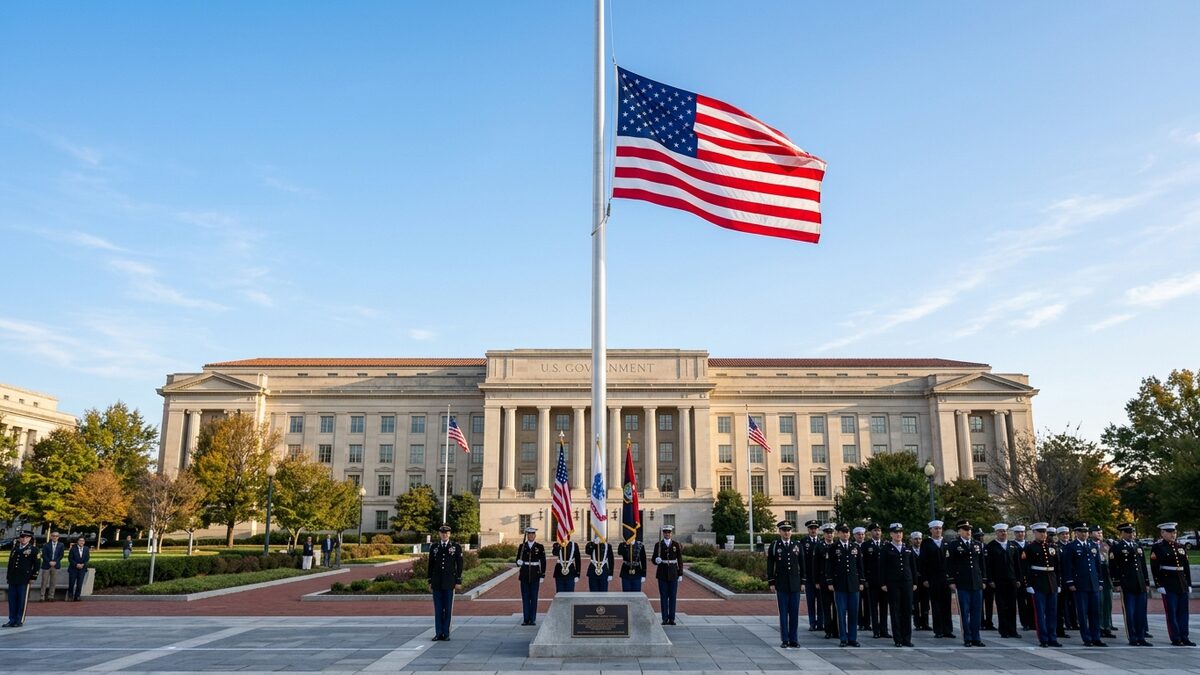
The United States Flag Code, established nearly a century ago, plays a crucial role in maintaining the respectful display of the national flag on federal holidays. Rooted in historic principles from the Continental Congress, these guidelines offer a structured approach to honoring the flag’s symbolism. Understanding how these protocols shape public observance reveals much about the nation’s commitment to unity and respect for its heritage.
Key Takeaways
- The United States Flag Code has guided respectful flag display since 1923.
- It is based on a 1777 resolution establishing the flag as a symbol of national unity.
- The Flag Code mandates uniform and dignified flag display on federal holidays.
- U.S.C. § 6(d) requires the flag to be displayed on all days, emphasizing its constant symbolic presence.
Since its adoption in 1923, the United States Flag Code has served as the authoritative guide for the respectful display of the national flag, particularly on federal holidays. Rooted in a tradition that dates to the Continental Congress’s resolution of June 14, 1777, which established the flag as a symbol of national unity, the Flag Code delineates specific protocols to honor the flag’s significance. These regulations ensure that on designated federal holidays—such as Memorial Day, Independence Day, and Veterans Day—the flag is displayed with uniformity and dignity, reflecting the nation’s reverence for its heritage and ideals.
Core Flag Code Rule Governing Display
The Flag Code Regulation of Flag Display on Federal Holidays is primarily codified in 4 U.S.C. § 6(d), which establishes the framework for when the flag should be exhibited. The statute articulates that the flag “should be displayed on all days,” establishing a general principle favoring continuous display rather than limiting it to specific occasions. This provision emphasizes the flag’s constant symbolic presence in American life. However, the statute further designates certain days on which the flag’s display is especially encouraged, underscoring their elevated national significance.
The statute articulates that the flag “should be displayed on all days,” establishing a general principle favoring continuous display rather than limiting it to specific occasions.
It is critical to note that the language of the Flag Code is advisory rather than mandatory, employing the term “should” instead of imposing a legal obligation. As a result, while the Code serves as the official guidance for proper flag display, it does not carry criminal penalties for noncompliance. This advisory character reflects the Code’s purpose as a standard of respect and decorum rather than enforceable law.
Federal Holidays Explicitly Named in the Flag Code
The Flag Code specifically identifies several federal holidays as priority dates for flag display, reflecting their profound national importance. These include New Year’s Day (January 1), Independence Day (July 4), Veterans Day (November 11), Christmas Day (December 25), and Thanksgiving Day (the fourth Thursday in November). On these dates, the flag’s prominent display is strongly recommended as an expression of patriotism and collective remembrance.
Each of these designated holidays carries distinct historical and cultural significance, and the Flag Code Regulation of Flag Display on Federal Holidays ensures uniform observance across federal properties and encouraged observance nationwide. By highlighting these days, the Code promotes a shared national identity through the consistent and dignified presentation of the flag.
Additional Named Observances and Commemorative Dates
Beyond the core federal holidays, the Flag Code also identifies a series of other observances for flag display. These include Inauguration Day (January 20), Martin Luther King Jr. Day (third Monday in January), Washington’s Birthday (third Monday in February), Labor Day (first Monday in September), Constitution Day (September 17), and Flag Day (June 14). Each of these days is recognized as warranting special attention, underscoring various aspects of American history and civic life.
Moreover, the Code designates additional commemorative dates such as Lincoln’s Birthday (February 12), Armed Forces Day (third Saturday in May), Memorial Day (last Monday in May) with specific half-staff instructions until noon, National Vietnam War Veterans Day (March 29), and National Korean War Veterans Armistice Day (July 27). These designations enhance the comprehensive nature of the Flag Code Regulation of Flag Display on Federal Holidays, ensuring that the flag serves as a unifying symbol on a broad spectrum of occasions that honor military service, foundational principles, and national leaders.