
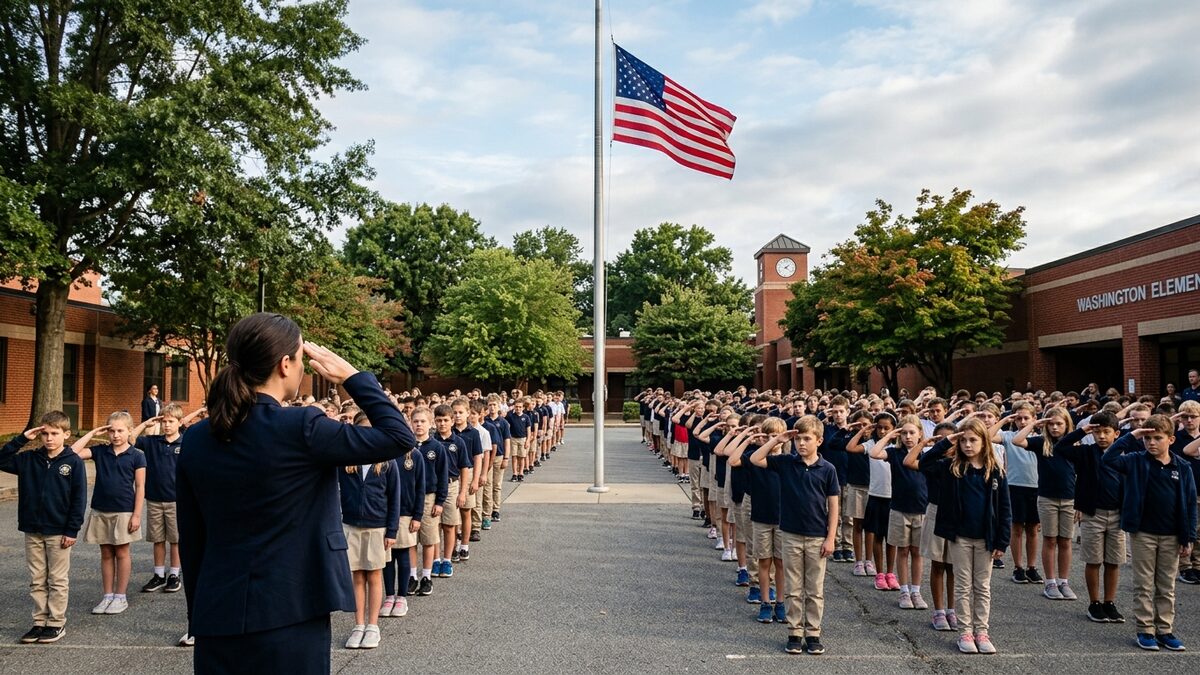
The US Flag Code sets clear standards for how schools should display and handle the national flag, emphasizing respect and patriotism. By outlining specific guidelines, it seeks to create a consistent approach to flag etiquette across educational institutions, preventing misuse or disrespect. Exploring these provisions reveals how schools can foster a culture of national pride while ensuring compliance with federal recommendations.
Key Takeaways
- Schools are advised to display the US flag daily near the main administration building and schoolhouse.
- The Flag Code promotes respect and uniformity in flag handling and display within educational settings.
- These provisions aim to foster patriotism and prevent flag desecration among students and educators.
- The Flag Code uses advisory language, setting standards without legally mandating flag display in schools.
What responsibilities do schools bear in demonstrating respect for the United States flag, and how does the Flag Code delineate these duties? The US Flag Code establishes specific provisions guiding the display, handling, and treatment of the flag within educational settings. These rules aim to cultivate patriotism, ensure uniformity, and prevent desecration, thereby shaping the manner in which students and educators engage with this national symbol. Understanding these key provisions is essential for maintaining proper flag etiquette in schools.
Federal Baseline for School Display
The US Flag Code, codified principally in 4 U.S.C. § 7, sets a federal baseline recommending that the flag be displayed daily on or near the main administration building of every public institution. Additionally, it advises that the flag be displayed during school days in or near every schoolhouse. Although the language employs the word “should” rather than the mandatory “shall,” this guidance serves as an authoritative standard for schools nationwide. The American Legion and other authoritative entities emphasize these display requirements as integral to proper flag use within educational environments. These provisions ensure consistent visibility of the flag, reinforcing its symbolic presence and fostering a sense of national unity among students and staff.
These rules aim to cultivate patriotism, ensure uniformity, and prevent desecration, thereby shaping the manner in which students and educators engage with this national symbol.
Sunrise, Sunset, and Lighting Rules
The Flag Code stipulates that the flag should be displayed from sunrise to sunset on buildings and stationary flagstaffs when flown outdoors. However, the flag may be exhibited continuously, 24 hours a day, provided it is properly illuminated during hours of darkness. Furthermore, the Code prohibits displaying the flag in inclement weather unless an all-weather flag is used, underscoring the importance of preserving the flag’s dignity and condition. These regulations hold particular significance for schools that fly the flag outside classrooms, schoolhouses, or athletic fields, ensuring that the flag’s display adheres to dignified timing and lighting standards. Both congressional and veterans’ organization summaries consistently recognize these timing and illumination rules as critical components of respectful flag etiquette.
Respectful Handling and Positioning
The US Flag Code mandates that no disrespect be shown to the flag, prescribing specific rules for its handling and positioning. The flag must never be dipped to any person or object, nor should it ever touch anything beneath it, including the ground, floor, water, or merchandise. It is required to be carried aloft and free, not flat or horizontally, except in limited circumstances that warrant respect. Additionally, the flag must never be displayed with the union down except as a signal of dire distress in extreme danger. These provisions are fundamental to maintaining the flag’s honor and symbolic integrity within schools. By adhering to these respectful handling practices, educational institutions reinforce the flag’s stature as a revered national emblem and instill these values in the student body.