
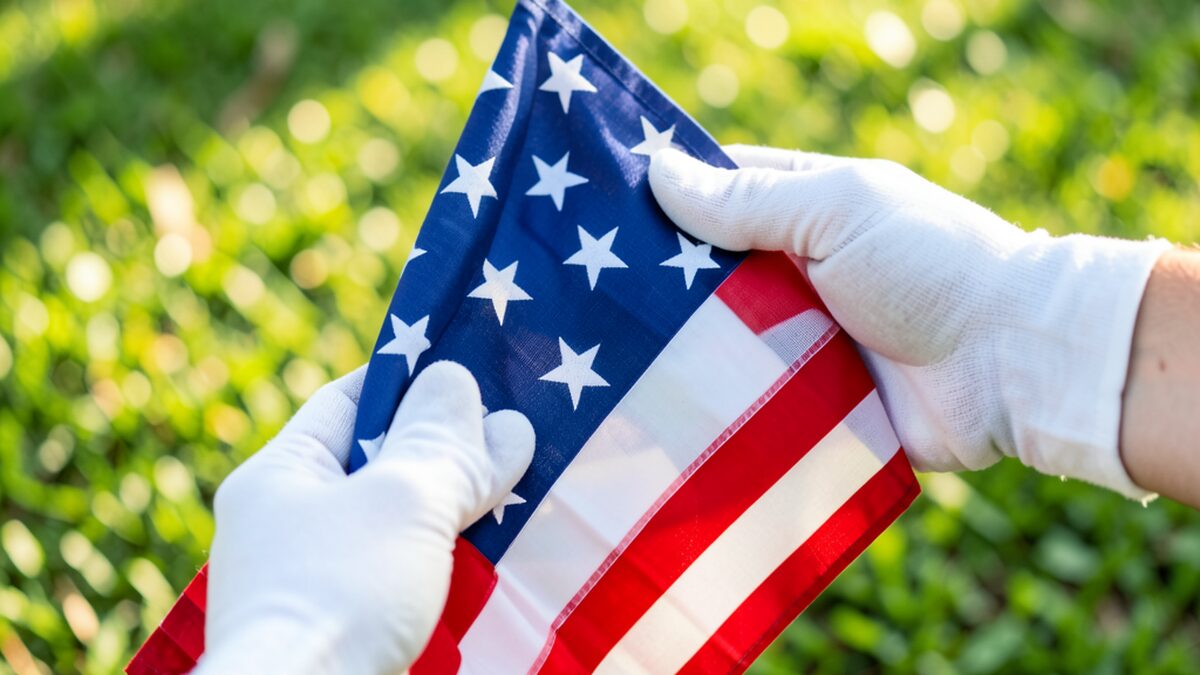
The American flag’s folding ceremony carries profound symbolism, reflecting the nation’s history and values. While tradition often dictates specific folding methods, the U.S. Flag Code focuses more on respectful treatment than on rigid procedures. Exploring the legal framework behind these practices reveals how law and custom intersect to uphold the flag’s dignity, inviting a closer examination of what truly defines proper flag etiquette.
Key Takeaways
- The U.S. Flag Code mandates respectful treatment of the American flag but does not specify a folding method.
- Folding the flag properly is guided by tradition and custom rather than federal law.
- Military and veteran organizations promote specific folding procedures to honor the flag’s symbolism.
- Understanding flag folding practices helps preserve the flag’s historical and national significance.
Since the early days of the Republic, the American flag has stood as a potent emblem of national identity and sacrifice, its folds steeped in tradition and reverence. The precise method of folding the flag, often observed during military ceremonies and solemn occasions, is governed not only by custom but by established legal guidelines that ensure its dignity is preserved. Understanding these requirements is essential to honoring the flag’s historical significance and the values it represents.
Federal Law and the Absence of a Mandated Folding Pattern
The primary federal regulation concerning the care and display of the American flag is found in Title 4 of the United States Code, Chapter 1, commonly referred to as the U.S. Flag Code. This statute provides comprehensive guidance on the respectful treatment of the flag, including its display, handling, and the occasions on which it may be used. However, the Flag Code notably does not prescribe a specific method for folding the flag. Rather, it leaves the folding procedure to tradition and custom.
The primary federal regulation concerning the care and display of the American flag is found in Title 4 of the United States Code, Chapter 1, commonly referred to as the U.S. Flag Code.
Organizations such as the Veterans of Foreign Wars (VFW) and the American Legion emphasize that the federal legal framework imposes no penalties for improper folding and explicitly does not require any particular folding technique. This distinction underscores that while federal law governs the flag’s etiquette broadly, the exact folding method is not a matter of legal mandate but one of ceremonial practice and respect.
The Standard Ceremonial Fold: The Thirteen-Fold Triangle
The most widely recognized folding method culminates in a triangular shape, displaying only the blue union or canton of the flag. This ceremonial fold consists of thirteen folds, symbolically reflecting the original thirteen colonies. The process begins with two lengthwise folds followed by eleven triangular folds, ultimately producing a compact, triangular form.
Official guides, including those provided by the Department of Veterans Affairs, illustrate this sequence as the standard. The VFW and other veteran organizations describe the completed fold similarly, emphasizing the visibility of the blue field as a sign of respect and honor. Though many attribute symbolic meanings to each fold, these interpretations are borne of tradition rather than legal requirement. The thirteen-fold triangle remains the customary form used in military ceremonies, funerals, and official observances.
The Traditional Folding Procedure Involving Two Persons
The commonly taught method for folding the American flag begins with two individuals standing opposite each other, holding the flag taut. The process initiates by folding the lower striped section over the blue union, ensuring that the flag is handled carefully and with due reverence. This method facilitates the precise and respectful folding that preserves the flag’s dignity.
The Veterans of Foreign Wars and the Department of Veterans Affairs both endorse this two-person approach, which is practical for maintaining the flag’s proper alignment throughout the folding process. The United States Flag Store also confirms this practice, noting that the involvement of two people is standard for achieving the neat, triangular fold recognized at ceremonial events. This procedure, while customary, is not legally mandated but serves to uphold the solemnity and respect due the national emblem.