
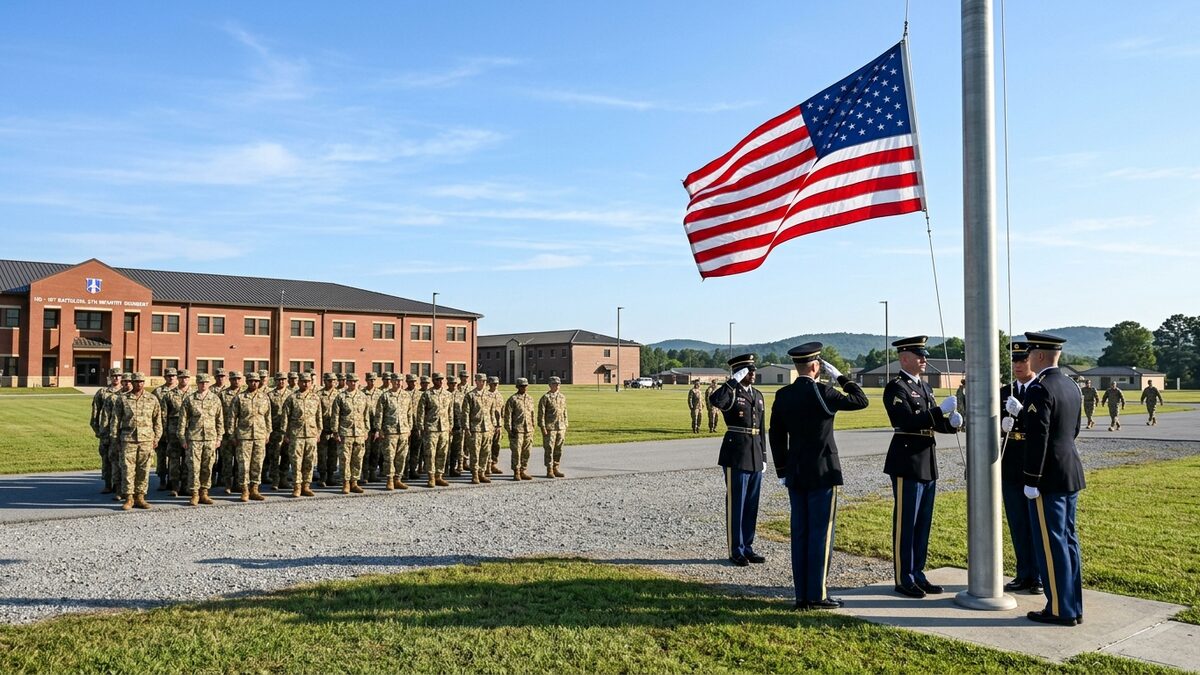
The protocol for flying the national flag on military bases embodies more than tradition; it reflects the discipline and respect fundamental to armed forces culture. This article explores how strict adherence to flag regulations reinforces military dignity and unity, highlighting the flag’s paramount status as dictated by the U.S. Flag Code and Department of Defense guidelines. Understanding these procedures reveals the deeper significance behind the flag’s elevated position among other banners.
Key Takeaways
- The U.S. flag is always given the highest position of honor on military bases.
- Only one U.S. flag is typically flown on a base within the Continental United States unless special permission is granted.
- When multiple flags are displayed, the U.S. flag must be placed in the center and flown higher than others.
- Following flag protocol reflects the discipline, respect, and values of the armed forces.
What message does the display of a national flag on a military base convey beyond mere symbolism? The protocol governing the flying of the flag is not a matter of decorum alone but a reflection of discipline, respect, and the values upheld by the armed forces. Understanding these regulations ensures that the flag is honored appropriately, maintaining the dignity of the military institution and reinforcing the unity it represents.
Placement and Precedence of the U.S. Flag on Military Installations
The U.S. flag holds the position of highest honor on all military bases, as stipulated by the U.S. Flag Code and Department of Defense directives. When displayed on a single staff or lanyard alongside other flags, it must be flown at the peak, the highest point. Within the Continental United States (CONUS), typically only one U.S. flag is flown on an installation unless explicit authorization is granted by the Commanding General of an Army Command or Service Component Command. This ensures uniformity and respect for the flag’s symbolic significance.
The protocol governing the flying of the flag is not a matter of decorum alone but a reflection of discipline, respect, and the values upheld by the armed forces.
In scenarios where multiple flagpoles are grouped together, the U.S. flag must be positioned centrally and flown higher than all other flags. Only the U.S. flag is allowed on primary installation flagpoles unless exceptions are made for specific flags, such as the POW/MIA flag, which may be flown on designated observances like Armed Forces Day or Memorial Day. Additionally, state, local, and organizational flags are required to be displayed at a lower height than the U.S. flag and positioned to the observer’s left, corresponding to the flag’s own right, highlighting the flag’s precedence in all military displays.
Hours of Display and Illumination Requirements
Protocol dictates that the U.S. flag be displayed from sunrise to sunset on buildings and stationary flagstaffs in the open, in accordance with Federal Flag Code Section 4. The flag may be flown continuously, 24 hours a day, if a patriotic effect is desired, provided it is properly illuminated during hours of darkness, as outlined in DoD Instruction 5410.16. This illumination must be sufficient to ensure the flag’s visibility and respect at all times.
In defense establishments and on Her Majesty’s Canadian ships not underway, the National Flag and other authorized flags are flown daily from sunrise to sunset, reflecting the shared military heritage and protocol standards between allied nations. When raising or lowering the flag during ceremonies accompanied by a bugle call or national anthem, the flag must be hoisted or lowered in precise synchronization with the final note, demonstrating the military’s commitment to ceremonial precision and reverence.
Weather Conditions and Special Considerations
The U.S. flag is not to be displayed during inclement weather unless it is an all-weather flag specifically designed to withstand such conditions. This regulation is rigorously enforced to preserve the flag’s condition and dignity. The use of an all-weather flag on military bases is reserved for situations where the flag must remain displayed despite adverse weather, ensuring that respect for the flag is balanced with its physical preservation.
Furthermore, the flying of the flag on military bases is governed by strict guidelines that extend beyond the physical handling of the flag. This includes the observance of special days and events when additional flags, such as the POW/MIA flag, may be flown with the U.S. flag under precise conditions. Adherence to these protocols underscores the disciplined environment of military installations and reflects the collective values and unity embodied by the armed forces.