The United States Flag Code establishes important protocols for the respectful display and handling of the American flag, emphasizing its role as a powerful national symbol. By detailing specific guidelines found in 4 U.S. Code, Chapter 1, the Code provides a framework for maintaining the flag’s dignity in diverse contexts. Exploring these provisions reveals the balance between tradition and civility that underpins proper flag etiquette.
Key Takeaways
- The US Flag Code treats the flag as a living symbol deserving solemn respect.
- It provides detailed guidelines on how and when the flag should be displayed.
- The Code is advisory, not legally enforceable, but widely respected by federal agencies.
- Proper flag etiquette includes displaying the flag only from sunrise to sunset unless properly illuminated.
“The flag represents a living country and is itself considered a living thing.” This foundational principle, articulated in the preamble to the United States Flag Code, encapsulates the solemn respect mandated for the national emblem. The Flag Code delineates precise rules governing the display, handling, and treatment of the American flag, underscoring its symbolic significance and the duty to preserve its dignity. Understanding these key provisions is essential for ensuring proper flag etiquette in both public and private spheres.
1. Core Legal Source and Scope
The primary federal authority for flag display is found in 4 U.S. Code, Chapter 1, which codifies the Flag Code’s provisions on where, when, and how the flag is displayed. While these rules are advisory rather than criminally enforceable, they establish standards of proper conduct respected by federal agencies and the public. The Code addresses display on staffs, in windows, in groups, and during processions, forming the legal foundation for flag etiquette.
“The flag represents a living country and is itself considered a living thing.”
2. Time of Display and Lighting
The Flag Code directs that the flag should be displayed from sunrise to sunset on buildings and stationary flagstaffs in the open. It may be exhibited 24 hours a day if properly illuminated during darkness and if a patriotic effect is desired. This rule is consistently reaffirmed by official guides, including those from the Department of Veterans Affairs and the American Legion.
3. Weather and Physical Condition
The flag should not be displayed during rain, snow, or high winds unless it is an all-weather flag designed for such conditions. Additionally, it must be kept clean and in good repair, avoiding display when it is dirty, torn, wrinkled, or frayed. The flag must never touch the floor, reflecting its dignified status as a national symbol.
4. Position and Manner of Display
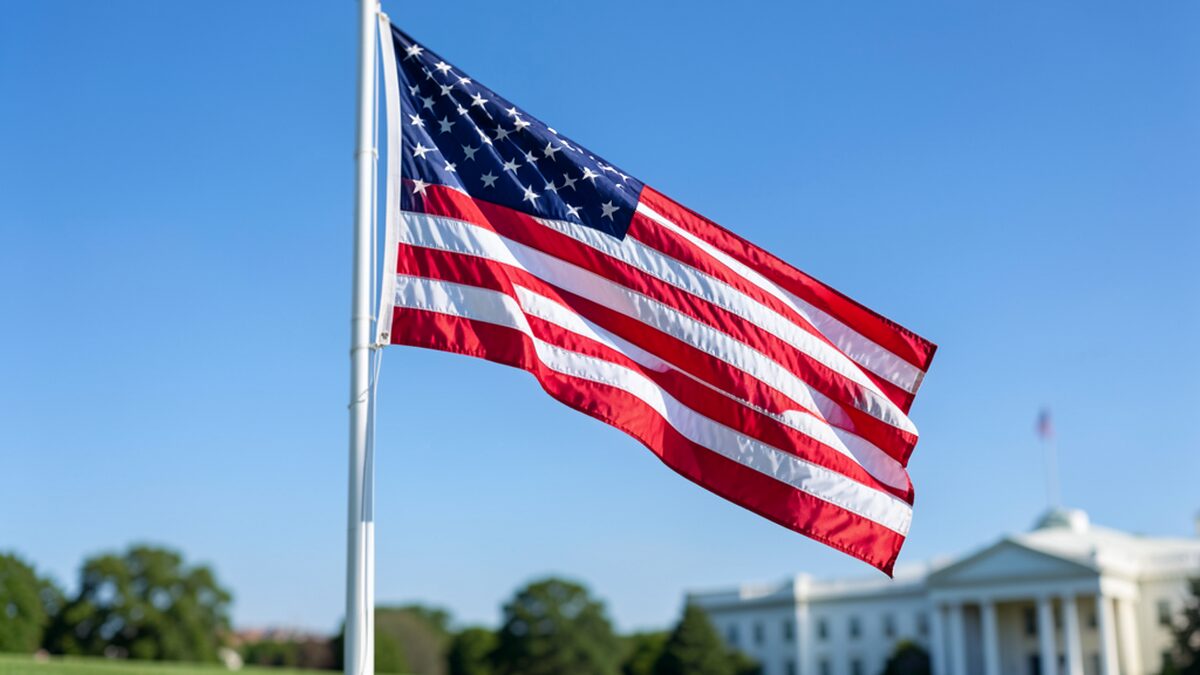
According to 4 U.S.C. § 7, the flag must be positioned with the union (blue field with stars) at the peak of the staff, except during mourning when it is flown at half-staff. When displayed with other flags, the U.S. flag holds the position of superior prominence, typically to the observer’s left or at the center and highest point in a group.
5. Display in Processions and Indoors
In processions, the flag should be carried to the marching right or at the front and center of the formation. Indoors, the flag may be displayed on a staff or suspended flat against a wall, with the union positioned uppermost and to the flag’s own right, which is the observer’s left. These practices ensure the flag’s respect and visibility in diverse settings.