
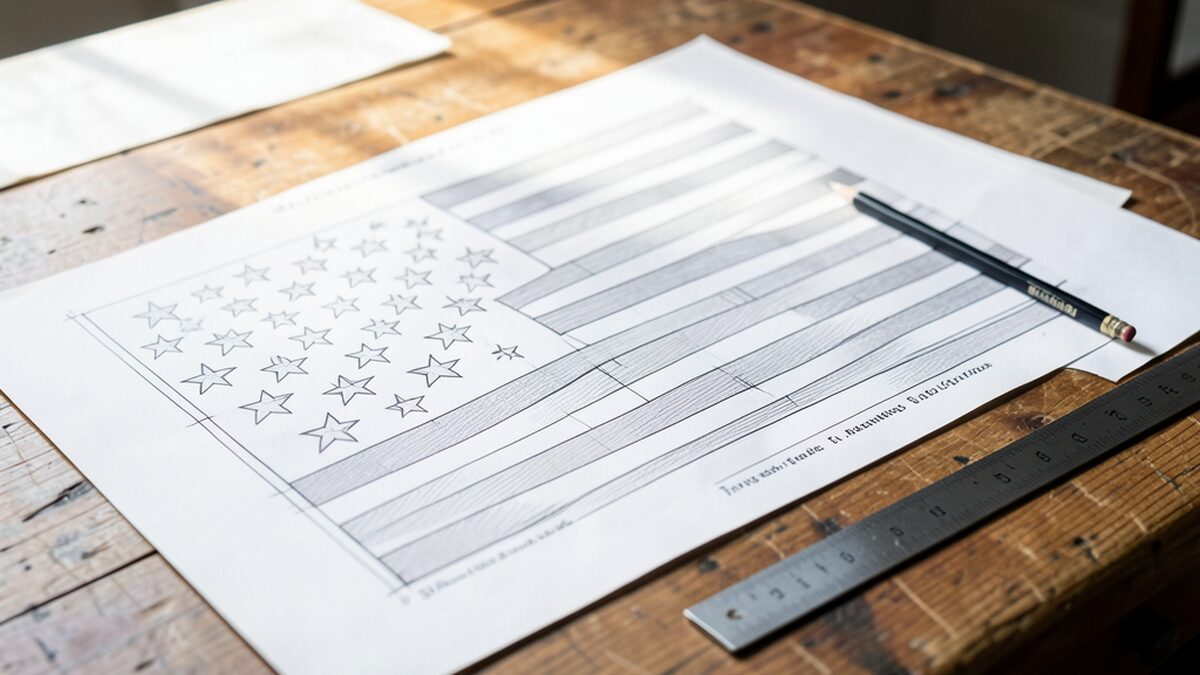
The standardization of the 50-star American flag in 1960 marked a pivotal moment in the nation’s visual identity, reflecting its growth and unity with the inclusion of Alaska and Hawaii. This article explores the meticulous process behind the flag’s design, highlighting how tradition and symbolism were carefully balanced to create a lasting emblem. Understanding this evolution reveals deeper insights into the cultural and historical significance embedded in the flag’s final form.
Key Takeaways
- The 50-star flag design was standardized in 1960 to reflect the admission of Alaska and Hawaii.
- A government committee was formed to review designs and ensure the flag's consistency.
- The design specified the arrangement, proportions, and colors of the stars and stripes.
- This standardization balanced tradition with the symbolic representation of all 50 states.
The adoption of the 50-star American flag in 1960 marked the culmination of a process shaped by decades of evolving national identity, echoing earlier moments such as the standardization of the 13-star flag during the Revolutionary War. As Alaska and Hawaii were admitted as the 49th and 50th states, the need to formalize the flag’s design became imperative, reflecting the nation’s expanding unity. The careful specification of star arrangement, proportions, and colors in 1960 provided a definitive template that balanced tradition with the symbolic representation of statehood, ensuring consistency in the flag’s display across the United States.
Design Selection Process and Committee Formation
In response to the impending admission of Alaska and Hawaii as the 49th and 50th states, the Eisenhower administration initiated a structured process to determine the new flag design. A formal committee was established, comprising the Secretaries of State, Defense, and Treasury, alongside the Chairman of the Commission on Fine Arts. This committee was tasked with reviewing public submissions and proposing an official design that would represent the expanded union. Over 3,000 design suggestions flooded in, many featuring the common motif of nine rows with alternating five and six stars. The committee’s deliberations reflected a desire to balance aesthetic appeal with practicality, ensuring the flag would accommodate future state additions.
The careful specification of star arrangement, proportions, and colors in 1960 provided a definitive template that balanced tradition with the symbolic representation of statehood, ensuring consistency in the flag’s display across the United States.
During a Cabinet meeting on November 19, 1958, President Dwight D. Eisenhower expressed a preference for a design featuring seven staggered rows of seven stars. This arrangement was valued for its symmetry and adaptability. The committee concurred, seeing the seven-by-seven star pattern as a suitable framework for future modifications. The design selection process extended from late 1958 through August 1959, concluding with the formal submission of the proposed design on August 17, 1959. This meticulous approach underscored the administration’s commitment to a standardized and enduring flag design.
Robert Heft’s High School Project and Selection
Amid the extensive public input, one design stood out through its unique origin and execution. Robert Heft, a high school student from Ohio, conceived his 50-star flag as part of a history class project in 1958. Tasked with an open-ended assignment related to American history, Heft dedicated over twelve hours to crafting his flag. He carefully cut fifty white stars from iron-on material and affixed them to a blue field, which he then sewed onto an existing 48-star flag owned by his parents. His design arranged the stars in five rows of six stars interspersed with four rows of five stars, creating a visually balanced and harmonious pattern.
Congressman Walter Moeller became aware of Heft’s creation and presented the physical flag to the design committee. Unlike other submissions, which were primarily drawings on paper, Heft’s tangible rendering allowed for a direct assessment of its appearance when flown. President Eisenhower personally selected Heft’s design from approximately 1,500 similar entries. This selection not only highlighted the design’s aesthetic qualities but also demonstrated the impact of grassroots participation in the standardization of the 50-star flag design in 1960.
Executive Orders and Official Adoption
The formalization of the 50-star flag design was completed through presidential action. Following Alaska’s admission to the Union, President Eisenhower issued Executive Order 10798 on January 3, 1959, which established the official design for the 49-star flag. This order set a precedent for the subsequent adjustment required by Hawaii’s impending statehood. After the design committee’s final approval and the selection of Heft’s pattern, President Eisenhower issued Executive Order 10834 on August 21, 1959. This executive order officially adopted the 50-star flag design as the national standard, specifying the star arrangement, flag proportions, and color details.
The new flag was first flown on July 4, 1960, symbolizing the nation’s growth and unity. The executive orders provided a definitive legal framework for the flag’s manufacture and display, ensuring consistency across government and public use. The 50-star flag’s standardization in 1960 marked a significant moment in American history, codifying a symbol that reflected both tradition and the evolving composition of the United States.