
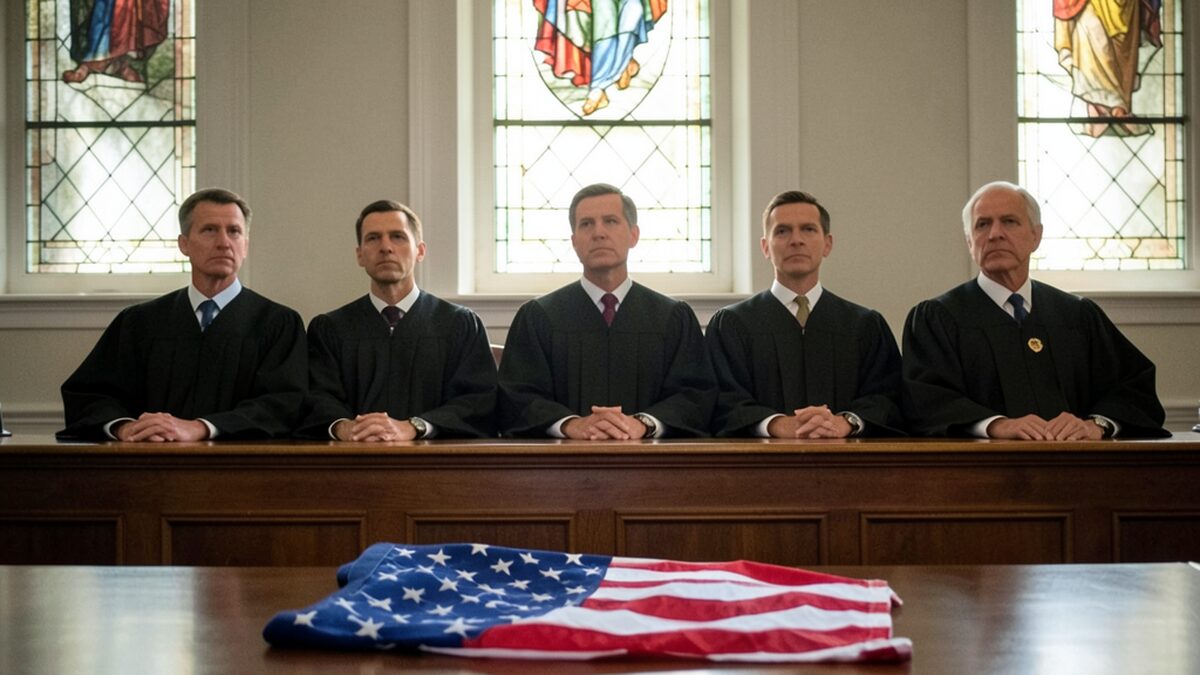
The complex interplay between patriotism and constitutional rights is vividly illustrated in the evolution of flag desecration laws in the United States. Originating as efforts to uphold national unity during turbulent times, these laws have sparked profound legal challenges that test the boundaries of free expression. Supreme Court rulings have played a pivotal role in shaping this delicate balance, raising critical questions about the limits of symbolic speech and the protection of national emblems.
Key Takeaways
- The American flag has been legally protected to preserve national unity and patriotism.
- The 1968 Federal Flag Desecration Law criminalized disrespectful acts against the flag during the Vietnam War era.
- Supreme Court rulings have balanced flag protection laws with First Amendment free speech rights.
- These decisions have significantly influenced the constitutional approach to flag desecration cases in the U.S.
Since the early 20th century, the American flag has stood as a potent symbol of national identity and unity, prompting legislative efforts to protect it from acts deemed disrespectful or desecrative. These laws, initially rooted in a desire to preserve patriotic reverence during times of conflict, have spurred contentious legal battles culminating in landmark Supreme Court decisions. The Court’s rulings have navigated the tension between safeguarding national symbols and upholding the First Amendment’s protection of free speech, shaping the constitutional landscape surrounding flag desecration in profound and enduring ways.
Early Federal Flag-Desecration Law
Congress enacted the Federal Flag Desecration Law on July 5, 1968, as Public Law 90-381. This statute criminalized knowingly casting contempt upon the United States flag by openly mutilating, defacing, defiling, burning, or trampling it. Violators faced penalties of up to a $1,000 fine, up to one year imprisonment, or both. The law emerged during the politically charged Vietnam War era, when flag desecration became a form of protest against government policies and military actions. This legislation laid the groundwork for subsequent constitutional challenges, as it directly confronted the question of whether symbolic acts involving the flag were protected by the First Amendment.
The Court’s rulings have navigated the tension between safeguarding national symbols and upholding the First Amendment’s protection of free speech, shaping the constitutional landscape surrounding flag desecration in profound and enduring ways.
Pre-1989 Supreme Court Doctrine on Symbolic Expression
The Supreme Court’s early approach to symbolic speech involving the flag evolved notably in Spence v. Washington (1974). In this case, the Court addressed the expressive use of a flag adorned with a peace symbol and recognized that such conduct could merit First Amendment protection. This decision marked a departure from a narrow interpretation of free speech, acknowledging that nonverbal expression, including modifications to the flag, might convey a political message. By the late 1980s, the Court had thus established a doctrinal foundation affirming that symbolic acts, not just verbal or written words, could constitute protected speech under the Constitution. This jurisprudential development set the stage for more explicit challenges to anti-flag-desecration statutes.
Texas v. Johnson and United States v. Eichman
The landmark case Texas v. Johnson, 491 U.S. 397 (1989), decisively shaped the constitutional framework governing flag desecration. On June 21, 1989, the Supreme Court ruled in a 5–4 decision that Gregory Lee Johnson’s act of burning the American flag during a political protest in Dallas constituted symbolic speech protected by the First Amendment. The Court invalidated Texas’s flag desecration statute, emphasizing that the government could not prohibit expression merely because it was offensive or disagreeable to the public. This ruling underscored the primacy of free speech protections even when national symbols were involved.
In response, Congress enacted the Flag Protection Act of 1989, attempting to create a federal prohibition on flag desecration. However, in United States v. Eichman (1990), the Supreme Court struck down this federal statute as unconstitutional, reaffirming the principles articulated in Johnson. The Court maintained that the government’s interest in preserving the flag as a symbol did not outweigh the constitutional guarantee of free expression. Together, these decisions firmly established that flag desecration, while deeply controversial and offensive to many, constitutes protected symbolic speech under the First Amendment, limiting the government’s ability to regulate such conduct.