
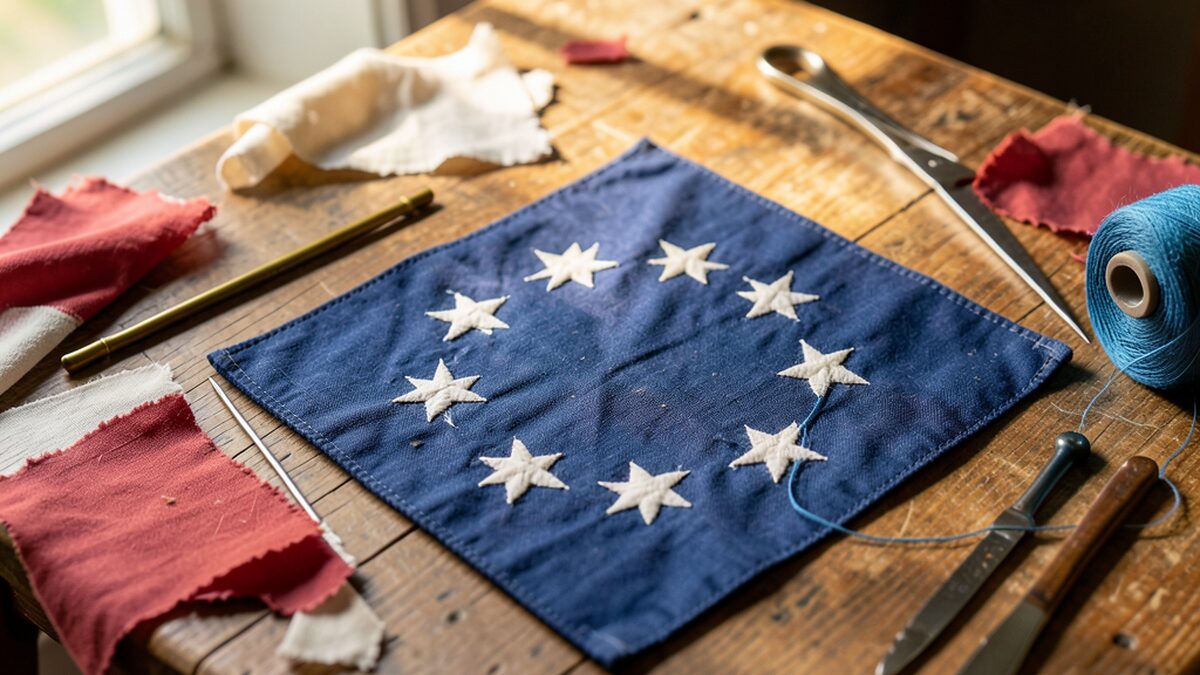
The Betsy Ross flag stands as a potent symbol of America’s revolutionary roots, yet its origins remain shrouded in historical debate. Beyond its iconic thirteen stars and stripes, the flag encapsulates the spirit of unity among the original colonies during a transformative era. Exploring its design and symbolism reveals deeper insights into the collective identity and aspirations that shaped the early United States.
Key Takeaways
- The Betsy Ross flag is traditionally linked to a Philadelphia seamstress who created an early American flag design.
- Its thirteen stars arranged in a circle and thirteen stripes symbolize the unity of the original thirteen colonies.
- The flag reflects the revolutionary ideals and collective aspirations of the newly independent United States.
- The exact historical origins of the Betsy Ross flag remain uncertain and debated by historians.
In the aftermath of the Declaration of Independence in 1776, amid the fervor of a nascent nation seeking symbols to unite its disparate colonies, the Betsy Ross flag emerged as an emblem of American identity. Traditionally attributed to Betsy Ross, a Philadelphia seamstress, this early design featuring thirteen stars arranged in a circle alongside thirteen stripes represented the original colonies’ unity and resolve. While its precise origins remain a subject of historical debate, the flag’s iconography encapsulates the revolutionary ideals and collective aspirations that defined the birth of the United States.
What the Betsy Ross Flag Is
The Betsy Ross flag is recognized as one of the earliest designs of the United States flag, characterized by thirteen stars arranged in a perfect circle and thirteen alternating red and white stripes. These elements symbolized the original thirteen colonies that declared independence from British rule. The design aligns with the Flag Resolution passed by the Continental Congress on June 14, 1777, which mandated that the flag consist of thirteen stripes and thirteen stars within a blue field, representing a new constellation of states. Over time, this design has become a potent emblem of the American Revolution and the foundational period of the United States, reflecting the unity and sovereignty of the fledgling nation. Notably, the term “Betsy Ross flag” only gained widespread usage more than a century after the flag’s first documented appearances in historical imagery.
While its precise origins remain a subject of historical debate, the flag’s iconography encapsulates the revolutionary ideals and collective aspirations that defined the birth of the United States.
The Betsy Ross Legend
The popular narrative surrounding the Betsy Ross flag involves a meeting in 1776 between Betsy Ross and three prominent figures: George Washington, Robert Morris, and George Ross. According to this story, Washington presented Ross with a rough sketch of a flag featuring thirteen stars and stripes, initially depicted as six-pointed stars. The legend credits Ross with suggesting the alteration of the stars to five points, a design choice that has since become iconic. Following this consultation, Ross purportedly sewed the first flag for the revolutionary government. However, this account is primarily derived from family oral traditions passed down through Ross’s descendants rather than from contemporaneous documentation or official records.
What Historians Say About the Legend
Historical scrutiny reveals significant skepticism regarding the Betsy Ross narrative. Institutions such as the National Postal Museum highlight the absence of any primary source evidence—such as diaries, letters, or official Continental Congress records—that corroborate the story of Ross’s involvement in designing or sewing the first flag. The museum concludes that the story is most likely apocryphal. Similarly, Colonial Williamsburg notes a near consensus among historians that family oral history alone is insufficient to substantiate the full account, emphasizing the lack of any written material supporting the supposed Washington-Ross committee meeting. The American Battlefield Trust also acknowledges this uncertainty, underscoring that while the story enjoys enduring popularity, it remains unverified within the historical record. Thus, the origins and meaning of the Betsy Ross flag design reside more in symbolic tradition than in documented fact, embodying the spirit rather than the literal creation of the nation’s first flag.