
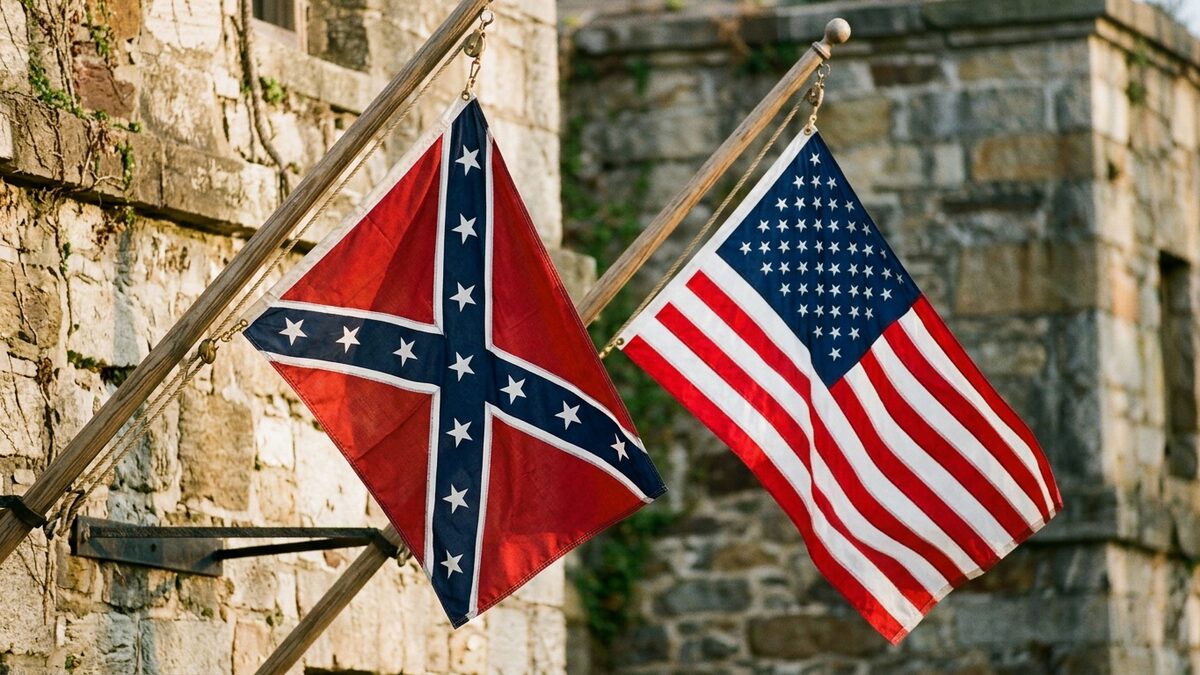
The distinctions between Civil War battle flags and the national flag reveal deeper insights into the era’s complex identities. While the national flag embodied unity and a shared sense of nationhood, battle flags prioritized visibility and individual regimental identity amid the chaos of combat. Exploring these differences uncovers how symbolism during the Civil War reflected broader tensions between collective allegiance and localized loyalty, inviting a richer understanding of this pivotal period.
Key Takeaways
- Civil War battle flags prioritized immediate battlefield recognition over national unity.
- The national flag symbolized a cohesive United States identity during the era.
- Battle flags featured bold, distinct designs tailored to individual regiments or factions.
- The differing flag designs reflect the tension between national cohesion and localized loyalties.
The stark divergence between Civil War battle flags and the national flag reveals contrasting priorities of identity and function during a tumultuous period. While the national flag—characterized by its orderly stripes and stars—served as a unifying emblem of the United States, the battle flags of the era were designed for immediate battlefield recognition, often featuring bold, varied patterns and distinct color schemes unique to individual regiments or factions. This juxtaposition underscores the tension between a cohesive national identity and the fragmented, localized loyalties that defined the Civil War, as each side sought not only to assert political authority but also to maintain clarity amid the chaos of combat.
Purpose and Use of Civil War Battle Flags Versus the National Flag
The fundamental difference between Civil War battle flags and the national flag lies in their intended purpose and operational context. Battle flags were primarily tactical tools, crafted to facilitate swift identification of units amidst the confusion of combat. This was particularly crucial given the smoke, noise, and disorder that characterized Civil War battlefields. The Confederate battle flag, for example, was specifically designed to prevent confusion with the Union’s national flag, highlighting the practical necessity behind its distinct appearance. In contrast, the national flag symbolized the broader political entity—either the United States or the Confederate States—serving as a unifying emblem rather than a battlefield marker.
This juxtaposition underscores the tension between a cohesive national identity and the fragmented, localized loyalties that defined the Civil War, as each side sought not only to assert political authority but also to maintain clarity amid the chaos of combat.
Union infantry regiments typically carried two flags: the national color, representing the United States, and a state or regimental color to signify local or unit identity. Confederate regiments, however, usually bore a single battle flag that combined these roles, reflecting different organizational and symbolic priorities. While the Confederate battle flag was widely recognized and emblematic of Southern identity, it was never the official national flag of the Confederacy, illustrating the complexity of flag symbolism during the war.
The Union Flag System and Its Multifaceted Role
The Union’s flag system during the Civil War was notably structured and multifaceted, reflecting the dual needs of national unity and regimental distinction. The primary national flag, the Stars and Stripes, served as the official emblem of the United States government and was carried alongside regimental colors by infantry units. These regimental colors were typically dark blue and prominently displayed the state crest, reinforcing state-level pride within the broader Union framework. Such dual flag-bearing underscored the layered identities soldiers maintained—as both American citizens and members of distinct state regiments.
Beyond infantry, other branches of the Union Army utilized smaller flags tailored to their specific units. Moreover, Union Major General Joseph Hooker introduced an innovative system of flags and badges designed to enhance command identification and unit cohesion on the battlefield. This systematic approach to flags illustrates the Union’s emphasis on order, hierarchy, and coordinated military structure, contrasting with the Confederacy’s more singular battle flag use.
Distinctive Features of the Confederate Battle Flag
The Confederate battle flag, often referred to as the “Southern Cross,” is one of the most recognizable symbols associated with the Civil War. Its design featured a blue saltire, or diagonal cross, adorned with 13 white stars on a red field. These stars represented the eleven Confederate states along with Missouri and Kentucky, two border states with divided loyalties. Unlike the rectangular national flags, the battle flag was square, a notable departure that aided in its immediate battlefield identification.
Size variations corresponded to branch distinctions, with infantry flags measuring approximately 48 inches square and cavalry flags smaller at around 30 inches. This flag was first issued in November 1861, reflecting a deliberate attempt by Confederate forces to establish a distinctive and functional symbol for use in combat. While the Confederacy also had official national flags, including the rectangular “Stars and Bars,” the battle flag’s bold and unique design ultimately became the enduring emblem associated with the Confederate cause during and after the war.