
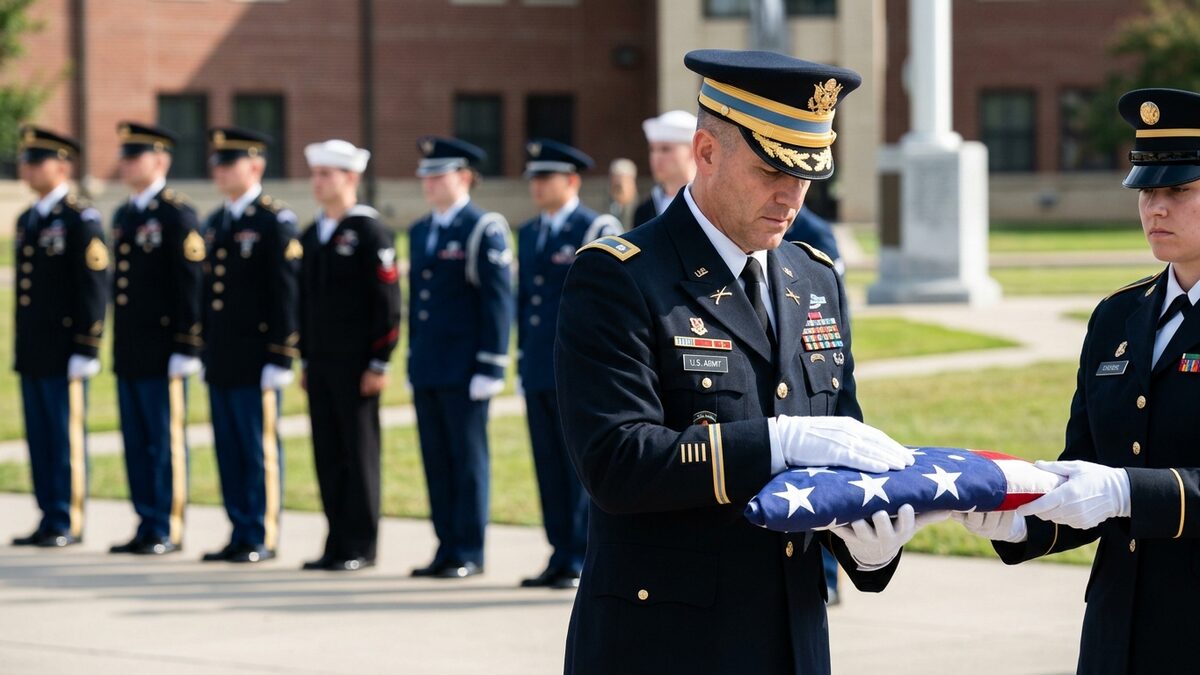
The article explores the profound significance of flag etiquette within military ceremonies, tracing its origins from Roman legions to modern regimental colors. It highlights how flags embody sovereignty, sacrifice, and unity, while strict protocols ensure their respectful treatment. Understanding these traditions reveals the deep-rooted discipline and symbolism that shape military honors, inviting further examination of the regulations that preserve this solemn heritage.
Key Takeaways
- Flag etiquette in military ceremonies is rooted in a long history symbolizing unity and respect.
- U.S. law under 4 U.S.C. § 9 mandates strict protocols for handling the flag during official events.
- Military personnel must render a salute whenever the flag is displayed or passes in review.
- These practices ensure that every action involving the flag honors its symbolic importance and military tradition.
Since the earliest organized armies raised banners to rally troops and symbolize collective identity, flag etiquette has evolved into a codified practice that governs the display and handling of national colors in military ceremonies. From the Roman legions’ vexillum to the regimental colors of modern armed forces, the flag has served not only as a visual emblem of sovereignty and sacrifice but also as a focal point for discipline and respect. This historical legacy underpins the meticulous protocols that guide the use of flags today, ensuring that each gesture—from hoisting to retirement—reflects the solemnity and honor intrinsic to military tradition.
Core Federal Rule for Ceremonies
The foundational legal framework for flag etiquette in U.S. military ceremonies is anchored in 4 U.S.C. § 9, which specifically addresses the proper handling of the flag during hoisting, lowering, and its passage in parades or reviews. This statute codifies practices that reinforce respect and uniformity, demanding that all participants adhere to precise conduct. Uniformed personnel are required to render the military salute when the flag is displayed or passes by, a gesture that symbolizes allegiance and reverence.
Since the earliest organized armies raised banners to rally troops and symbolize collective identity, flag etiquette has evolved into a codified practice that governs the display and handling of national colors in military ceremonies.
Veterans and Armed Forces members not in uniform are similarly entitled to render the military salute, maintaining the continuity of respect regardless of dress. Civilians, while not saluting, must face the flag and stand at attention with their right hand placed over the heart. When applicable, they should remove any headdress with the right hand and hold it at the left shoulder, further signifying respect. This structured approach ensures a uniform expression of honor across diverse groups during formal military observances.
National Anthem and Indoor Ceremony Conduct
Flag etiquette extends into the auditory domain during the playing of the national anthem, where the presence or absence of the flag indoors dictates the appropriate posture and saluting behavior. Uniformed personnel are directed to face the flag and salute during the anthem, reinforcing the symbolic centrality of the national colors. In instances where the flag is displayed indoors, all participants should stand at attention facing the flag, a posture that embodies collective respect and solemnity.
If the flag is not present in an indoor setting, participants are instructed to face the source of the music, maintaining the same attentive demeanor. This protocol is further supported by Department of the Army and Air Force guidelines, which mirror federal statutes and underscore the importance of consistency in ceremonial conduct. Veterans and active-duty members not in uniform maintain the right to render the military salute in these scenarios, reinforcing the enduring connection between service and respect for the flag.
Flag Placement and Precedence
Proper positioning of the flag in ceremonies is a critical aspect of flag etiquette, reflecting the hierarchy and symbolic precedence inherent in military traditions. When multiple flags are displayed, the U.S. flag is accorded the place of honor to its own right, which corresponds to the right side of marchers and the observer’s left. This placement underscores the primacy of the national colors above all others in official contexts.
In the absence of foreign national colors, some official arrangements permit the highest-precedence flag to occupy the center position, although Department of the Army guidance typically places the highest-precedence flag on the right when flags are arranged right to left. This emphasis on precedence over purely aesthetic symmetry ensures that respect and protocol guide visual displays. Additionally, the U.S. flag is never dipped to any person or object, a practice that preserves its dignity and status as a sovereign emblem.