
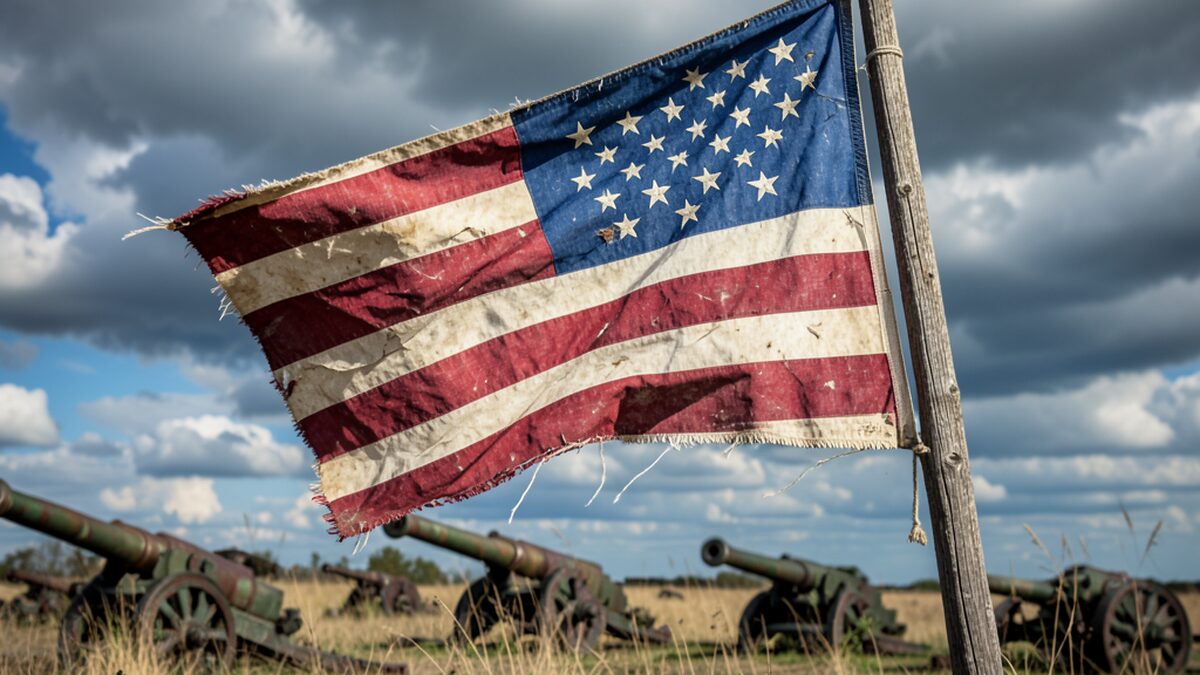
The 15-star flag, adopted after Vermont joined the Union, stands as a powerful symbol of America’s early expansion and resilience. Its role during the War of 1812 highlights not only the nation’s fight for independence but also the complex political landscape shaping the fledgling republic. Exploring this emblem offers valuable insights into how identity and sovereignty were visually and politically asserted during a pivotal era in American history.
Key Takeaways
- The 15-star, 15-stripe flag symbolized the early expansion of the United States after Vermont and Kentucky joined the Union.
- It was the official flag during the War of 1812, representing the young nation's sovereignty.
- The Flag Act of 1794 legally established the 15-star, 15-stripe design to reflect the growing Union.
- This flag design captured a key moment in American history, embodying political change and national identity.
In the aftermath of Vermont’s admission to the Union in 1791, the United States adopted the 15-star, 15-stripe flag, a symbol that would fly prominently during the War of 1812. This flag, representing the nation’s early expansion and fragile unity, stood witness to a conflict that tested the young republic’s sovereignty against British forces. Its design encapsulated a formative moment in American history, reflecting both political realities and the evolving identity of the United States amid international strife.
Legal Origin of the 15-Star, 15-Stripe Design
The 15-star, 15-stripe flag emerged from the evolving legislative framework that sought to represent the growing Union. The first U.S. flag law, enacted on June 14, 1777, established a flag with 13 stars and 13 stripes, symbolizing the original thirteen colonies. However, with the admission of Vermont in 1791 and Kentucky in 1792, Congress recognized the need to update the flag’s design to reflect the expanding nation.
This flag, representing the nation’s early expansion and fragile unity, stood witness to a conflict that tested the young republic’s sovereignty against British forces.
The Flag Act of January 13, 1794, legislated this change by increasing both the stars and stripes to fifteen. This modification officially took effect on May 1, 1795, marking the birth of the 15-star, 15-stripe flag. This design remained the official emblem of the United States for nearly a quarter-century, including the critical period of the War of 1812, embodying the nation’s early growth and unity despite underlying tensions.
The Flag’s Wartime Context in 1812–1814
When the United States declared war on Great Britain on June 18, 1812, the country had expanded to 18 states, yet the official national flag remained the 15-star, 15-stripe version. The next flag redesign was not legislated until 1818, creating a temporal discrepancy between the nation’s actual size and its symbolic representation. Despite this, the 15-star flag flew over American forces and government buildings throughout the conflict, becoming a potent symbol of national identity and resilience.
During the War of 1812, this flag represented a young republic asserting its sovereignty against the longstanding British Empire. It served not only as a military standard but also as a rallying symbol for citizens who viewed the war as a second struggle for independence. The continued use of the 15-star flag during this period underscores how symbols can lag behind political realities yet retain profound significance in times of crisis.
The Fort McHenry Flag and Its Makers
The 15-star flag achieved iconic status during the War of 1812 by flying over Fort McHenry in Baltimore Harbor. Known as the Star-Spangled Banner or the Great Garrison Flag, it was commissioned specifically to be large and visible from a distance. Baltimore seamstress Mary Pickersgill, assisted by Grace Wisher, crafted the flag, which was delivered to the fort on August 19, 1813. This flag’s immense size and distinctive design were intended to boost troop morale and communicate American presence during a time of intense conflict.
The flag’s historical significance was cemented during the British bombardment of Fort McHenry from September 13 to 14, 1814. After a grueling 25-hour assault, the sight of the 15-star flag still flying at dawn signaled that the fort had not fallen. This moment inspired Francis Scott Key’s poem, which later became the national anthem, intertwining the flag with American patriotism and endurance. The Fort McHenry flag thus stands as a tangible symbol of national unity and resolve during the War of 1812.