
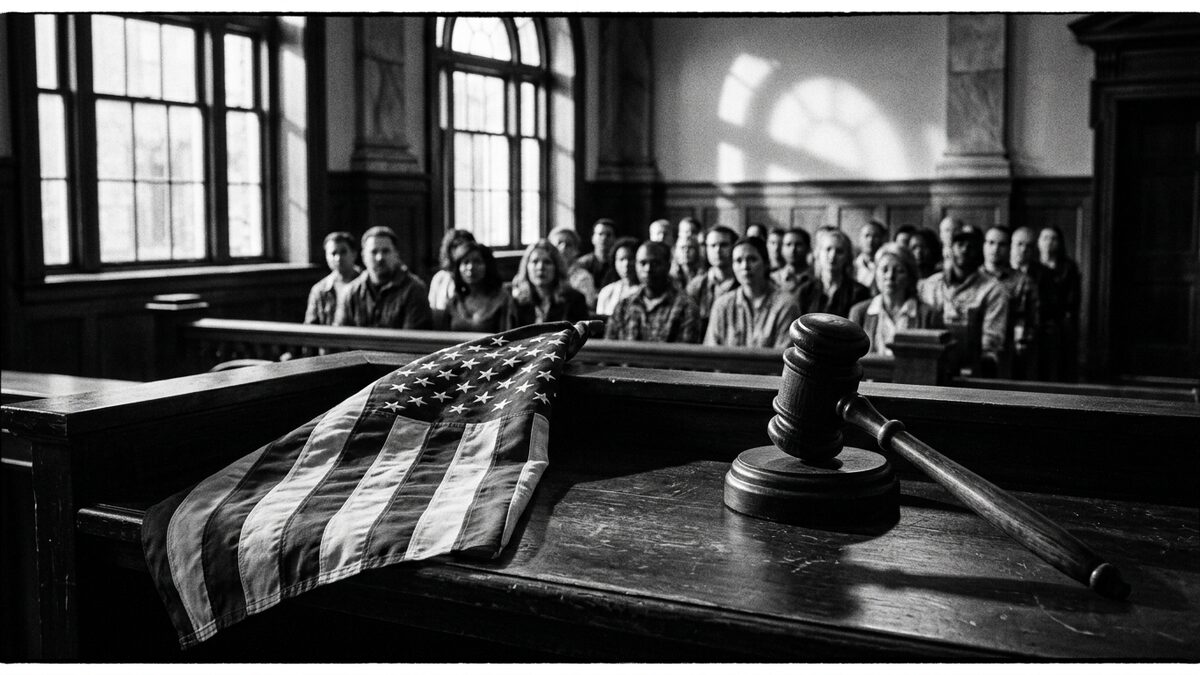
The enduring controversy surrounding flag desecration cases underscores a complex intersection of patriotism and constitutional rights in the United States. Since the landmark Texas v. Johnson decision, states’ repeated attempts to criminalize flag desecration have sparked significant legal and societal debates. This ongoing struggle not only tests the boundaries of the First Amendment but also shapes the evolving discourse on the limits of expressive conduct under U.S. law.
Key Takeaways
- The 1989 Texas v. Johnson ruling established flag burning as protected symbolic speech under the First Amendment.
- Over 30 states have tried to criminalize flag desecration despite the Supreme Court's decision.
- The ongoing legal conflicts highlight tensions between patriotic values and free speech rights.
- Flag desecration cases continue to influence the interpretation of expressive conduct laws in the U.S.
Since the landmark 1989 Supreme Court decision in Texas v. Johnson, which invalidated laws prohibiting flag desecration, over 30 states have enacted or attempted to enact legislation aimed at criminalizing the act, reflecting deep societal divisions over the limits of free speech. This persistent legislative push underscores the enduring tension between patriotic symbolism and constitutional protections under the First Amendment. The complex legal battles surrounding flag desecration have not only shaped the jurisprudence of expressive conduct but also continue to provoke debate about the scope and boundaries of free speech in the United States.
Texas v. Johnson (1989) Landmark Ruling
The Supreme Court’s decision in Texas v. Johnson marked a pivotal moment in First Amendment jurisprudence by affirming that flag burning is a form of symbolic speech protected by the Constitution. In a narrow 5–4 ruling, the Court struck down a Texas statute criminalizing flag desecration, emphasizing that the government cannot prohibit expression simply because it is offensive or disagreeable to society. Justice William Brennan, authoring the majority opinion, underscored that Gregory Lee Johnson’s act of burning the American flag during a political demonstration was an intentional, expressive conduct aimed at conveying a political message.
The Supreme Court’s decision in Texas v. Johnson marked a pivotal moment in First Amendment jurisprudence by affirming that flag burning is a form of symbolic speech protected by the Constitution.
This ruling invalidated flag desecration laws in 48 states, fundamentally reinforcing the principle that expressive conduct, especially when politically motivated, merits robust protection. The decision highlighted the judiciary’s role in safeguarding unpopular speech, even when it collides with prevailing patriotic sentiments, thereby setting a precedent that continues to influence free speech litigation.
United States v. Eichman (1990) Federal Statute Overturned
Following Texas v. Johnson, Congress enacted the Flag Protection Act of 1989, attempting to criminalize flag desecration at the federal level. However, in United States v. Eichman, the Supreme Court again invalidated such restrictions in a 5–4 decision, reaffirming that flag burning constitutes protected expressive conduct under the First Amendment. The majority, comprising the same justices from Johnson, rejected the government’s attempt to justify the statute without referencing the content of the speech, applying strict scrutiny to legislative attempts to regulate expression.
The ruling decisively affirmed that neither state nor federal governments may impose criminal penalties for flag desecration. This case underscores the judiciary’s commitment to content neutrality in free speech protections and reinforces the principle that symbolic acts, even those deeply offensive to many, deserve constitutional safeguarding. It also illustrates the limitations of legislative efforts to circumvent constitutional protections through new statutes.
Symbolic Speech Doctrine Expansion
The flag desecration cases significantly expanded the scope of the symbolic speech doctrine, clarifying that the First Amendment protects expressive conduct beyond spoken or written words. The Court recognized that actions such as flag burning convey messages that are inherently communicative and warrant constitutional protection. Justice Brennan’s opinion in Texas v. Johnson emphasized that the form of expression should not diminish the speech’s constitutional status, particularly when it reflects political dissent.
This doctrinal expansion has broad implications for free speech laws, reinforcing that governmental authority to regulate expressive conduct is limited and subject to the highest scrutiny when the regulation targets the content or message. The impact of these cases extends beyond flag desecration, influencing legal standards governing protests, demonstrations, and other symbolic acts integral to democratic discourse.