
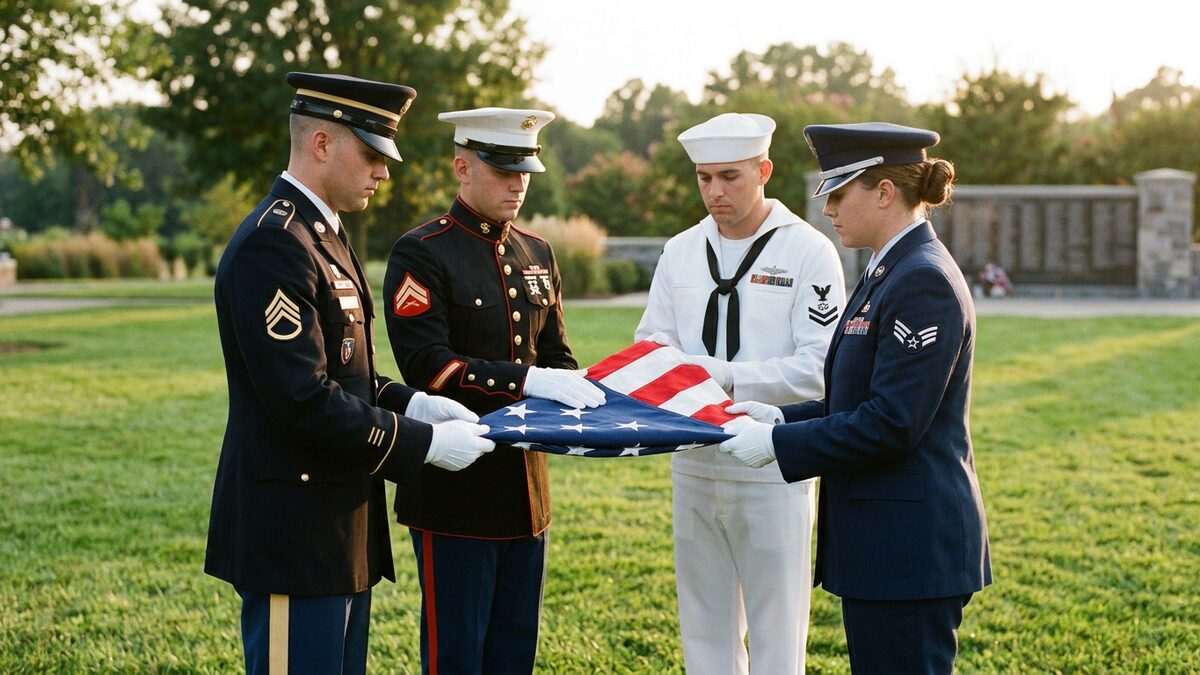
The protocol for folding the American flag during military funerals embodies a profound expression of respect and patriotism. Each fold carries deep symbolic meaning, honoring the sacrifice of service members while connecting to a rich historical tradition. This practice transforms the flag into a powerful emblem of remembrance, inviting reflection on its origins and enduring significance within American heritage. What lies behind this meticulous ritual reveals much about the nation’s values and identity.
Key Takeaways
- The American flag is folded into a triangle resembling a Revolutionary War tricorn hat.
- Thirteen folds represent the original thirteen colonies.
- The folding ritual symbolizes sacrifice, honor, and patriotism.
- This protocol is a nationwide tradition at military funerals.
As the final notes of “Taps” echoed across the cemetery, a solemn figure approached the folded flag resting gently on the casket. With deliberate care, two service members began the time-honored ritual of folding the American flag, their movements precise and reverent. Each fold symbolized a chapter of sacrifice, honor, and patriotism, a silent testament to the life of a fallen comrade. This meticulous protocol, observed at military funerals nationwide, embodies the nation’s profound respect for those who have served, transforming a simple piece of cloth into a sacred emblem of remembrance.
Historical Symbolism and Tricorn Hat Representation
The protocol for folding the American flag at military funerals is steeped in historical symbolism that traces back to the American Revolution. The flag’s final folded form is intentionally crafted into a triangle resembling a tricorn hat, the distinctive headwear of Revolutionary War patriots. This design choice honors the courage and determination of early American soldiers who fought for independence. The folding procedure involves precisely thirteen folds, each representing one of the original thirteen colonies, thereby linking the act of folding to the nation’s foundational history.
Each fold symbolized a chapter of sacrifice, honor, and patriotism, a silent testament to the life of a fallen comrade.
Upon completion, the flag displays only the blue union with white stars, a deliberate design to ensure that no red or white stripes remain visible. This presentation serves as a visual reminder of the national motto, “In God We Trust,” as the stars point upward. The folded flag, in this dignified form, transcends its physical properties to become a solemn emblem of the nation’s gratitude to the deceased service member and their family, symbolizing honor, sacrifice, and patriotism.
Standardized Personnel and Honor Guard Composition
Military protocol mandates a specific configuration of honor guard personnel during the flag folding ceremony. Typically, six honor guards participate in the folding process, with three positioned on each side of the casket to execute the precise folds with coordinated efficiency. However, depending on the size of the flag or the circumstances of the ceremony, the number of personnel involved may range from two to six. The presenter of the folded flag must be a member of the same military branch as the deceased, underscoring the connection between the fallen service member and their comrades.
The lead body bearer plays a critical role, especially when cremated remains are involved, by carrying the folded flag to the right of the urn. Throughout the ceremony, honor guard members are required to maintain strict control over the flag, ensuring that it never touches the ground, which would be considered a profound disrespect. This rigorous adherence to protocol reflects the military’s commitment to honoring the deceased with the utmost dignity and respect.
Pre-Folding Casket and Urn Positioning Protocols
Before the folding of the flag begins, the flag must be properly positioned over the casket or urn according to established regulations. The flag is draped so that its union, the blue field with stars, lies at the head of the casket, positioned over the left shoulder of the deceased. The red and white stripes extend lengthwise from the head to the foot of the casket, ensuring a neat and respectful presentation. The flag is stretched taut to avoid wrinkles or sagging, which preserves the dignity of the ceremony and the honor paid to the fallen.
When cremated remains are present, the flag is similarly prepared and positioned in a manner that facilitates the ritual of folding. These preparatory steps are critical to the overall protocol for folding the American flag at military funerals, as they set the tone for the solemn and precise movements that follow. The careful arrangement of the flag underscores the respect accorded to the deceased and the gravity of the national tribute being rendered.