
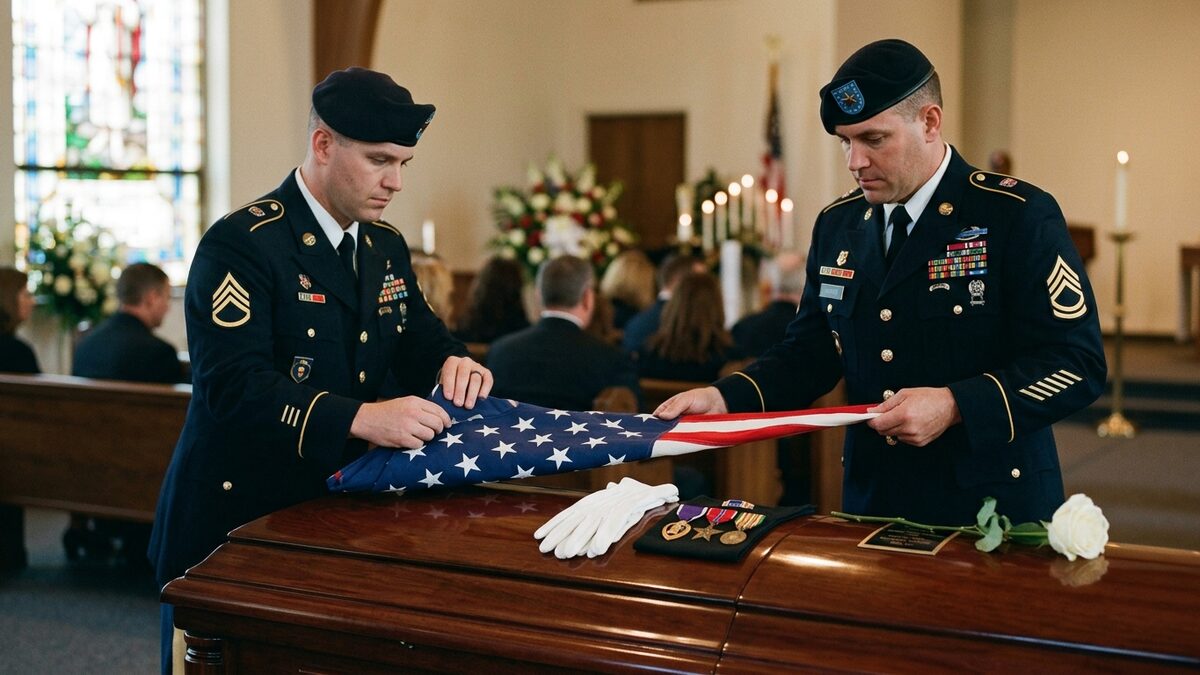
The American flag plays a profound role in military funerals, serving as a powerful emblem of sacrifice and national reverence. More than a symbol of sentiment, it encapsulates a nation’s history and collective memory, honoring those who have defended freedom. The meticulous protocols surrounding its use during military honors reflect the deep respect bestowed upon fallen servicemembers, inviting further exploration into the traditions and meanings behind this solemn tribute.
Key Takeaways
- The American flag in military funerals symbolizes the nation's history and gratitude for fallen servicemembers.
- The flag is draped on the casket with the blue union over the left shoulder of the deceased.
- This precise flag placement honors the service and sacrifice of the individual.
- Military flag rituals embody collective respect and remembrance beyond simple symbolism.
“‘The flag is the embodiment, not of sentiment, but of history,’ proclaimed Henry Cabot Lodge, encapsulating the profound reverence accorded to the American flag in military funerals and honors. This emblem, draped over the coffins of fallen servicemembers and presented with solemn ceremony, serves as a tangible testament to sacrifice and national gratitude. Its use in military rites transcends mere symbolism, embodying the collective memory and respect of a nation for those who have borne the ultimate burden in defense of freedom.”
Draping Protocols and Casket Placement
The use of the American flag in military funerals follows precise draping protocols, reflecting deep respect for the deceased and their service. The flag is positioned on the casket with the union—the blue field adorned with fifty white stars—placed at the head of the casket and directly over the left shoulder of the fallen servicemember. This placement represents the deceased’s unwavering service and dedication to the nation. The red and white stripes run lengthwise from the head to the foot of the casket, with the blue field as the top fold, symbolizing honor and unity.
“The flag is the embodiment, not of sentiment, but of history,” proclaimed Henry Cabot Lodge, encapsulating the profound reverence accorded to the American flag in military funerals and honors.
During the ceremony, the flag is meticulously maintained to never touch the ground, preserving its sanctity. Pallbearers or members of the honor guard keep continuous control of the flag to ensure it remains taut and properly displayed. The flag is never lowered into the grave or buried with the deceased, as the Department of Defense (DoD) regulations strictly prohibit such actions. This protocol underscores the flag’s role as a perpetual symbol of national gratitude rather than a mere shroud.
Flag Folding Ceremony and Symbolism
Following the casket draping, the American flag is carefully folded in a solemn ceremony performed by a detail of six honor guards. The folding process consists of exactly thirteen precise folds, each imbued with symbolic significance. The number thirteen represents the original thirteen colonies that founded the United States, linking the fallen servicemember’s sacrifice to the nation’s historic origins and enduring values.
The flag is folded into a distinctive triangular shape, reminiscent of the tricorner hat worn by American patriots during the Revolutionary War. This final folded form displays only the blue field with white stars, with no red or white stripes visible, symbolizing the unity and vigilance of the nation. The folding ceremony is conducted silently, emphasizing reverence and solemnity before the flag is presented to the next of kin.
Presentation Protocol and Official Language
The culminating act of the military funeral honors is the formal presentation of the folded flag to the deceased’s family. The presenter, typically a member of the same branch of service as the veteran, stands facing the flag recipient and holds the folded flag waist-high with the straight edge toward the family member. The presenter solemnly leans forward in a gesture of respect while delivering the flag.
The presentation is accompanied by the official Department of Defense statement, which begins: “On behalf of the President of the United States, the United States [Army, Navy, Air Force, Marine Corps, Coast Guard], and a grateful nation, please accept this flag as a symbol of our appreciation for your loved one’s honorable and faithful service.” This scripted language conveys the nation’s collective gratitude and acknowledges the sacrifice made by the deceased and their family. The flag, thus presented, becomes a cherished keepsake and a lasting emblem of honor.