
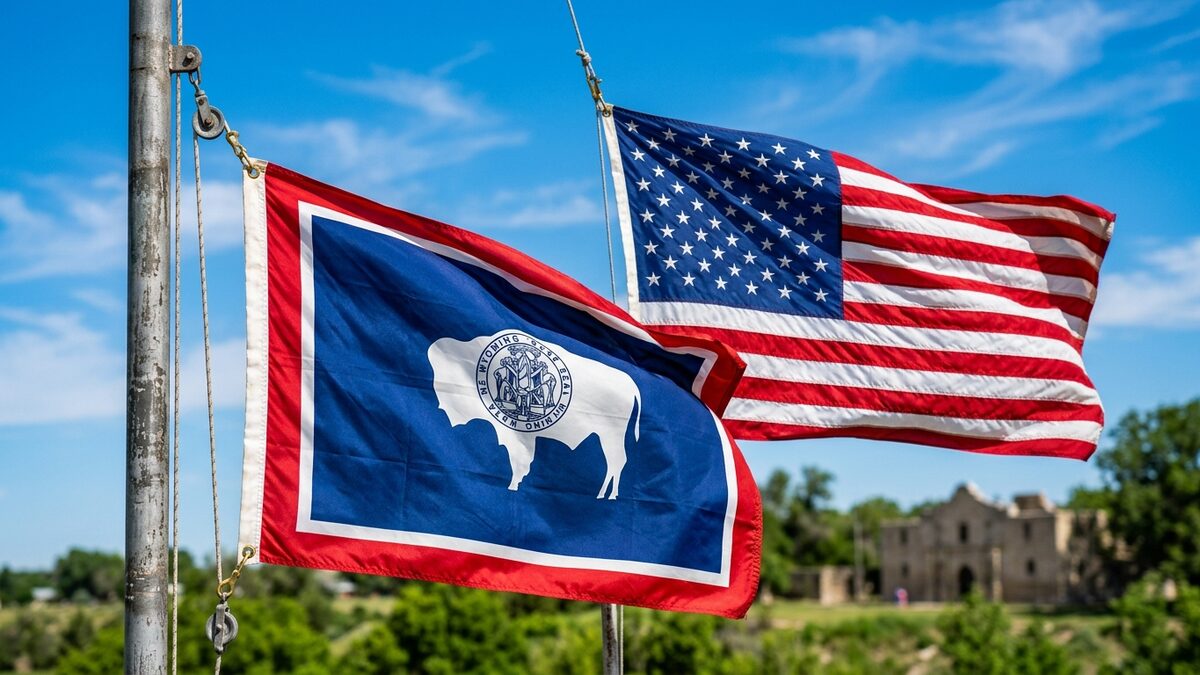
The incorporation of national flag elements into US state flags offers a compelling lens through which to explore the interplay between state identity and federal unity. By analyzing the historical and political motivations behind these design choices, one uncovers a rich narrative about how states balance regional pride with allegiance to the nation. This synthesis of symbolism invites a deeper appreciation of the complex relationship embodied in the flags’ visual language.
Key Takeaways
- Some US state flags include elements of the national flag to symbolize unity with the federal government.
- Stars, stripes, and the blue field are common design elements borrowed from the US flag.
- These design choices reflect historical periods and political sentiments during the flags' adoption.
- State flags balance expressing regional pride with demonstrating allegiance to the nation.
What motivates certain US states to weave elements of the national flag into their own banners? This design choice reflects a complex interplay of identity, allegiance, and historical context. By incorporating stars, stripes, or colors from the Stars and Stripes, state flags visually express a connection to the federal union while simultaneously asserting regional pride. Understanding why these symbols appear requires examining the historical periods during which the flags were adopted, the political sentiments of those eras, and the desire to balance state sovereignty with national unity.
National Flag Design Elements Used by States
The United States flag is legally defined by its thirteen alternating red-and-white stripes and a blue union containing white stars. The stripes represent the original thirteen colonies, while the fifty stars symbolize the current fifty states. Many US state flags incorporate these elements directly, especially stars, stripes, or a blue field, to visually align themselves with the national identity. This borrowing underscores the state’s position within the broader federal union rather than suggesting separate national symbolism. Over time, federal flag law has reinforced the star as the clearest unifying emblem, expanding the star count to reflect each new state’s admission. States adopting elements of the national flag thus engage in a dialogue between regional identity and national belonging, using familiar motifs to express this duality.
By incorporating stars, stripes, or colors from the Stars and Stripes, state flags visually express a connection to the federal union while simultaneously asserting regional pride.
Why States Incorporate Stars
Stars are the most frequently adapted element from the national flag in US state flags, primarily because they symbolize both collective and individual statehood. The federal flag’s requirement—since the Act of April 4, 1818—that each state be represented by one star has institutionalized this symbolism. For example, Indiana’s flag features nineteen stars: thirteen for the original states, five for the states admitted before Indiana, and one for Indiana itself. Such arrangements allow states to affirm their membership in the Union while embedding local historical significance. Even non-state jurisdictions like Washington, D.C., utilize stars in their flags; however, these serve as civic symbols distinct from state identity. The strategic use of stars thus balances a state’s unique heritage with its integral role in the national federation.
Why States Incorporate Stripes
Stripes on state flags often evoke the national flag’s thirteen stripes, which stand for the original colonies and the nation’s founding era. Several states use stripes to connect their identity to this foundational period and the enduring legacy of the United States. The District of Columbia’s flag, for example, employs two red stripes, demonstrating how stripe motifs can be adapted rather than directly replicated. Alabama’s and Hawaii’s flags also reference stripe-based designs, although their symbolism nuances differ from strict national replication. These stripe elements reinforce notions of unity, continuity, and historical legitimacy, visually linking state identity to the broader narrative of American nationhood. In this way, stripes serve as both historical markers and symbols of allegiance within the framework of US state flags incorporating elements of the national flag.