
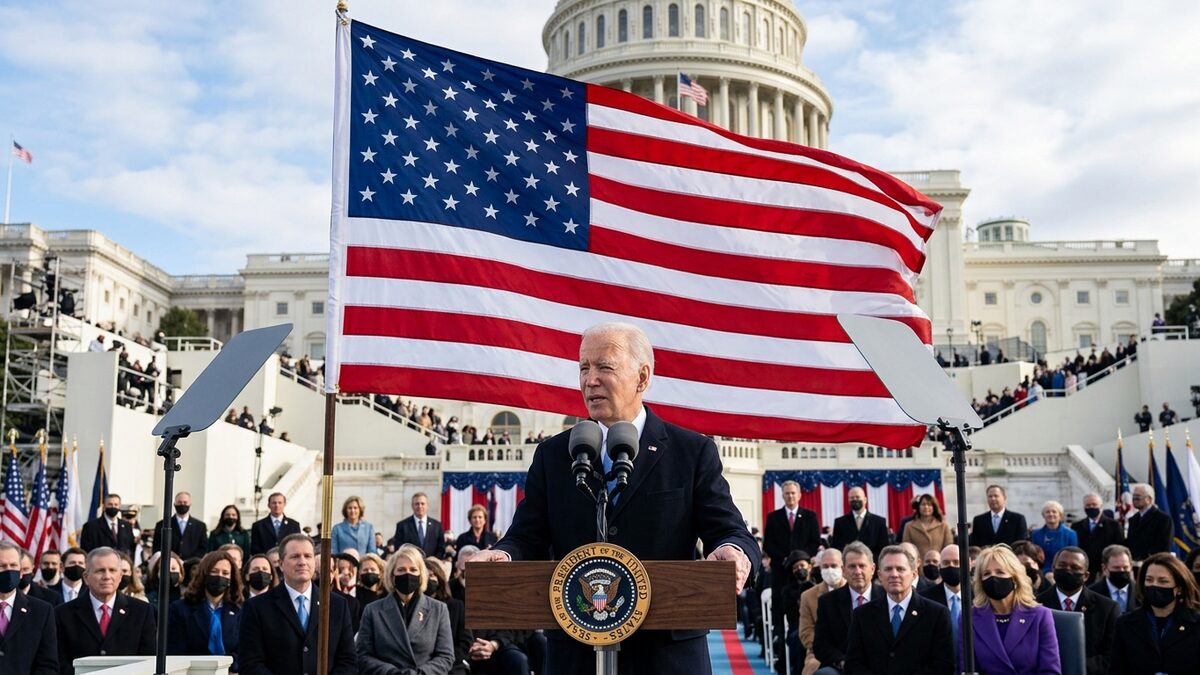
The American flag’s role in presidential inauguration ceremonies offers a compelling lens through which to explore the intersection of symbolism, tradition, and national identity. Tracing its transformation from George Washington’s modest display to the intricate rituals of modern inaugurations reveals how this emblem encapsulates the enduring values and historical evolution of the Republic. Understanding the flag’s ceremonial significance uncovers deeper insights into the nation’s commitment to democratic ideals and constitutional continuity.
Key Takeaways
- The American flag has symbolized national unity and democratic ideals since the first presidential inauguration in 1789.
- Its presence at inaugurations reflects the continuity of the Republic and the solemn transfer of executive power.
- A 2025 presidential directive mandates the U.S. flag be flown at full-staff on all Inauguration Days.
- This federal rule applies to all federal buildings, military posts, naval stations, and U.S. facilities abroad during Inauguration Day.
Since George Washington’s first inauguration in 1789, the American flag has served as a potent emblem of national unity and democratic ideals during presidential inauguration ceremonies. Its presence, evolving alongside the nation’s history, reflects the continuity of the Republic and the solemn transfer of executive power. From the early republic’s modest displays to the elaborate pageantry of the modern era, the flag has symbolized both the enduring principles of the Constitution and the collective identity of the American people at moments of political renewal.
Federal Rule on Inauguration Day Flag Display
The use of the American flag in presidential inaugurations is governed by both tradition and federal directives. In January 2025, the White House issued a presidential action mandating that, “on this and all future Inauguration Days,” the U.S. flag “shall be flown at full-staff.” This directive applies to the White House, all federal public buildings and grounds, military posts, naval stations and vessels, and U.S. facilities abroad for the duration of Inauguration Day. Notably, the order instructs that the flag be returned to half-staff following the day’s ceremonies, specifically in recognition of former President Jimmy Carter’s recent passing.
Since George Washington’s first inauguration in 1789, the American flag has served as a potent emblem of national unity and democratic ideals during presidential inauguration ceremonies.
While this federal order establishes a clear full-staff display on Inauguration Day, the U.S. Flag Code itself has historically taken a more permissive stance. According to summaries by organizations such as the American Legion, the Flag Code states that the flag “should be displayed” on January 20 but does not mandate full-staff status. Contemporary media coverage in early 2025 underscored this distinction, highlighting that the Flag Code’s language designates Inauguration Day as a day for display without requiring the flag to be flown at full-staff.
Flag Code vs. Mourning Flag Orders
The intersection of ceremonial flag display and statutory mourning protocols was brought into sharp relief during the 2025 inauguration. The U.S. Flag Code lists Inauguration Day as one of the days when the flag “should be displayed,” affirming its symbolic importance during presidential transitions. However, the same Flag Code mandates that the flag “shall be flown at half-staff” for 30 days following the death of a president or former president. The death of former President Jimmy Carter on December 29, 2024, initiated such a 30-day mourning period that coincided with the January 20, 2025 inauguration.
To reconcile these conflicting directives, the White House’s January 2025 order temporarily overrode the half-staff requirement for the duration of Inauguration Day, instituting a full-staff display in honor of the new presidency. This decision sparked debate and coverage in outlets such as TIME and the Miami Herald, which framed the situation as a legal and ceremonial conflict. The controversy underscored the complexity of balancing respect for a deceased president with the symbolic imperatives of national renewal inherent in the inauguration ceremony.
Capitol West Front Flag Arrangement
The visual presentation of the American flag during presidential inaugurations extends beyond federal flag display rules to include the architectural and ceremonial staging at the Capitol’s West Front. The Joint Congressional Committee on Inaugural Ceremonies oversees this arrangement, ensuring that the flag’s presence aligns with the dignity and symbolism of the event. The flag is prominently displayed on the Capitol building and surrounding areas, framing the oath of office and serving as a backdrop that emphasizes the continuity of the Republic.
Over time, the flag arrangement at the West Front has evolved to accommodate larger audiences and enhanced media coverage, reinforcing the flag’s role as a unifying emblem. The strategic placement of the flag in this setting reflects an awareness of its visual power to communicate national identity and constitutional legitimacy at the moment of executive power transfer. As such, the use of the American flag in this context exemplifies the broader theme of its function as a symbol of democratic ideals during presidential inaugurations.