
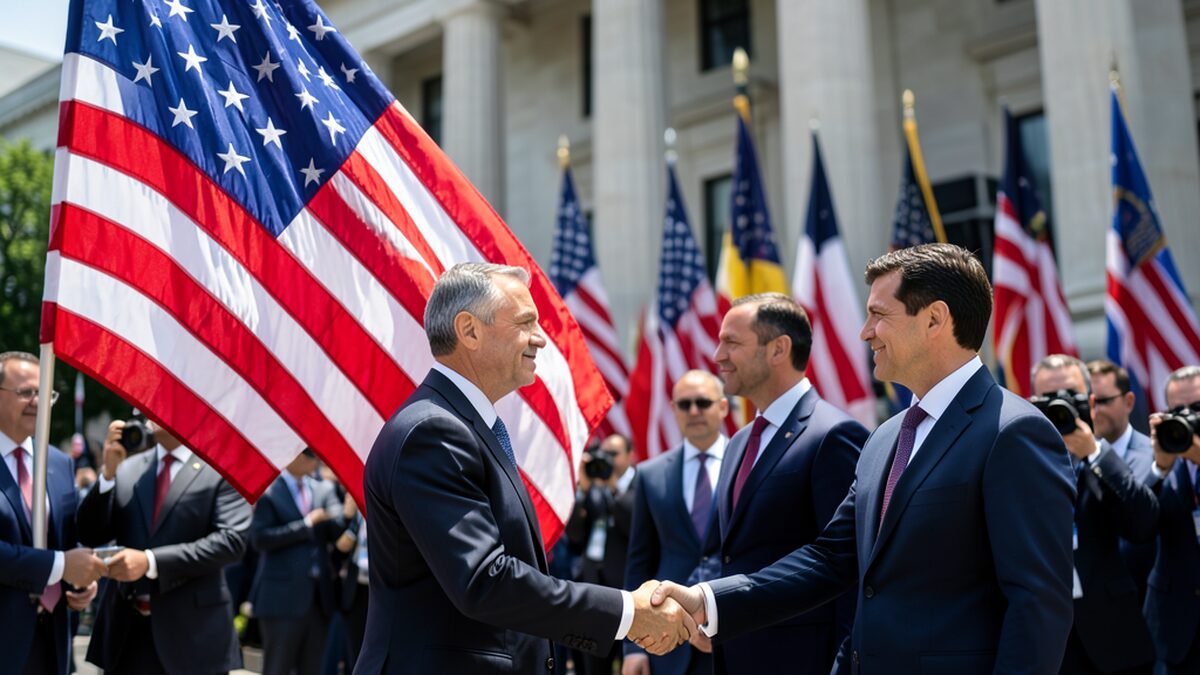
The American flag has long transcended its role as a mere national emblem, becoming a powerful instrument in international diplomacy. From historic treaties to contemporary global summits, its presence signals more than patriotism—it conveys political ideals and strategic influence. Exploring how the stars and stripes have shaped diplomatic interactions offers insight into the enduring impact of national symbols on global affairs and U.S. soft power projection.
Key Takeaways
- The American flag symbolizes U.S. political ideals and diplomatic presence internationally.
- It has been a key emblem from the Revolutionary War through modern diplomatic events.
- U.S. embassies and diplomatic missions are legally required to display the flag daily.
- The flag’s presence reinforces American sovereignty and soft power in global affairs.
Since its first unfurling during the American Revolutionary War, the stars and stripes have come to embody more than national identity; they have served as a potent symbol in the realm of international diplomacy. Throughout history, the American flag has been a visual shorthand for the United States’ political ideals, strategic intentions, and diplomatic presence, from the Treaty of Paris in 1783 to Cold War negotiations and contemporary summits. Its display at foreign embassies, peacekeeping missions, and multilateral forums underscores the enduring power of national symbolism in shaping international relations and projecting soft power across diverse geopolitical landscapes.
The American Flag as the Official Symbol of U.S. Diplomatic Missions
The American flag holds a codified legal and symbolic status within U.S. diplomatic missions worldwide. Under international law and U.S. Department of State regulations, embassies, ambassadorial offices, and residences are entitled and required to display the flag daily, weather permitting. This ensures a constant visual representation of American sovereignty and diplomatic presence. The Foreign Affairs Manual mandates that chiefs of mission ensure the flag’s prominent placement, reinforcing the United States’ official standing in host countries.
Throughout history, the American flag has been a visual shorthand for the United States’ political ideals, strategic intentions, and diplomatic presence, from the Treaty of Paris in 1783 to Cold War negotiations and contemporary summits.
Moreover, the protocol surrounding the flag’s display reflects its elevated status among sovereign symbols. On U.S. government premises abroad, the American flag is accorded the position of honor in any formation with other national flags, customarily placed first on the left when facing the display. It must be flown at equal height and size alongside other sovereign flags, symbolizing parity and respect within the international community. Additionally, the U.S. flag often accompanies mission-specific banners, such as the Foreign Service or consular flags, signifying the multifaceted nature of American diplomatic engagement.
Flag Protocol and Ceremonial Authority in Foreign Postings
The meticulous regulations governing the American flag’s use in overseas missions underscore its role beyond mere decoration, serving as a vehicle of official diplomatic messaging. The Department of State’s Foreign Affairs Manual (2 FAM 150) codifies the use of seals, coats of arms, and flags, prescribing strict protocol for their display. Notably, the flag is lowered to half-staff abroad only under exceptional circumstances, such as the death of a sitting or former U.S. President, unless specific orders are issued by top officials. This restraint in ceremonial gestures abroad reflects the flag’s importance as a symbol of national dignity and continuity.
Flag placement also functions as a marker of diplomatic rank and authority. The American flag is displayed alongside the Foreign Service flag of the chief of mission at embassies and with the consular flag at consulates. This arrangement visually communicates the hierarchy and official representation of the U.S. government within the host country. Thus, flag protocol in foreign postings is an integral component of diplomatic practice, reinforcing the United States’ presence and signaling respect for host nation sovereignty while asserting American identity.
The Flag as a Visual Marker of Restored or Changing Bilateral Relations
The American flag’s reappearance or removal at diplomatic sites often signals shifts in bilateral relations, serving as a tangible indicator of political developments. A recent example occurred in Caracas, Venezuela, where the U.S. flag was raised again over the American embassy in 2026 for the first time in seven years. This act marked the restoration of formal diplomatic ties following a prolonged hiatus, conveying a message of renewed engagement and cooperation.
Such moments illustrate how the American flag in international diplomacy transcends symbolism, functioning as a visual marker of political status and intent. Its presence or absence can communicate shifts in alliances, tensions, or reconciliation without verbal articulation. Consequently, the flag remains a critical instrument in the diplomatic toolkit, shaping perceptions and signaling changes in international relationships with immediacy and clarity.