
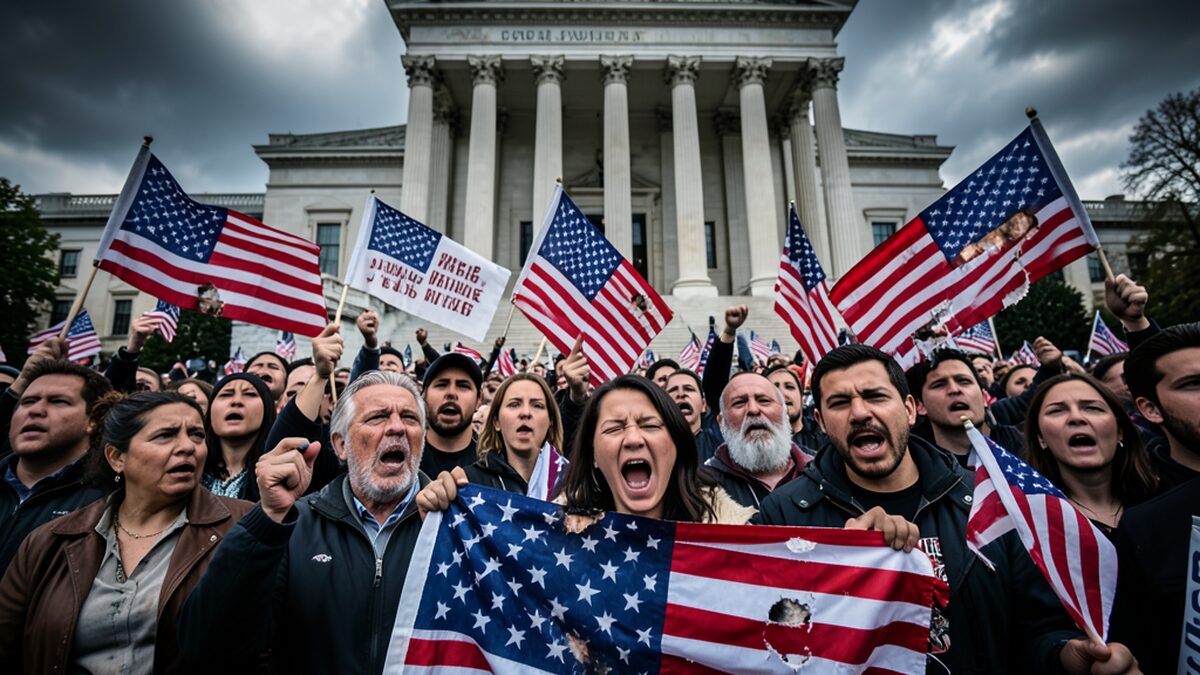
The enduring clash between safeguarding national symbols and protecting constitutional rights remains a focal point in American legal discourse. The Supreme Court’s ruling in Texas v. Johnson not only recognized flag desecration as a form of protected speech but also ignited fierce debates about the boundaries of expression and patriotism. As societal values evolve, the tension between upholding the First Amendment and honoring national reverence continues to provoke profound legal and ethical questions.
Key Takeaways
- The US Supreme Court ruled that flag desecration is protected free speech under the First Amendment.
- The Texas v. Johnson case set a precedent that symbolic acts of protest cannot be criminalized solely for offending public sentiment.
- Legal debates continue over balancing national respect for the flag with constitutional free speech rights.
- Flag desecration cases highlight ongoing tensions between individual expression and collective national identity.
What limits, if any, should a society impose on the expression of dissent when it involves the desecration of its most revered symbol, the national flag? This question lies at the heart of ongoing legal controversies in the United States, where the tension between safeguarding free speech under the First Amendment and preserving the flag’s symbolic sanctity continues to provoke intense debate. The courts have grappled with whether acts of flag desecration constitute protected expressive conduct or cross a line warranting governmental restriction, raising profound issues about the boundaries of constitutional freedoms and national identity.
Core Supreme Court Holding in Texas v. Johnson (1989)
The landmark case of Texas v. Johnson, decided on June 21, 1989, serves as a foundational moment in the legal controversies of flag desecration and free speech in the US. Gregory Lee Johnson burned an American flag on August 22, 1984, outside the Republican National Convention in Dallas, Texas. Johnson was prosecuted under a Texas statute that criminalized the desecration of a “venerated object,” including the U.S. flag. The Supreme Court, in a narrow 5–4 decision, reversed his conviction, holding that flag burning constituted protected expressive conduct under the First Amendment.
The courts have grappled with whether acts of flag desecration constitute protected expressive conduct or cross a line warranting governmental restriction, raising profound issues about the boundaries of constitutional freedoms and national identity.
Justice William J. Brennan Jr., writing for the majority, emphasized that the government may not prohibit expression simply because it is offensive or disagreeable. The ruling recognized that the act of burning the flag was a form of political expression intended to convey a particular message. This holding underscored the principle that symbolic speech, even in the form of flag desecration, is entitled to constitutional protection when it communicates an idea or viewpoint.
Key First Amendment Reasoning
The Court’s analysis centered on the classification of Johnson’s conduct as symbolic speech. The flag burning was deliberate and intended to express political dissent, distinguishing it from mere conduct lacking communicative intent. The state of Texas argued that its interest lay in preventing breaches of the peace and preserving the flag’s status as a national symbol. However, the Court found these justifications insufficient. Importantly, the act did not incite any violence or actual disorder, undermining the state’s public safety argument.
The majority held that the government cannot prohibit expression solely because it is offensive to the public or because it challenges deeply held values. This reasoning reinforced a core tenet of First Amendment jurisprudence: the protection of unpopular or controversial speech is essential to democratic discourse. The decision thus delineated the boundaries of constitutional freedoms, clarifying that symbolic acts of protest, even those involving the desecration of revered symbols, merit protection unless they produce imminent lawless action or genuine threats to public order.
Reaction and Constitutional Politics After the Decision
The Texas v. Johnson ruling ignited widespread public and political backlash. Many Americans perceived the flag as a uniquely sacred emblem warranting special protection beyond ordinary speech. In response, Congress enacted the Flag Protection Act of 1989, designed to criminalize certain forms of flag desecration without relying on the Texas statute invalidated by the Supreme Court. However, this federal law was itself struck down in United States v. Eichman, 496 U.S. 310 (1990), which reaffirmed the principles established in Johnson by holding that the government could not prohibit flag desecration without violating the First Amendment.
Following Eichman, efforts to pass a constitutional amendment banning flag desecration emerged repeatedly, reflecting ongoing political contention. Despite numerous proposals, no such amendment has been ratified, leaving the Supreme Court’s decisions as the prevailing authority on the issue. The legal controversies of flag desecration and free speech in the US thus continue to exemplify the tension between national identity and constitutional liberties, illustrating the complex balance between protecting symbolic national values and upholding robust freedom of expression.