
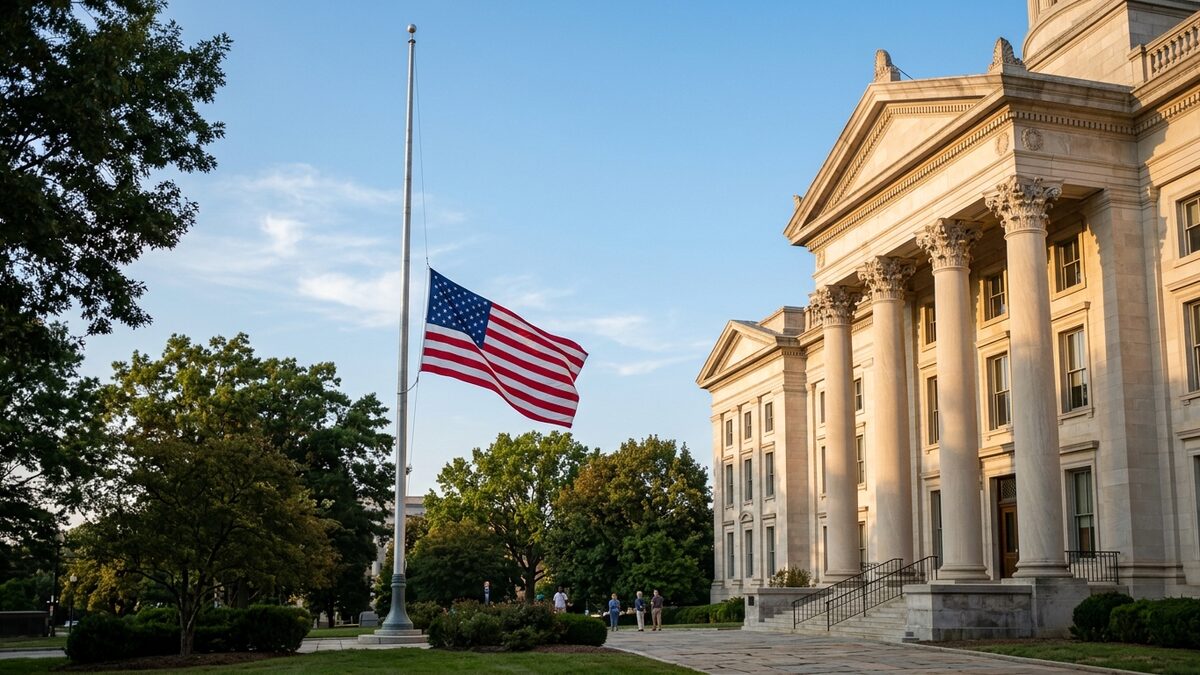
The practice of flying the American flag at half-staff carries profound historical and symbolic meaning, tracing back to maritime signals of mourning in the 1600s. Its formal adoption during the Civil War marked a turning point, transforming it into a national gesture of respect for loss and tragedy. Exploring the origins and evolving significance of this solemn tradition reveals much about American values and collective memory.
Key Takeaways
- The American flag is flown at half-staff as a symbol of mourning and respect rooted in early maritime traditions.
- The practice was formalized during the Civil War to honor fallen soldiers and national tragedies.
- The President has the authority to order the flag at half-staff under the U.S. Flag Code.
- Flying the flag at half-staff expresses the nation’s collective grief and reverence during significant events.
The tradition of flying the American flag at half-staff traces back to the early 17th century, with maritime practices signaling mourning or distress. In the United States, this gesture took on formalized meaning during the Civil War, when flags were lowered to honor fallen soldiers and national tragedy. Over time, it evolved into a solemn symbol of respect and remembrance, employed during periods of mourning for prominent leaders, tragic events, or national disasters. Understanding when and why the flag is flown at half-staff reveals the nation’s collective expression of grief and reverence embedded in its historical customs.
Official Authority and Legal Basis for Half-Staff Proclamations
The authority to order the American flag to be flown at half-staff is primarily vested in the President of the United States, as codified in the U.S. Flag Code (4 U.S.C. § 7(m)). This legal framework empowers the President to designate periods of national mourning or recognition of specific events by lowering the flag on federal buildings, grounds, and naval vessels throughout the nation and its territories. The Flag Code, revised in 1954 under President Dwight D. Eisenhower, provides detailed guidelines on the timing and duration of half-staff displays, ensuring uniformity in observance across federal entities.
Understanding when and why the flag is flown at half-staff reveals the nation's collective expression of grief and reverence embedded in its historical customs.
In addition to the President, individual state governors possess the authority to order the flag at half-staff within their jurisdictions. This power is typically exercised to honor the deaths of state officials or to mark events of significance at the state level. Similarly, the Mayor of the District of Columbia may direct the flag to be flown at half-staff within the District for events affecting the city. Compliance with these proclamations is mandatory for government buildings and installations within the respective authorities’ domains, reinforcing the flag’s role as a symbol of collective mourning and respect.
Specific Duration Guidelines for the Death of Government Officials
The U.S. Flag Code specifies precise durations for flying the flag at half-staff in response to the deaths of various government officials, reflecting their roles in the federal and state hierarchy. Upon the death of a sitting or former President, the flag is flown at half-staff for 30 days from the date of death, marking the highest level of national mourning. For the Vice President, the Chief Justice (current or retired), and the Speaker of the House of Representatives, the flag is lowered for 10 days, acknowledging their pivotal roles in government leadership.
Other officials receive varying periods of half-staff display: Associate Justices of the Supreme Court, Secretaries of executive or military departments, former Vice Presidents, and State Governors have the flag lowered from the day of death until interment. Members of Congress are accorded a shorter period, with the flag at half-staff on the day of death and the following day. Specifically, for Senators, Representatives, Territorial Delegates, or Resident Commissioners from Puerto Rico, the half-staff observance in the Washington, D.C., area also lasts two days. These durations underscore the respect accorded to officials based on their governmental responsibilities and prominence.
Other Circumstances for Flying the Flag at Half-Staff
Beyond mourning government officials, the American flag is flown at half-staff during national tragedies, disasters, or significant solemn occasions. The President may issue proclamations lowering the flag in response to events such as terrorist attacks, mass casualties, or natural disasters, serving as a unifying symbol of communal grief and resilience. State and local authorities may also order half-staff displays to honor citizens or public servants who have died in the line of duty or to commemorate significant local tragedies.
Additionally, certain dates are designated for half-staff observance, such as Memorial Day, when the flag is flown at half-staff until noon to honor those who died in military service. This practice reinforces the flag as a dynamic emblem of national memory, sorrow, and respect. In all instances, flying the flag at half-staff is a deliberate and formalized act that conveys solemnity and collective mourning, reflecting the enduring traditions and values embedded in American history.