
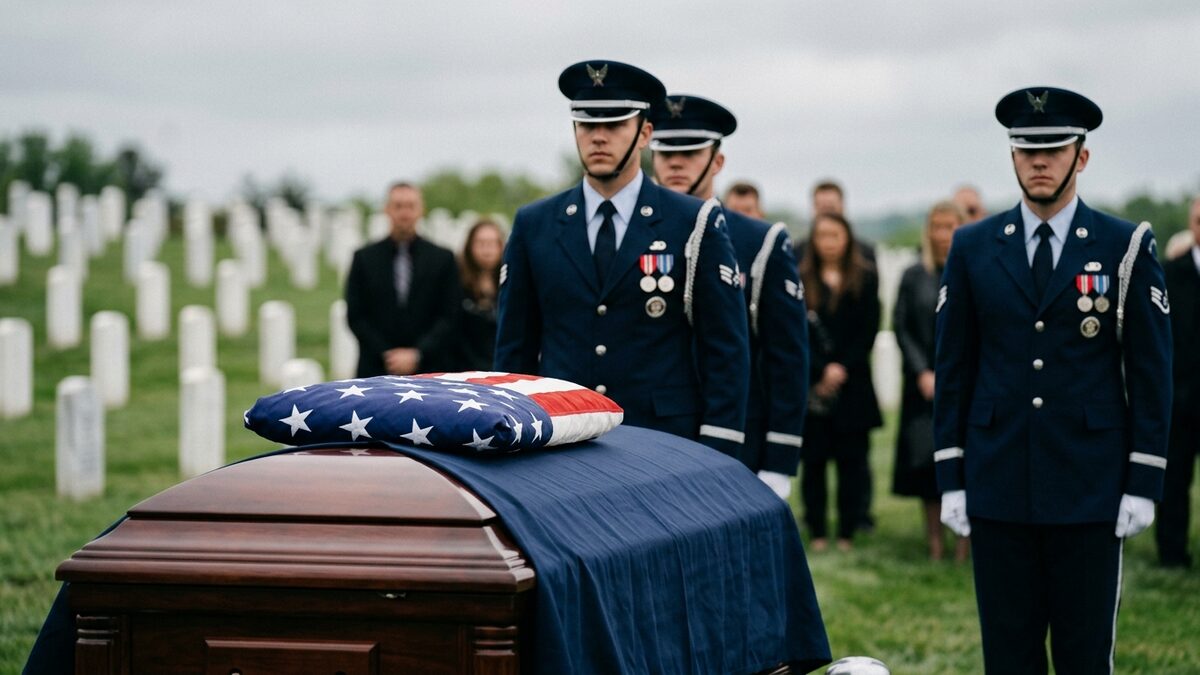
The article explores the profound significance of the American flag within military funerals, tracing its origins to the War of 1812. It highlights how the flag’s role evolved from a simple symbol of national identity to a carefully regulated emblem of honor and respect for fallen service members. This examination offers insight into the rituals and protocols that underscore the intersection of patriotism, mourning, and military heritage.
Key Takeaways
- The American flag has been used in military funerals since the War of 1812 as a symbol of sacrifice.
- Military funeral protocols dictate the flag's precise placement on the casket with the union over the left shoulder.
- The flag’s presentation and folding follow strict regulations to honor the fallen service members respectfully.
- These traditions highlight the deep connection between patriotism, mourning, and military heritage.
Since the early 19th century, the American flag has served not only as a symbol of national identity but also as a solemn emblem of sacrifice in military funerals. Its use in honoring fallen service members traces back to the War of 1812, when draping the flag over coffins became a poignant ritual to recognize the ultimate price paid for the nation’s defense. Over time, this practice evolved into a codified set of protocols that govern the respectful presentation, folding, and retirement of the flag in military ceremonies, underscoring the enduring connection between patriotism, mourning, and military tradition.
Flag Placement and Physical Specifications on the Casket
The American Flag in Military Funerals and Protocols begins with the precise placement of the flag on the casket of deceased veterans. According to Department of Defense regulations, the flag must be positioned so that the union—the blue field containing stars—is at the head of the casket, directly over the left shoulder of the deceased. This placement symbolizes the nation’s protection and respect for the service member even in death, with the stars oriented upwards over the heart.
Since the early 19th century, the American flag has served not only as a symbol of national identity but also as a solemn emblem of sacrifice in military funerals.
Standard burial flags used for this solemn purpose measure exactly 5 feet by 9½ feet (approximately 1.52 meters by 2.92 meters). The flag is stretched taut over the casket, with the red and white stripes running lengthwise from the head to the foot. This careful draping ensures that the flag does not touch the ground at any point during the ceremony. Pallbearers and honor guard members maintain strict control of the flag to uphold the dignity of the ritual and the honor owed to the fallen. These physical specifications and handling rules contribute to the reverence and uniformity observed in military funerals across all branches of service.
Official Presentation Protocols and Standardized Verbiage
On April 20, 2012, the Secretary of Defense issued a memorandum that standardized the exact wording used when presenting the American flag in military funerals and protocols. This directive formalized the language and procedures by which the folded flag is bestowed upon the next of kin, reinforcing the solemnity and uniformity of the ceremony nationwide. The presenter must be a member of the same military branch as the deceased, reflecting the personal and institutional connection between the service member and the armed forces.
During the presentation, the presenter leans forward and holds the folded flag waist-high, with the straight edge facing the recipient. The standardized phrase recited is: “On behalf of the President of the United States, [the United States Army/Marine Corps/Navy/Air Force/Space Force/Coast Guard], and a grateful nation, please accept this flag as a symbol of our appreciation for your loved one’s honorable and faithful service.” This moment typically follows the playing of “Taps,” performed by a lone bugler or via audio recording if a bugler is unavailable. The folded flag serves as a cherished keepsake for the family, embodying the nation’s gratitude and the sacrifices made by the deceased.
Folding and Retirement of the Flag in Military Ceremonies
The protocol for folding the American flag in military funerals is steeped in symbolism and precision. The flag is folded thirteen times in a specific triangular pattern, with each fold bearing significance related to the nation’s history and values. The final triangular shape resembles a cocked hat, reminiscent of the hats worn by colonial soldiers during the American Revolution, linking the flag to the country’s foundational sacrifices.
Following the presentation, the flag may be retired in accordance with established guidelines when it becomes worn or damaged. The U.S. Flag Code and military regulations dictate that flags no longer suitable for display must be disposed of respectfully, typically by burning in a dignified ceremony. This practice underscores the enduring respect afforded to the flag as a sacred symbol in military funerals and protocols, reaffirming the nation’s commitment to honor both the flag and those who have served under it.